No products added!


Introduction
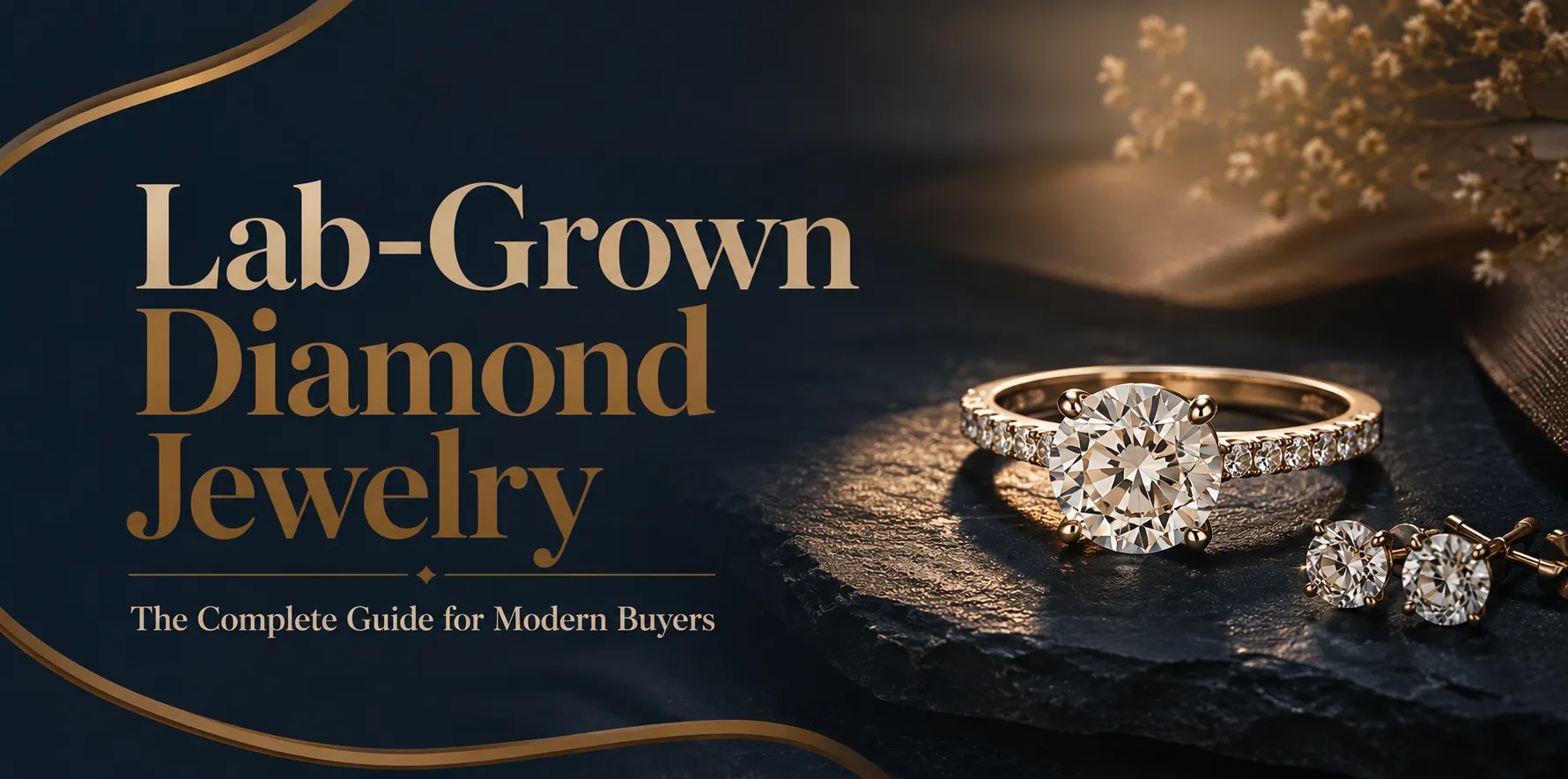
The jewelry industry has undergone a significant transformation over the past decade, and one of the biggest changes has been the rapid rise of lab-grown diamonds. Once considered a niche alternative, lab-grown diamonds have become a mainstream choice for engagement rings, wedding jewelry, necklaces, earrings, bracelets, and custom luxury pieces.
Modern buyers are increasingly looking for jewelry that offers beauty, value, transparency, and flexibility. As a result, lab-grown diamond jewelry has become one of the fastest-growing segments in the fine jewelry market.
But many buyers still have questions:
- What exactly is a lab-grown diamond?
- How is it made?
- Is it a real diamond?
- Is it worth buying?
- What are the advantages and disadvantages?
- Who should choose lab-grown diamonds?
- How much money can you save?
- What mistakes should you avoid?
This guide answers everything modern buyers need to know before purchasing lab-grown diamond jewelry.
Key Takeaways
- Lab-grown diamonds are real diamonds with the same chemical, physical, and optical properties as mined diamonds.
- They are created using advanced HPHT and CVD technologies that replicate natural diamond formation.
- Lab-grown diamonds typically cost 50–80% less than comparable natural diamonds.
- Buyers can often choose larger carat sizes or higher quality grades while maintaining the same budget.
- IGI certification is the most common grading standard for lab-grown diamonds, while GIA also provides grading reports.
- Lab-grown diamonds are ideal for engagement rings, custom jewelry, wedding jewelry, and luxury everyday wear.
- Diamond cut quality is often more important than carat weight when it comes to visual beauty.
- Lab-grown diamonds provide excellent value but should not be viewed primarily as investment assets.
- Always verify certification, craftsmanship, and metal quality before purchasing.
- Modern buyers increasingly choose lab-grown diamonds for personalization, transparency, and value.
What Is Lab-Grown Diamond Jewelry?
Lab-grown diamond jewelry features diamonds created in controlled laboratory environments rather than mined from the earth.
Despite the term “lab-grown,” these stones are genuine diamonds.
They possess:
- Identical chemical composition
- Identical crystal structure
- Identical hardness
- Identical brilliance
- Identical optical properties
Once set into jewelry, a lab-grown diamond appears visually indistinguishable from a natural diamond.
Popular jewelry categories include:
- Engagement rings
- Wedding bands
- Diamond necklaces
- Earrings
- Tennis bracelets
- Personalized jewelry
- Custom pendants
How Do Lab-Grown Diamonds Work?
Lab-grown diamonds are created by replicating the conditions that naturally form diamonds beneath the earth.
HPHT (High Pressure High Temperature)
HPHT technology recreates the intense pressure and heat found deep underground.
A diamond seed is exposed to extreme conditions that allow carbon atoms to crystallize into a diamond.
Benefits
- Excellent crystal quality
- Strong color grades
- Suitable for larger diamonds
CVD (Chemical Vapor Deposition)
CVD technology uses carbon-rich gases inside a vacuum chamber.
Carbon atoms gradually attach to a diamond seed, growing layer by layer until a complete diamond crystal forms.
Benefits
- Highly controlled process
- Consistent quality
- Efficient production
- Widely used in premium jewelry
Are Lab-Grown Diamonds Real?
Yes.
Lab-grown diamonds are real diamonds.
They are not:
- Cubic Zirconia
- Moissanite
- Crystal simulants
- Synthetic lookalikes
The primary difference is origin.
Natural diamonds form underground over billions of years.
Lab-grown diamonds form in advanced laboratory environments over several weeks.
Lab-Grown Diamonds vs Natural Diamonds
| Feature | Lab-Grown Diamonds | Natural Diamonds |
| Real Diamond | Yes | Yes |
| Hardness | 10 Mohs | 10 Mohs |
| Sparkle | Same | Same |
| Chemical Structure | Same | Same |
| Visual Appearance | Same | Same |
| Origin | Laboratory Created | Earth Mined |
| Cost | Lower | Higher |
| Custom Jewelry Value | Excellent | Excellent |
| Larger Carat Access | Easier | More Expensive |
| Resale Demand | Generally Lower | Generally Higher |
Why Are Lab-Grown Diamonds Becoming Popular?
Modern buyers increasingly prioritize:
- Better value
- Larger stones
- Customization flexibility
- Transparency
- Ethical sourcing considerations
As a result, lab-grown diamonds have become one of the fastest-growing categories in fine jewelry.
Is Lab-Grown Diamond Jewelry Worth It?
For many buyers, absolutely.
Lab-grown diamonds often provide significantly more diamond for the same budget.
Instead of purchasing:
- Smaller carat sizes
- Lower clarity
- Lower color grades
buyers can often upgrade all three characteristics simultaneously.
Who Should Buy Lab-Grown Diamond Jewelry?
Engagement Ring Buyers
Couples seeking maximum beauty and size within budget.
Custom Jewelry Buyers
People designing personalized jewelry pieces.
Luxury Value Buyers
Consumers who prioritize appearance and quality over geological origin.
Fashion Jewelry Enthusiasts
Those wanting larger statement pieces without traditional diamond pricing.
Pros of Lab-Grown Diamond Jewelry
Better Value
More diamond for the money.
Larger Carat Sizes
Upgrade size without dramatically increasing budget.
Higher Diamond Quality
Access better clarity and color grades.
Excellent Brilliance
Identical sparkle and fire.
More Design Flexibility
Budget can be allocated toward craftsmanship and customization.
Broad Availability
Available across multiple shapes, sizes, and quality grades.
Cons of Lab-Grown Diamond Jewelry
Lower Resale Expectations
Lab-grown diamonds generally have lower resale demand.
Market Evolution
Industry pricing continues to evolve.
Consumer Misunderstanding
Many buyers still incorrectly assume lab-grown diamonds are fake.
Understanding Lab-Grown Diamond Certification
Certification is one of the most important aspects of purchasing any diamond.
IGI Certification
The International Gemological Institute (IGI) is currently one of the leading grading authorities for lab-grown diamonds.
IGI reports typically include:
- Carat weight
- Color grade
- Clarity grade
- Cut grade
- Measurements
- Polish
- Symmetry
- Growth method
- Laser inscription details
GIA Certification
The Gemological Institute of America (GIA) also grades lab-grown diamonds and is widely respected throughout the jewelry industry.
Cost Considerations
The price of lab-grown diamond jewelry depends on:
- Carat weight
- Cut quality
- Color grade
- Clarity grade
- Metal selection
- Design complexity
- Craftsmanship quality
Real-World Buying Examples
Example 1: Engagement Ring
Budget: $3,000
Natural Diamond
- 0.75 Carat
- VS2 Clarity
- H Color
Lab-Grown Diamond
- 1.50 Carat
- VS1 Clarity
- F Color
The lab-grown option provides significantly greater size and quality.
Example 2: Custom Pendant
Natural diamond budgets may limit design complexity.
Lab-grown diamonds often allow:
- Larger center stones
- More accent diamonds
- Premium metal upgrades
while maintaining the same budget.
Example 3: Wedding Jewelry Set
Couples may choose:
- Better stone quality
- Larger total carat weight
- More elaborate settings
without exceeding their planned spending.
Common Mistakes Buyers Make
- Choosing Carat Over Cut
Cut quality affects sparkle more than size.
- Ignoring Certification
Always request IGI or GIA reports.
- Buying Based Only on Price
Craftsmanship matters as much as the diamond.
- Skipping CAD Review
Always review custom jewelry designs before production.
- Ignoring Metal Quality
The setting significantly impacts durability and long-term wear.
Expert Recommendations for Buying Lab-Grown Diamond Jewelry
Purchasing lab-grown diamond jewelry involves more than choosing a diamond that looks attractive. Industry professionals recommend focusing on quality, certification, craftsmanship, and long-term wearability to maximize value and satisfaction.
Prioritize Cut Quality
A diamond’s cut is often the most important factor influencing its beauty and sparkle. Even a larger diamond can appear dull if the cut quality is poor, while a smaller well-cut diamond can deliver exceptional brilliance and fire.
When evaluating diamonds, prioritize cut quality before focusing solely on carat weight. A well-cut diamond typically offers better light performance, making it appear brighter and more visually impressive.
Verify Certification
Always choose diamonds that are independently graded by respected gemological laboratories such as International Gemological Institute (IGI) or Gemological Institute of America (GIA).
Certification helps verify:
- Carat weight
- Color grade
- Clarity grade
- Cut quality
- Diamond authenticity
- Laser inscription details
Independent certification provides confidence that you are receiving the quality you are paying for.
Compare Multiple Stones
Avoid purchasing the first diamond you see. Reviewing multiple certified stones allows you to compare differences in cut, color, clarity, and overall value.
Even diamonds with similar specifications can vary noticeably in appearance. Comparing several options helps identify the best balance between beauty, quality, and budget.
Focus on Wearability
Jewelry should not only look beautiful but also remain comfortable and durable over time.
When selecting a design, consider:
- Daily wear requirements
- Lifestyle compatibility
- Setting security
- Long-term maintenance needs
- Comfort and practicality
A timeless and durable design often provides greater long-term satisfaction than a trend-driven piece that may feel outdated or fragile.
Work With Transparent Jewelers
Transparency is one of the most important indicators of a trustworthy jewelry provider.
Look for jewelers that offer:
- Detailed pricing breakdowns
- Diamond certification reports
- CAD design approvals
- Material specifications
- Clear warranty policies
- Transparent production timelines
A transparent process allows buyers to make informed decisions and reduces the risk of unexpected costs or quality concerns.
Consider the Entire Jewelry Piece
Many buyers focus exclusively on the diamond while overlooking the setting and craftsmanship. The overall quality of the jewelry depends on both the stone and the workmanship behind it.
Evaluate:
- Metal purity and quality
- Stone setting security
- Finishing details
- Manufacturing standards
- Overall design execution
A high-quality setting enhances the beauty of the diamond while improving durability and long-term wearability.
Think Long-Term, Not Just Initial Cost
Lab-grown diamonds often provide significant savings compared to natural diamonds. Rather than simply spending less, consider using those savings strategically.
Many buyers choose to upgrade:
- Cut quality
- Color grade
- Clarity grade
- Metal quality
- Custom design features
This approach can result in a more impressive and personalized piece without dramatically increasing the overall budget.
Lab-Grown Diamond Purchase Checklist
Purchasing lab-grown diamond jewelry involves more than simply selecting a stone. A careful review of certification, craftsmanship, and customization details can help ensure you receive the quality and value you expect. Use the following checklist before making your final decision.
Diamond Checklist
Before purchasing a lab-grown diamond, verify the diamond’s quality through an independent grading report and review the key characteristics that impact appearance and value.
- IGI or GIA Certification: Always request certification from a reputable grading laboratory such as International Gemological Institute (IGI) or Gemological Institute of America (GIA). Certification provides independent verification of the diamond’s characteristics and authenticity.
- Carat Weight: Confirm the exact carat weight and ensure it aligns with your expectations and budget.
- Color Grade: Review the diamond’s color grade, which measures the absence of color and influences overall appearance and pricing.
- Clarity Grade: Check the clarity grade to understand the presence of inclusions or blemishes within the diamond.
- Cut Grade: Prioritize cut quality whenever possible. A well-cut diamond often appears more brilliant and visually appealing than a larger diamond with a lower-quality cut.
- Laser Inscription Verification: Many certified diamonds include a microscopic laser inscription on the girdle. Verify that the inscription matches the certification report.
Jewelry Checklist
The quality of the setting and craftsmanship is just as important as the diamond itself.
- Metal Purity Verification: Confirm the metal type and purity, whether it is 14K gold, 18K gold, platinum, sterling silver, or another precious metal.
- Stone Security: Inspect the setting design and prongs to ensure the diamond is securely mounted for long-term wear.
- Craftsmanship Quality: Review finishing details, symmetry, polishing, and overall construction quality before purchase.
- Warranty Coverage: Understand what warranty protection is included for manufacturing defects, repairs, and maintenance.
- Return and Exchange Policy: Review return, exchange, resizing, and repair policies to avoid surprises after purchase.
Custom Jewelry Checklist
For custom-designed lab-grown diamond jewelry, additional verification steps are essential.
- CAD Design Approval: Carefully review and approve the CAD (Computer-Aided Design) model before production begins to ensure every detail matches your vision.
- Final Design Specifications: Confirm all agreed specifications, including stone size, setting style, metal type, dimensions, engraving details, and finishing preferences.
- Production Timeline: Request a clear manufacturing schedule and estimated delivery timeline before placing your order.
- Shipping and Insurance Details: Verify shipping methods, insurance coverage, tracking options, and delivery protection for high-value jewelry purchases.
Frequently Asked Questions
Are lab-grown diamonds real diamonds?
Yes. They are chemically and physically identical to natural diamonds.
Do lab-grown diamonds sparkle like natural diamonds?
Yes. They exhibit the same brilliance, fire, and sparkle.
Is IGI certification good?
Yes. IGI is one of the most recognized and widely accepted grading authorities for lab-grown diamonds.
Is GIA better than IGI?
Both are respected organizations. IGI has a particularly strong presence within the lab-grown diamond industry.
Are lab-grown diamonds cheaper?
Yes. They generally cost significantly less than comparable natural diamonds.
Are lab-grown diamonds good for engagement rings?
Absolutely. They are among the most popular choices for modern engagement rings.
Can lab-grown diamonds last forever?
Yes. They possess the same durability as natural diamonds.
Can I customize jewelry with lab-grown diamonds?
Yes. Lab-grown diamonds are widely used in custom engagement rings, pendants, bracelets, necklaces, and earrings.
What is the biggest mistake buyers make?
Prioritizing carat size while ignoring cut quality and certification.
Should I choose lab-grown or natural diamonds?
Choose lab-grown diamonds if you prioritize value, size, and customization. Choose natural diamonds if geological rarity is important to you.
Final Verdict
Lab-grown diamond jewelry represents one of the biggest innovations in modern fine jewelry. These diamonds are real, beautiful, durable, and often provide significantly better value than comparable natural diamonds.
For buyers seeking larger stones, premium quality, customization flexibility, and transparent pricing, lab-grown diamonds offer a compelling alternative to traditionally mined diamonds.
Custom Karat helps modern buyers create personalized luxury jewelry with complete control over metals, stones, settings, and finishing details. Whether you’re designing a custom engagement ring, diamond pendant, wedding band, or statement jewelry piece, Custom Karat offers both lab-grown and natural diamond options, CAD design previews, expert craftsmanship, and direct manufacturer pricing—allowing you to create jewelry that feels uniquely yours.

About Author Brijesh Sharma
Brijesh Sharma is a jewelry retail industry author who shares expert insights on diamonds, lab-grown jewelry, custom designs, and smart jewelry buying. His content helps customers understand quality, pricing, trends, and craftsmanship so they can make confident jewelry purchase decisions.