No products added!

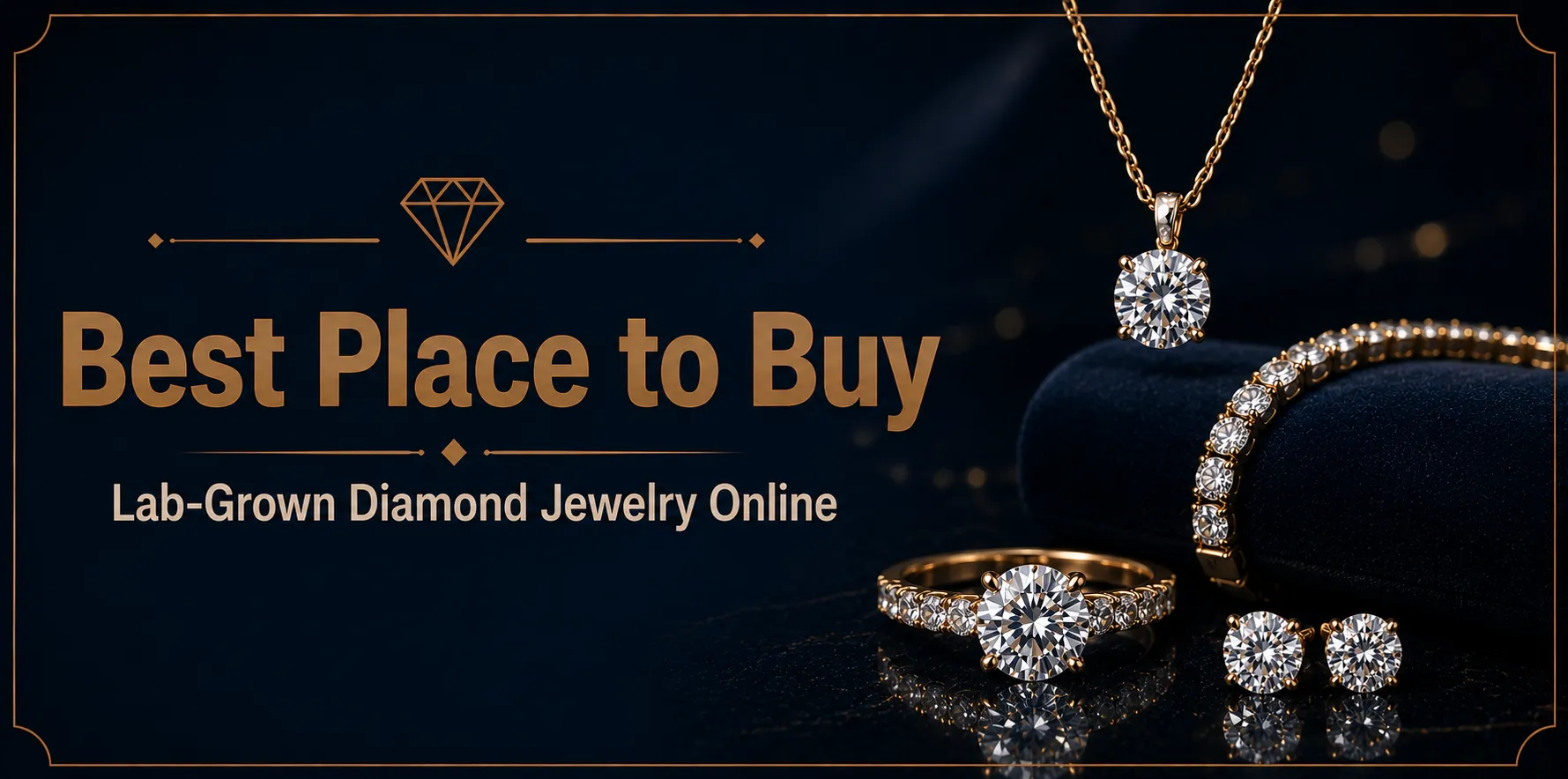
Introduction
Buying diamond jewelry online used to feel risky.
Today, buyers have more options than ever—but that also makes choosing the right place more difficult.
A quick search for lab-grown diamond jewelry reveals hundreds of brands promising better pricing, larger stones, premium quality, and faster delivery. Yet not all jewelry buying experiences are created equally.
Some retailers operate as marketplaces. Some sell fixed inventory. Others specialize in customization and direct manufacturing.
For modern buyers in the United States, the question is no longer:
“Where can I buy lab-grown diamond jewelry?”
It has become:
“Where can I buy high-quality lab-grown diamond jewelry that offers transparency, craftsmanship, and long-term value?”
Whether you’re shopping for an engagement ring, custom necklace, diamond pendant, earrings, tennis bracelet, or personalized luxury jewelry, understanding how to evaluate where you buy matters as much as selecting the diamond itself.
This guide explains what to look for before ordering and how to choose the right jewelry provider based on your priorities.
Key Takeaways
- The best place to buy lab-grown diamond jewelry depends on customization, craftsmanship, transparency, and certification—not just price.
- Lab-grown diamonds are real diamonds with the same physical and optical properties as natural diamonds.
- Certification from recognized grading laboratories remains essential.
- Custom jewelry allows buyers to control stone quality, metal selection, and design.
- Transparent pricing and production visibility often lead to better buying confidence.
- CAD approval can reduce customization mistakes.
- Larger diamonds do not automatically mean better value—cut quality remains critical.
- Modern buyers increasingly prioritize personalization and quality over traditional retail experiences.
What Makes a Great Place to Buy Lab-Grown Diamond Jewelry Online?
Buying jewelry online should feel informed—not confusing.
The strongest jewelry providers typically combine five things:
1. Transparent Pricing
Luxury jewelry pricing should feel understandable.
Look for brands that clearly explain:
- Diamond pricing
- Metal pricing
- Making charges
- Certification
- Production timelines
When pricing is transparent, buyers can compare quality instead of relying only on discounts.
2. Independent Diamond Certification
Always verify diamond grading before purchasing any lab-grown diamond jewelry.
Certification is one of the strongest indicators of transparency and quality when buying diamonds online. While a diamond may appear visually impressive in photographs or videos, an independent grading report helps confirm that the specifications being advertised match the stone you are actually purchasing.
For modern buyers—especially when purchasing engagement rings, custom jewelry, or higher-value pieces—diamond certification should never be treated as optional.
The most commonly recognized grading organizations include:
IGI Certification (International Gemological Institute)
IGI is currently one of the most widely used and recognized grading authorities for lab-grown diamonds.
IGI certification provides buyers with an independent assessment of the diamond’s characteristics and is commonly used across premium lab-grown diamond jewelry collections.
An IGI report typically evaluates:
- Carat weight
- Color grade
- Clarity grade
- Cut quality
- Measurements
- Polish
- Symmetry
- Growth method
- Laser inscription details
Many buyers choose IGI-certified diamonds because of its strong presence within the lab-grown diamond category and its detailed reporting standards.
GIA Grading Reports (Gemological Institute of America)
GIA is one of the most globally recognized names in diamond grading.
The organization is known for establishing many of the grading standards used throughout the jewelry industry and provides reports for both natural and lab-grown diamonds.
A GIA report helps buyers evaluate quality consistently and compare stones with greater confidence.
What Should a Proper Diamond Report Include?
Regardless of the grading laboratory, a complete certification report should include:
Carat Weight
Confirms the exact weight of the diamond rather than relying on estimated size.
Color Grade
Measures how colorless the diamond appears. Higher color grades generally create a brighter appearance.
Clarity Grade
Evaluates internal characteristics and surface features that may influence appearance.
Cut Grade
One of the most important factors affecting brilliance and sparkle. A well-cut diamond often appears more impressive than a larger poorly cut stone.
Measurements
Provides detailed dimensions that influence proportions and overall visual balance.
Laser Inscription (When Available)
Many certified diamonds include microscopic laser inscriptions that match the certification number, helping verify authenticity.
Additional details may also include:
- Polish quality
- Symmetry grading
- Fluorescence information
- Growth method (HPHT or CVD)
Why Certification Matters More Than Buyers Realize
Certification is not only about authenticity—it helps buyers compare diamonds objectively.
Two diamonds may appear similar online but differ significantly in:
- Light performance
- Proportions
- Clarity quality
- Visual appearance
- Long-term satisfaction
Independent grading reduces uncertainty and allows buyers to make informed decisions rather than relying solely on marketing descriptions.
Warning Signs to Watch For
Be cautious if a jewelry provider:
- Does not mention certification
- Refuses to share grading reports
- Uses vague quality descriptions
- Avoids showing stone specifications
- Cannot explain diamond grades clearly
- Provides limited information about the actual stone
If certification information is difficult to access, treat that as a warning sign.
Transparent jewelry providers should be comfortable sharing grading details, answering questions, and helping buyers understand exactly what they are purchasing.
3. Strong Customization Options
Modern buyers increasingly want jewelry designed around their preferences.
Look for options such as:
- Stone selection
- Metal choices
- Ring sizing
- Engraving
- Setting customization
- Personalized dimensions
Custom jewelry provides flexibility that traditional retail inventory cannot.
4. CAD Design Approval
This is often overlooked.
Before production begins, buyers should review a digital jewelry model.
CAD approvals help confirm:
- Dimensions
- Stone placement
- Structure
- Proportions
- Final appearance
This becomes especially valuable for:
- Custom engagement rings
- Personalized pendants
- Statement jewelry
- Wedding jewelry
5. Craftsmanship and Manufacturing Standards
The diamond is only part of the final result.
Pay attention to:
- Stone setting quality
- Finishing
- Metal purity
- Polishing
- Durability
- Quality control process
A well-made setting improves both appearance and long-term wear.
Best Ways to Buy Lab-Grown Diamond Jewelry Online
Different buyers have different priorities.
Option 1: Traditional Jewelry Retailers
Best For: Buyers who want immediate purchase decisions.
Pros:
- Familiar experience
- Faster selection
Cons:
- Limited customization
- Higher retail overhead
Option 2: Marketplace Platforms
Best For:
Comparing multiple vendors.
Pros:
- Wide inventory
- Competitive pricing
Cons:
- Quality inconsistency
- Less design flexibility
Option 3: Direct Manufacturer Custom Jewelry
Pros:
- Better customization
- Transparent production
- Design flexibility
- Material selection
- Greater value allocation
Cons:
- Requires approval process
- Production timeline may vary
This approach is increasingly popular among buyers creating:
- Custom engagement rings
- Diamond pendants
- Personalized necklaces
- Men’s jewelry
- Wedding sets
Lab-Grown Jewelry vs Traditional Retail Jewelry
| Factor | Direct Custom Manufacturing | Traditional Retail |
| Design Control | High | Limited |
| Pricing Transparency | High | Moderate |
| Material Selection | Extensive | Limited |
| CAD Approval | Available | Rare |
| Customization | Strong | Limited |
| Production Visibility | Higher | Lower |
Common Mistakes Buyers Make
Buying Based Only on Price
The cheapest option is not always the best value. A lower price may mean compromises in diamond quality, metal purity, craftsmanship, or long-term durability. Instead of looking only at cost, buyers should check what is included in the price.
Ignoring Certification
Always request grading reports before buying lab-grown diamonds. Certifications such as IGI or GIA help verify carat weight, color, clarity, cut, measurements, and authenticity. If certification details are not clearly provided, it is a warning sign.
Prioritizing Carat Over Cut
A bigger diamond does not always look better. Cut quality has a major impact on sparkle, brilliance, and overall beauty. A smaller well-cut diamond can often look more impressive than a larger poorly cut one.
Skipping Production Review
For custom jewelry, always review the CAD design before production begins. This helps confirm the size, setting, stone placement, and overall design before the piece is made.
Forgetting About Metal Quality
The setting affects durability and long-term appearance. Buyers should confirm the metal type, purity, finish, and strength, especially for engagement rings, pendants, bracelets, and everyday jewelry.
Questions to Ask Before You Order
Before making your purchase, ask:
- Is the diamond certified?
- Can I review CAD before production?
- What metal options are available?
- Is pricing transparent?
- How long is production?
- What customization is included?
- Is resizing available?
- What support exists after delivery?
Is Custom Lab-Grown Diamond Jewelry Worth It?
For many buyers, yes.
Instead of using the entire budget on stone cost alone, custom buying often allows you to optimize:
- Diamond quality
- Design details
- Metal upgrades
- Wearability
- Personal meaning
This is one reason custom jewelry continues growing across the United States.
Related Reading:
- Lab-Grown vs Natural Diamonds: Which Is Better for Your Jewelry?
- How to Buy a Lab-Grown Diamond Without Overpaying
- Custom Jewelry vs Retail Jewelry
Final Verdict
The best place to buy lab-grown diamond jewelry online is not necessarily the biggest retailer or the lowest price provider.
The right choice depends on:
- Certification
- Craftsmanship
- Customization
- Pricing transparency
- Long-term confidence
For buyers who want more control over materials, design, and final quality, a custom-first approach often creates a more personalized experience than traditional retail inventory.
Custom Karat helps buyers create personalized fine jewelry with lab-grown diamonds, premium metals, CAD design previews, and transparent direct manufacturer pricing—allowing each piece to be built around the wearer rather than selected from a shelf.
FAQs
Are lab-grown diamonds real diamonds?
Yes. They share the same physical, chemical, and optical properties as natural diamonds.
Is custom lab-grown jewelry more expensive?
Not necessarily. Custom design often allows buyers to allocate budget more intentionally.
Should I choose IGI or GIA?
Both are respected grading institutions.
Can I customize engagement rings with lab-grown diamonds?
Yes. Lab-grown diamonds are commonly used in custom engagement rings.
What matters more: carat or cut?
Cut quality typically has the biggest impact on visual beauty.

About Author Brijesh Sharma
Brijesh Sharma is a jewelry retail industry author who shares expert insights on diamonds, lab-grown jewelry, custom designs, and smart jewelry buying. His content helps customers understand quality, pricing, trends, and craftsmanship so they can make confident jewelry purchase decisions.