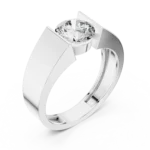
No products added!

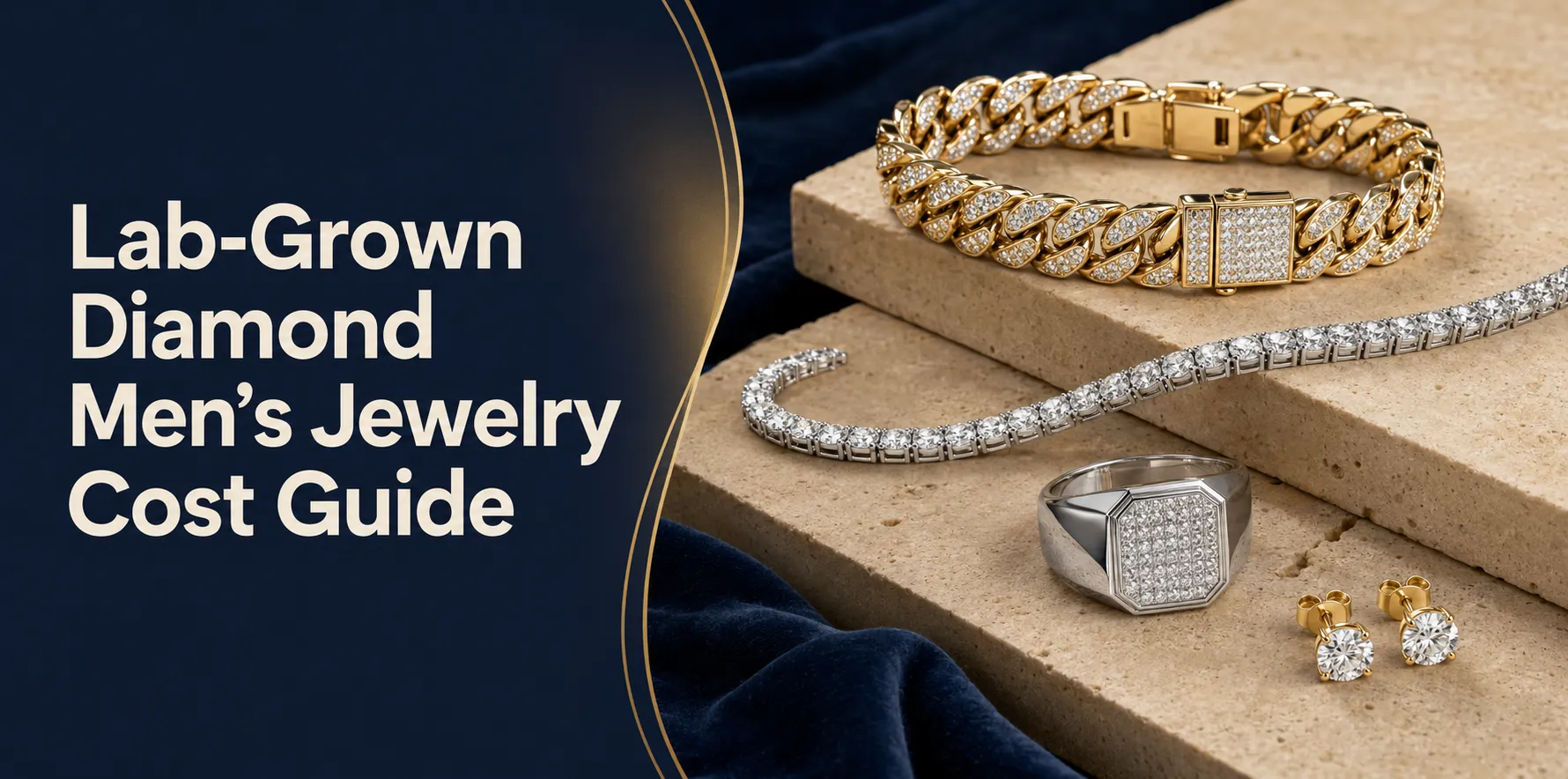
Lab-grown diamond men’s jewelry is a smart choice for buyers who want bold style, real diamond sparkle, and better cost control.
Whether you are buying a men’s diamond ring, wedding band, Cuban chain, diamond pendant, tennis bracelet, Cuban bracelet, earrings, iced-out jewelry, or a custom statement piece, lab-grown diamonds allow you to create a premium look at a more accessible price than many natural diamond options.
But the cheapest men’s jewelry is not always the best choice.
A low-priced ring, chain, pendant, or bracelet with weak metal, poor stone setting, thin construction, loose diamonds, or unclear diamond quality can become a poor purchase over time. The real goal is to get the lowest possible cost for premium-quality lab-grown diamond men’s jewelry.
This guide explains how much lab-grown diamond men’s jewelry costs, what affects pricing, real-life cost-saving examples, and how Custom Karat helps buyers create premium custom men’s jewelry without unnecessary retail markups.
Key Takeaways
- Lab-grown diamond men’s jewelry uses real diamonds created in controlled laboratory environments.
- Lab-grown diamonds have nearly the same chemical, optical, and physical properties as natural diamonds, but they have a different origin.
- Lab-grown diamond men’s jewelry usually costs less than natural diamond jewelry of similar size and quality.
- Men’s jewelry often costs more than lighter jewelry because it may use more metal, wider proportions, thicker chains, stronger clasps, and bolder designs.
- Cost depends on diamond size, total carat weight, metal type, metal weight, setting style, chain thickness, bracelet length, pendant size, and craftsmanship.
- Buyers can reduce cost by choosing lab-grown diamonds, smart diamond grades, 10K or 14K gold, practical diamond coverage, and direct custom manufacturing.
- The lowest cost should mean the best price for premium quality, not cheap jewelry.
- Custom Karat helps buyers control cost through direct manufacturer value, CAD previews, transparent pricing, smart diamond selection, and premium craftsmanship.
What Is Lab-Grown Diamond Men’s Jewelry?
Lab-grown diamond men’s jewelry is jewelry designed for men using diamonds created in a laboratory instead of mined from the earth.
These diamonds are real diamonds. They offer diamond sparkle, brilliance, hardness, and beauty, but their origin is laboratory-created. GIA explains that lab-grown diamonds have the same crystal structure as natural diamonds and nearly the same chemical, optical, and physical properties.
Lab-grown diamonds can be used in many men’s jewelry styles, including:
- Men’s diamond rings
- Men’s wedding bands
- Signet rings
- Cuban chains
- Tennis chains
- Diamond pendants
- Cross pendants
- Logo pendants
- Name pendants
- Diamond bracelets
- Cuban bracelets
- Tennis bracelets
- Diamond earrings
- Stud earrings
- Iced-out jewelry
- Hip hop jewelry
- Custom men’s jewelry
Are Lab-Grown Diamonds Real Diamonds?
Yes, lab-grown diamonds are real diamonds.
A lab-grown diamond is not cubic zirconia, moissanite, glass, white sapphire, or a simulated diamond. Simulated stones only look like diamonds, while lab-grown diamonds are actual diamonds created in controlled laboratory environments.
The FTC also advises sellers to clearly disclose laboratory-created diamonds so buyers understand they are not mined diamonds.
| Diamond Type | Meaning |
| Natural Diamond | Formed underground |
| Lab-Grown Diamond | Created in a laboratory |
| Simulated Diamond | Looks like diamond but is not diamond |
How Much Does Lab-Grown Diamond Men’s Jewelry Cost?
Lab-grown diamond men’s jewelry cost can vary widely depending on jewelry type, diamond weight, metal, design size, setting style, craftsmanship, and customization.
As a broad buyer estimate, lab-grown diamond men’s jewelry may range from $400 to $25,000+. Simple diamond studs or small pendants may start at a lower price point, while heavy Cuban chains, iced-out pendants, large men’s rings, and custom statement bracelets can cost much more.
Current online examples show how wide men’s lab-grown diamond jewelry pricing can be. Glamira lists men’s lab-grown diamond rings in 14K and 18K gold with examples around $1,286 to $4,377, depending on gold type, diamond weight, and design. Glamira’s men’s lab-grown diamond necklace and pendant listings also show a wide spread in pricing based on metal, diamond weight, and design complexity.
This is why buyers should not compare only by price. A men’s jewelry piece’s real value depends on the full product: diamonds, metal weight, setting security, clasp strength, polish, comfort, craftsmanship, and long-term durability.
Lab-Grown Diamond Men’s Jewelry Cost Chart
The price ranges below are educational estimates only. Actual pricing changes based on diamond quality, metal price, design, craftsmanship, certification, and market conditions.
| Men’s Jewelry Type | Approximate Cost Range |
| Lab-Grown Diamond Stud Earrings | $400 – $4,000+ |
| Men’s Lab-Grown Diamond Ring | $800 – $7,000+ |
| Lab-Grown Diamond Wedding Band | $700 – $4,500+ |
| Men’s Lab-Grown Diamond Pendant | $700 – $8,000+ |
| Men’s Lab-Grown Diamond Cross Pendant | $800 – $10,000+ |
| Men’s Lab-Grown Diamond Tennis Bracelet | $1,000 – $8,000+ |
| Men’s Lab-Grown Diamond Cuban Bracelet | $2,000 – $15,000+ |
| Men’s Lab-Grown Diamond Chain | $2,500 – $25,000+ |
| Iced-Out Lab-Grown Diamond Jewelry | $1,500 – $25,000+ |
| Custom Men’s Lab-Grown Diamond Jewelry | Depends on diamond, metal, size, design, and craftsmanship |
A simple men’s diamond ring usually costs less than a heavy iced-out Cuban chain because the chain uses more metal, more diamonds, more setting labor, and a stronger clasp system.
Why Lab-Grown Diamond Men’s Jewelry Costs Less Than Natural Diamond Jewelry
Lab-grown diamond men’s jewelry usually costs less because the diamonds are created through technology instead of mined from the earth.
Natural diamond pricing is affected by rarity, mining, distribution, inventory, and traditional retail structures. Lab-grown diamonds are more scalable, which gives buyers more cost flexibility.
This matters strongly in men’s jewelry because men’s designs often use:
- More metal
- Wider rings
- Heavier chains
- Larger pendants
- Bold bracelet links
- More diamond coverage
- Pavé or iced-out settings
- Stronger clasp systems
- Thicker construction
Lab-grown diamonds help buyers create bigger, bolder, and more diamond-heavy designs at a more practical cost.
What Affects Lab-Grown Diamond Men’s Jewelry Cost?
The price of men’s lab-grown diamond jewelry is not based only on diamond size. The complete jewelry piece affects the final cost.
Main pricing factors include:
- Jewelry type
- Diamond size
- Total carat weight
- Diamond count
- Diamond cut quality
- Diamond color grade
- Diamond clarity grade
- Diamond shape
- Metal type
- Metal weight
- Ring width
- Chain length
- Chain thickness
- Bracelet length
- Pendant size
- Setting style
- Clasp quality
- CAD work
- Stone setting labor
- Finishing and polishing
- Custom engraving
- Design complexity
- Direct or retail pricing model
To get the lowest cost for a premium product, buyers need to understand which details truly add value and which upgrades may be unnecessary.
Factor 1: Jewelry Type
The type of jewelry has a major impact on cost. A pair of men’s diamond stud earrings may cost less than a Cuban bracelet because earrings use less metal and fewer diamonds.
A men’s ring may cost less than a heavy pendant if the pendant uses more metal and diamond coverage.
Cost by general complexity:
| Jewelry Type | Cost Impact |
| Stud Earrings | Usually lower |
| Simple Diamond Ring | Moderate |
| Wedding Band | Moderate |
| Pendant | Moderate to high |
| Tennis Bracelet | Moderate to high |
| Cuban Bracelet | High |
| Tennis Chain | High |
| Iced-Out Chain or Pendant | High |
| Fully Custom Statement Piece | Depends on complexity |
Smart cost-saving tip:
Choose the jewelry type that matches the purpose. If you want a bold look at a lower cost, a custom pendant or ring may be more cost-effective than a full iced-out chain.
Factor 2: Total Carat Weight
Total carat weight means the combined weight of all diamonds in the jewelry piece. For men’s jewelry, total carat weight can increase quickly.
For example:
- A men’s stud earring pair may have 1 carat total.
- A men’s ring may have 0.50 to 3 carats total.
- A Cuban bracelet may have 3 to 10+ carats total.
- A tennis chain may have 10 to 30+ carats total.
- An iced-out pendant may use many small diamonds across the full surface.
Smart cost-saving tip:
Choose the right diamond coverage for the design. A piece does not always need full diamond coverage to look premium.
Factor 3: Diamond Count
Diamond count affects both material cost and labor cost.
A men’s ring with one center stone may require less setting labor than an iced-out ring with dozens of small diamonds.
A Cuban bracelet or pendant with hundreds of small stones requires more precision and time.
Smart cost-saving tip:
Use strategic diamond placement instead of covering every surface with diamonds.
For example, a pendant with a diamond border and center detail can look premium at a lower cost than a fully iced-out pendant.
Factor 4: Diamond Cut
Cut affects sparkle and brilliance.
A lower-priced diamond with weak cut may look dull, even if the carat weight is high. For men’s jewelry, cut matters for both center stones and small pavé diamonds.
A bold piece should not look flat or lifeless. Good cut quality helps create the luxury look buyers expect.
Smart cost-saving tip:
Do not reduce cut quality only to increase size. A smaller well-cut diamond can make the jewelry look more premium.
Factor 5: Diamond Color
Diamond color affects how white or warm the diamonds appear.
For white gold or platinum men’s jewelry, colorless and near-colorless diamonds usually create a cleaner look. For yellow gold, slightly warmer diamonds can still look excellent because the metal already has warmth.
For iced-out pieces, color consistency is important. If some stones look noticeably warmer than others, the jewelry may appear uneven.
Smart cost-saving tip:
Choose G-H or near-colorless diamonds for strong value instead of automatically paying for D-F color.
Factor 6: Diamond Clarity
Clarity refers to inclusions and blemishes. For men’s jewelry, clarity requirements depend on diamond size and placement.
A large center diamond in a ring or pendant should look clean. Smaller pavé diamonds in iced-out jewelry may not need flawless clarity, but they should not look cloudy, dull, or visibly included.
Smart cost-saving tip:
Choose VS1, VS2, or eye-clean diamonds instead of paying extra for flawless clarity that may not be visible during normal wear.
Factor 7: Diamond Shape
Diamond shape affects appearance, availability, and cost.
Popular diamond shapes for men’s jewelry include:
- Round
- Princess
- Emerald
- Radiant
- Asscher
- Cushion
- Baguette
- Black diamonds
- Custom-cut stones
Round diamonds are classic and widely used. Baguette and emerald diamonds create a clean, masculine look. Princess and radiant diamonds feel bold and geometric.
Smart cost-saving tip:
Use shapes that match the design purpose. Round diamonds are practical for pavé and tennis styles, while baguette or emerald diamonds can create a premium look with fewer stones.
Factor 8: Metal Type
Metal affects cost, strength, appearance, and weight.
Popular metals for men’s jewelry include:
- 10K gold
- 14K gold
- 18K gold
- Yellow gold
- White gold
- Rose gold
- Platinum
- Sterling silver
- Gold vermeil
Men’s jewelry often uses more metal than delicate jewelry, so metal choice can significantly affect final price.
Smart cost-saving tip:
Choose 14K gold for a strong balance of durability, luxury, and cost. Choose 10K gold for selected bold designs where durability and budget control are priorities. Choose 18K gold or platinum when a more premium metal is desired.
Factor 9: Metal Weight
Metal weight is one of the biggest cost factors in men’s jewelry.
A wide men’s ring, thick Cuban bracelet, heavy chain, or large pendant uses more metal than a delicate jewelry piece.
Metal weight affects:
- Final cost
- Comfort
- Durability
- Luxury feel
- Long-term strength
- Wearability
Smart cost-saving tip:
Use enough metal for durability, but avoid unnecessary thickness that increases cost without improving the design.
Custom Karat can help balance weight, strength, and budget through CAD review.
Factor 10: Ring Width and Band Thickness
For men’s rings, width and thickness strongly affect cost. A 4 mm ring will usually cost less than a 10 mm ring because it uses less metal.
A thick signet ring or bold statement ring can cost more due to metal weight and finishing work.
Smart cost-saving tip:
Choose a width that looks masculine and comfortable without becoming unnecessarily heavy. For daily wear, comfort matters as much as bold styling.
Factor 11: Chain Length and Thickness
For men’s chains, length and thickness can heavily affect cost.
A longer or thicker chain uses more metal. If the chain is diamond-set, it also uses more diamonds and more setting labor.
Common men’s chain lengths include:
| Chain Length | Common Use |
| 18 inches | Higher neckline |
| 20 inches | Popular men’s length |
| 22 inches | Slightly lower fit |
| 24 inches | Statement look |
| 26 inches+ | Bold or layered styling |
Smart cost-saving tip:
Choose the right chain length and thickness for the pendant or look. Do not pay for extra length or weight that does not improve the design.
Factor 12: Pendant Size and Bail Strength
For men’s pendants, size and bail strength matter.
A larger pendant uses more metal and may require more diamonds. The bail must be strong enough to support the pendant and fit the chain.
Cost factors include:
- Pendant height
- Pendant width
- Pendant thickness
- Bail size
- Bail design
- Diamond count
- Metal weight
- Chain compatibility
Smart cost-saving tip:
Optimize pendant size and thickness through CAD. A pendant should look bold but should not be unnecessarily heavy.
Factor 13: Bracelet Length and Link Size
Men’s bracelets usually require longer lengths and stronger construction.
A Cuban bracelet or ID bracelet may cost more because it uses larger links, more metal, and stronger clasps.
Common men’s bracelet lengths include:
| Bracelet Length | Common Fit |
| 7.5 inches | Smaller men’s wrist |
| 8 inches | Common men’s bracelet length |
| 8.5 inches | Larger wrist or looser fit |
| 9 inches+ | Larger wrist or statement fit |
Smart cost-saving tip:
Choose the correct bracelet length. Extra length means extra metal, extra diamonds, and extra cost.
Factor 14: Setting Style
The setting holds the diamonds in place.
For men’s jewelry, setting strength is very important because many pieces are worn daily and may experience more impact.
Common men’s jewelry settings include:
| Setting Style | Cost Impact |
| Channel Setting | Secure and clean, popular for men’s bands |
| Bezel Setting | Protective and modern, may use more metal |
| Pavé Setting | High sparkle but labor-intensive |
| Prong Setting | High light return, used for center stones |
| Flush Setting | Low-profile and practical |
| Iced-Out Setting | Higher cost due to many diamonds and labor |
| Custom Setting | Depends on design complexity |
Smart cost-saving tip:
Choose a setting that supports the lifestyle. Daily-wear rings and bracelets need security more than delicate detailing.
Factor 15: Clasp Quality
For men’s chains and bracelets, clasp quality is critical. A weak clasp can put the entire piece at risk.
Common clasp options include:
- Lobster clasp
- Box clasp
- Hidden clasp
- Safety lock
- Double safety clasp
- Custom lock system
Heavy Cuban chains, tennis chains, and diamond bracelets need strong clasps.
Smart cost-saving tip:
Do not reduce cost by choosing a weak clasp. A secure clasp protects the full jewelry investment.
How to Get Lab-Grown Diamond Men’s Jewelry at the Lowest Practical Cost
Getting the lowest cost does not mean buying weak jewelry. It means getting the best possible price for premium quality.
Here is how buyers can save without compromising the final product.
1. Choose Lab-Grown Instead of Natural Diamonds
This is the biggest cost-saving step.
Lab-grown diamonds usually allow buyers to get real diamond sparkle at a lower cost than comparable natural diamonds.
Example:
A buyer wants a bold men’s diamond ring with a large center stone and side diamonds.
A natural diamond version may become expensive quickly. A lab-grown diamond version can help the buyer achieve a similar real diamond look at a more accessible cost.
This is why lab-grown diamonds are ideal for men’s jewelry, especially bold designs with more diamond coverage.
2. Buy Direct Instead of Paying Retail Markups
Traditional jewelry pricing may include:
- Supplier margin
- Distributor margin
- Retail store margin
- Showroom cost
- Inventory holding cost
- Brand markup
Custom Karat helps buyers access direct manufacturer value.
This means more of the buyer’s budget can go into the jewelry itself: diamonds, metal, setting, clasp, polish, craftsmanship, and finishing.
3. Choose Smart Diamond Grades
Most buyers do not need the highest diamond grade in every category.
A smart value combination may include:
- Well-cut diamonds
- G-H color
- VS1 or VS2 clarity
- Eye-clean appearance
- Consistent diamond matching
- Practical diamond coverage
- Quality metal and clasp
This type of men’s jewelry can look premium without the higher cost of D color and flawless clarity.
4. Choose 10K or 14K Gold for Cost Control
Because men’s jewelry often uses more metal, choosing the right gold karat can create major savings.
14K gold is durable, beautiful, and cost-effective for many men’s designs. 10K gold can reduce cost further for bold rings, pendants, bracelets, and chains where metal weight is a major factor.
18K gold and platinum can be selected for buyers who want a more premium metal feel.
5. Use Strategic Diamond Coverage
A fully iced-out piece costs more because it uses more diamonds and more setting labor.
Buyers who want a premium look at a lower cost can choose:
- Diamond borders
- Center stone focus
- Partial pavé
- Channel-set diamonds
- Diamond accents
- Two-tone contrast
- Black enamel or texture with diamond highlights
Strategic design can create a strong luxury look without covering every surface in diamonds.
6. Optimize Metal Weight
Men’s jewelry should feel solid, but unnecessary weight can increase cost.
For example:
- A ring can look bold without being too thick.
- A pendant can look strong without being overly heavy.
- A Cuban bracelet can feel premium without excessive link size.
- A chain can support the pendant without being larger than needed.
CAD helps balance metal weight, comfort, and cost.
7. Use CAD Approval Before Production
CAD approval helps buyers review the piece before it is made.
This helps confirm:
- Ring width
- Pendant size
- Chain compatibility
- Bracelet length
- Link size
- Diamond placement
- Metal thickness
- Clasp structure
- Engraving placement
- Overall proportions
CAD helps reduce costly design changes later and gives buyers better control over final pricing.
Real-Life Example 1: Saving on a Men’s Lab-Grown Diamond Ring
Buyer Goal
A customer wants a bold men’s diamond ring with strong presence.
Expensive Retail Approach
The buyer may be shown:
- Fixed retail design
- Higher showroom markup
- 18K gold or platinum by default
- Premium diamond grades not needed visually
- Excessive band thickness
- Limited customization
This can increase cost quickly.
Smart Custom Karat Approach
Custom Karat can help the buyer choose:
- Lab-grown diamonds
- G-H color
- VS1 or VS2 clarity
- 10K or 14K gold
- Practical band width
- Secure channel or pavé setting
- CAD-reviewed proportions
- Direct manufacturer pricing
Buyer Benefit
The ring can still look bold, premium, and masculine.
The savings come from lab-grown diamond value, smart diamond grades, practical metal choice, controlled metal weight, and reduced retail markup.
Real-Life Example 2: Saving on a Men’s Diamond Pendant
Buyer Goal
A customer wants a custom diamond pendant with initials or a logo.
Expensive Retail Approach
A retail custom pendant may include:
- High customization fees
- Excessive metal thickness
- Full diamond coverage
- Limited chain compatibility
- Premium grades for tiny pavé stones
- Higher retail markup
Smart Custom Karat Approach
Custom Karat can reduce cost by helping choose:
- Practical pendant size
- 10K or 14K gold
- Lab-grown diamonds
- Selective diamond placement
- Strong bail design
- CAD-reviewed logo accuracy
- Clean premium finish
Buyer Benefit
The buyer gets a personalized pendant that looks premium and bold without paying for unnecessary metal or diamond coverage.
Real-Life Example 3: Saving on a Men’s Cuban Bracelet
Buyer Goal
A customer wants a diamond Cuban bracelet with a luxury look.
Expensive Retail Approach
The buyer may find a ready-made Cuban bracelet with:
- Fixed length
- Heavy metal weight
- Full pavé coverage
- High retail markup
- Limited clasp options
- No CAD control
Smart Custom Karat Approach
Custom Karat can help adjust:
- Bracelet length
- Link thickness
- Diamond coverage
- Metal type
- Clasp strength
- Setting style
- CAD-approved proportions
Buyer Benefit
The buyer gets a premium Cuban bracelet with strong wrist presence while avoiding unnecessary metal weight, excess diamond coverage, and retail markup.
Real-Life Example 4: Saving on Men’s Diamond Stud Earrings
Buyer Goal
A customer wants clean, premium diamond studs for daily wear.
Expensive Retail Approach
A retail store may push higher color or clarity grades that are not visually necessary for everyday studs.
The buyer may pay more for specifications that are difficult to notice during normal wear.
Smart Custom Karat Approach
Custom Karat can help choose:
- Lab-grown diamonds
- Excellent cut
- G-H color
- VS clarity
- 14K gold setting
- Secure backings
- Balanced diamond size
Buyer Benefit
The studs look bright, clean, and premium while avoiding unnecessary clarity and color premiums.
Lab-Grown Diamond Men’s Jewelry Cost by Style
Men’s Lab-Grown Diamond Rings Cost
Men’s diamond rings can range from simple and refined to bold and fully custom.
Main cost factors include:
- Diamond size
- Diamond count
- Ring width
- Metal weight
- Setting style
- Finish
- Engraving
- CAD work
Men’s rings often cost more than delicate rings because they use more metal and wider proportions.
Men’s Lab-Grown Diamond Wedding Bands Cost
Men’s wedding bands are usually designed for daily wear.
Main cost factors include:
- Band width
- Metal type
- Diamond count
- Setting style
- Comfort fit
- Finish
- Engraving
Channel, bezel, and flush settings are practical for men’s wedding bands because they protect the diamonds better.
Men’s Lab-Grown Diamond Pendants Cost
Men’s pendants can vary greatly in cost depending on size, metal thickness, bail strength, and diamond coverage.
Main cost factors include:
- Pendant size
- Pendant thickness
- Diamond count
- Total carat weight
- Bail design
- Metal type
- Chain compatibility
- Custom logo or symbol work
A custom logo pendant may cost more than a simple cross pendant because it requires more CAD and setting work.
Men’s Lab-Grown Diamond Chains Cost
Men’s diamond chains can be expensive because they use more metal and many diamonds.
Main cost factors include:
- Chain length
- Chain thickness
- Link style
- Diamond coverage
- Total carat weight
- Clasp quality
- Metal weight
- Stone setting labor
A tennis chain usually costs more than a plain gold chain with a pendant because diamonds are set throughout the chain.
Men’s Lab-Grown Diamond Bracelets Cost
Men’s bracelets may include tennis bracelets, Cuban bracelets, ID bracelets, and custom link designs.
Main cost factors include:
- Bracelet length
- Link size
- Metal weight
- Diamond count
- Total carat weight
- Setting style
- Clasp strength
- Safety lock
- CAD work
A Cuban bracelet usually costs more than a simple tennis bracelet if it uses heavier metal and pavé diamond coverage.
Men’s Lab-Grown Diamond Earrings Cost
Men’s diamond earrings are often one of the more accessible entry points into diamond jewelry.
Main cost factors include:
- Diamond size
- Diamond shape
- Pair matching
- Metal type
- Backing style
- Setting quality
Stud earrings usually cost less than custom hoops or iced-out earrings.
Iced-Out Men’s Jewelry Cost
Iced-out jewelry can cost more because it uses many small diamonds and requires detailed stone setting.
Main cost factors include:
- Diamond count
- Total carat weight
- Pavé setting labor
- Metal surface area
- Design complexity
- Metal thickness
- CAD work
- Polishing and finishing
Lab-grown diamonds help reduce cost, but craftsmanship is still important because every stone must be securely set.
Custom Lab-Grown Diamond Men’s Jewelry Cost
Custom men’s jewelry cost depends on the full design.
A simple custom ring may be affordable, while a large iced-out pendant, Cuban bracelet, or tennis chain may cost much more.
Main cost factors include:
- CAD design
- Diamond selection
- Total carat weight
- Metal type
- Metal weight
- Setting labor
- Clasp design
- Polishing
- Quality control
- Custom details
Lab-Grown Diamond Men’s Jewelry Cost-Saving Tips
| Cost Area | Smart Saving Tip |
| Diamond Type | Choose lab-grown diamonds instead of natural diamonds |
| Diamond Color | Choose G-H or near-colorless grades for value |
| Diamond Clarity | Choose eye-clean VS diamonds instead of flawless |
| Metal | Choose 10K or 14K gold for cost control |
| Metal Weight | Use enough metal for strength, not unnecessary bulk |
| Diamond Coverage | Use strategic placement instead of full coverage |
| Ring Width | Choose practical width for comfort and cost |
| Chain Length | Choose correct length instead of extra length |
| Pendant Size | Use CAD to balance size and weight |
| Clasp | Do not compromise on clasp security |
| Custom Design | Use CAD to optimize before production |
| Buying Channel | Choose direct manufacturer value |
What Does “Lowest Cost” Mean for Men’s Lab-Grown Diamond Jewelry?
Lowest cost should not mean:
- Fake diamonds
- Thin metal
- Weak clasps
- Loose stones
- Poor polish
- Unclear diamond quality
- Weak ring structure
- Rough finishing
- No quality control
- No customer support
For premium men’s lab-grown diamond jewelry, lowest cost should mean:
- Lowest avoidable markup
- Best diamond quality for the budget
- Smart metal choice
- Correct metal weight
- Practical diamond coverage
- Strong setting
- Secure clasp
- Comfortable fit
- Transparent pricing
- CAD-approved design
- Premium finishing
This is how buyers get men’s jewelry that looks expensive without overpaying.
Common Cost Mistakes Buyers Make
Choosing Only by Lowest Price
The cheapest men’s jewelry may use weak metal, poor clasps, loose stones, or unclear diamond quality. A low price is only valuable if the jewelry is also well made.
Overpaying for Full Diamond Coverage
Fully iced-out jewelry costs more because it uses more stones and more labor. Strategic diamond placement can create a premium look at a lower cost.
Ignoring Metal Weight Men’s jewelry uses more metal.
Unnecessary thickness can increase cost without improving comfort or appearance.
Choosing Weak Settings
Men’s jewelry often experiences more daily impact. Weak settings can cause diamonds to loosen over time.
Paying for Flawless Clarity
Most men’s jewelry does not need flawless clarity. Eye-clean diamonds often provide better value.
Comparing Only Diamond Price
Men’s jewelry is more than diamonds. Metal, setting, clasp, polish, comfort, craftsmanship, and support all affect value.
Skipping CAD Approval
CAD helps confirm size, thickness, diamond layout, clasp style, and overall structure before production. Skipping CAD can lead to design, comfort, and cost issues.
Expert Tips to Save More on Lab-Grown Diamond Men’s Jewelry
Start With a Clear Budget
Tell the jeweler your target budget first. A good custom jeweler can design around the budget instead of pushing unnecessary upgrades.
Choose Lab-Grown Diamonds
Lab-grown diamonds help buyers create larger and bolder men’s jewelry at a lower cost than many natural diamond options.
Choose Eye-Clean Diamonds
VS1, VS2, or eye-clean diamonds often offer excellent value. You do not need flawless clarity for most men’s designs.
Use Near-Colorless Grades
G-H color can look bright and premium in many men’s jewelry designs while costing less than D-F color.
Choose 10K or 14K Gold
14K gold is durable, premium-looking, and cost-effective. 10K gold can reduce cost further for larger men’s pieces where metal weight is a major factor.
Use Strategic Diamond Placement
A diamond border, center stone, channel setting, or selective pavé design can create strong visual impact without full diamond coverage.
Do Not Compromise on Clasp and Setting
Spend where it matters. Strong clasps and secure settings protect the jewelry and improve long-term value.
Use CAD for Cost Control
CAD helps refine the jewelry before production. This prevents unnecessary metal weight, incorrect sizing, oversized pendants, weak clasps, or extra diamonds that increase price.
Final Verdict
Lab-grown diamond men’s jewelry is one of the best ways to get real diamond sparkle, bold styling, and premium customization at a lower cost than many natural diamond options.
The lowest price is not always the best deal. The smarter choice is jewelry that gives the best value for comparable quality.
Buyers can save more by choosing lab-grown diamonds, eye-clean clarity, near-colorless grades, 10K or 14K gold, smart diamond placement, CAD-approved structure, and direct custom manufacturing.
Custom Karat helps buyers create premium lab-grown diamond men’s jewelry at the lowest practical cost through lab-grown diamond options, smart quality selection, CAD approval, transparent pricing, direct manufacturer value, expert craftsmanship, and secure USA shipping.
For buyers who want bold men’s diamond jewelry without unnecessary retail overpricing, Custom Karat is a strong choice.
FAQs
How much does lab-grown diamond men’s jewelry cost?
Lab-grown diamond men’s jewelry can cost from around $400 to $25,000+, depending on jewelry type, diamond weight, metal, setting, size, craftsmanship, and customization.
How much does a men’s lab-grown diamond ring cost?
A men’s lab-grown diamond ring may cost around $800 to $7,000+, depending on diamond size, metal, ring width, setting style, and design complexity.
How much does a men’s lab-grown diamond pendant cost?
A men’s lab-grown diamond pendant may cost around $700 to $8,000+, while larger custom iced-out pendants can cost more.
Are lab-grown diamond men’s jewelry pieces cheaper than natural diamond jewelry?
Yes. Lab-grown diamond men’s jewelry usually costs less than natural diamond jewelry of similar size and quality.
How can I get men’s lab-grown diamond jewelry at the lowest cost?
Choose lab-grown diamonds, eye-clean clarity, near-colorless color, 10K or 14K gold, strategic diamond placement, and direct custom manufacturing through a brand like Custom Karat.
Does lower cost mean lower quality?
Not always. Lower cost can come from avoiding retail markups and choosing smart quality grades. It should not mean weak metal, loose stones, poor clasp quality, or unclear diamond details.
What clarity gives the best value for men’s jewelry?
VS1, VS2, and eye-clean diamonds usually offer excellent value because they look clean without the high cost of flawless clarity.
What metal is best for saving money on men’s jewelry?
14K gold is often the best balance of durability, luxury, and cost. 10K gold can reduce cost further for selected bold men’s designs.
Is iced-out men’s jewelry expensive?
Iced-out jewelry can cost more because it uses many diamonds and more setting labor. Lab-grown diamonds and smart diamond placement can help reduce the final cost.
Can Custom Karat make custom men’s lab-grown diamond jewelry within my budget?
Yes. Custom Karat can help adjust diamond size, total carat weight, metal, jewelry size, diamond coverage, setting, and design details to create premium custom men’s jewelry around your budget.

About Author Priyanka Kale
Priyanka Kale is a jewelry retail industry author who shares knowledge on diamonds, lab-grown jewelry, custom designs, and jewelry buying tips. Her content helps customers understand quality, pricing, trends, and craftsmanship before making confident jewelry purchase decisions.