No products added!

Introduction
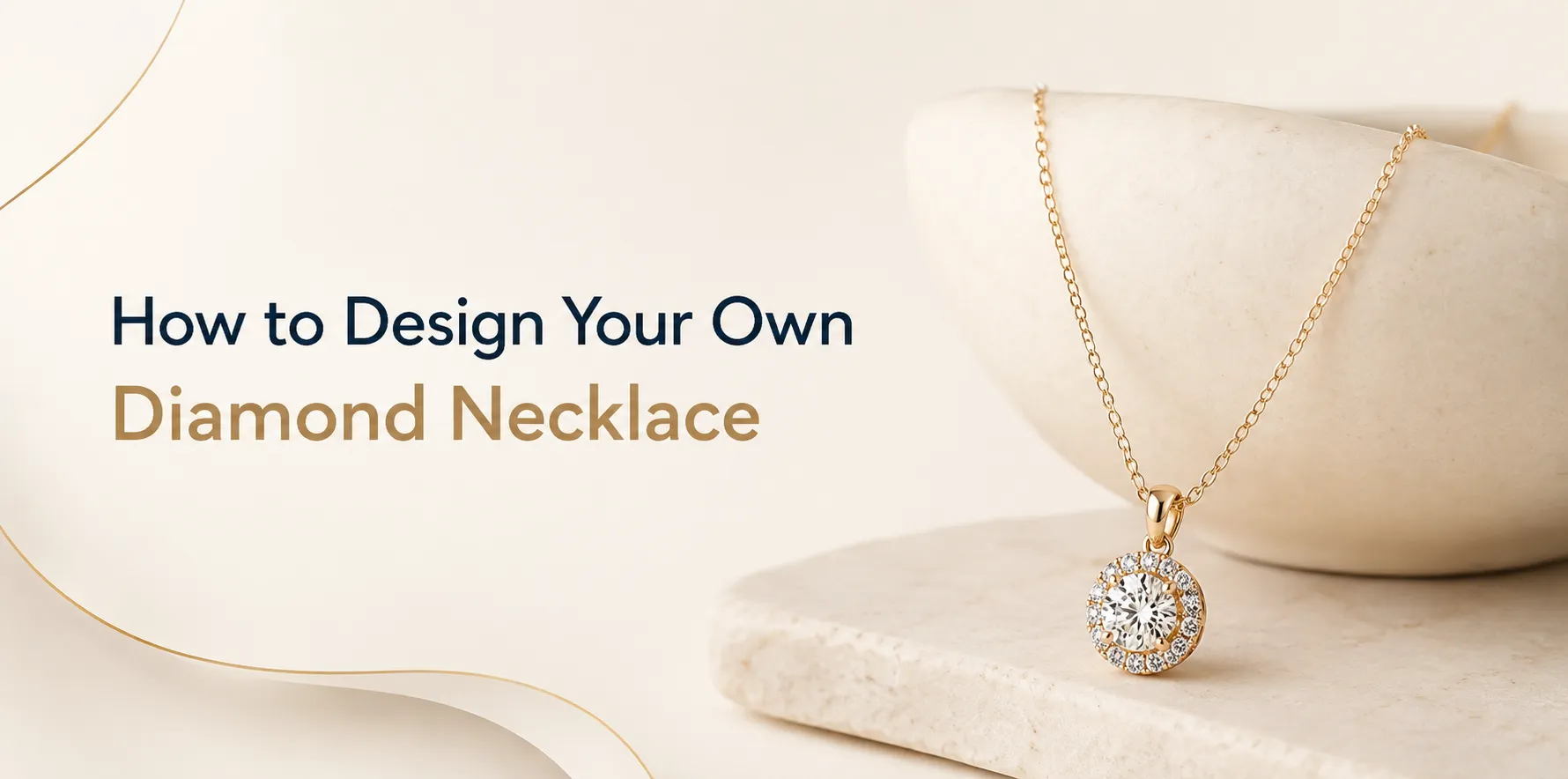
Designing your own diamond necklace gives you the freedom to create jewelry that matches your style, occasion, and personal meaning.
Instead of choosing a ready-made necklace, custom design allows you to decide the diamond type, necklace length, chain style, pendant size, metal, setting, engraving, and final finish.
A custom diamond necklace can be simple and elegant or bold and detailed. It can be designed as an everyday piece, bridal necklace, anniversary gift, tennis necklace, name necklace, solitaire pendant necklace, or luxury statement jewelry.
The best custom diamond necklaces are not only beautiful. They should sit well on the neckline, feel comfortable, hold the diamonds securely, and match the wearer’s lifestyle.
This guide explains how to design your own diamond necklace step by step.
Key Takeaways
- Designing your own diamond necklace gives you control over style, length, diamond quality, metal, and finish.
- Lab-grown diamonds and natural diamonds can both be used in custom necklaces.
- Necklace length affects how the piece sits on the neckline.
- Chain strength, clasp quality, and pendant balance are important for durability.
- CAD design approval helps review the necklace before production.
- Custom necklaces are ideal for everyday jewelry, bridal styling, gifts, and statement pieces.
- Transparent pricing helps buyers understand diamond, metal, craftsmanship, and design costs.
What Does It Mean to Design Your Own Diamond Necklace?
Designing your own diamond necklace means creating a necklace based on your preferences instead of selecting only from existing designs.
You can customize:
- Diamond type
- Diamond size
- Diamond shape
- Necklace length
- Chain style
- Pendant design
- Metal type
- Setting style
- Clasp type
- Engraving
- Finish
- Overall design
This makes the final necklace more personal and intentional.
Whether you want a simple solitaire diamond necklace, custom name necklace, tennis necklace, bridal piece, or statement design, customization helps create jewelry that feels made for you.
Step 1: Decide the Purpose of the Necklace
Start by deciding why the necklace is being made. The purpose will guide the design.
Common custom diamond necklace types include:
- Everyday diamond necklaces
- Solitaire diamond necklaces
- Tennis necklaces
- Name necklaces
- Initial necklaces
- Bridal necklaces
- Anniversary necklaces
- Layering necklaces
- Statement necklaces
- Custom pendant necklaces
For daily wear, comfort and durability should be a priority. For bridal or occasion jewelry, the design may focus more on sparkle, elegance, and visual impact.
Step 2: Set Your Budget
A clear budget helps you make better design decisions.
The cost of a custom diamond necklace depends on:
- Diamond type
- Diamond size
- Diamond quality
- Total carat weight
- Metal type
- Metal weight
- Chain style
- Design complexity
- Craftsmanship
- Finishing
Lab-grown diamonds are often chosen by buyers who want larger diamonds or better quality grades within a planned budget.
Natural diamonds are often chosen by buyers who value traditional rarity.
The goal is to create the best necklace for your budget, not simply the most expensive one.
Step 3: Choose Lab-Grown or Natural Diamonds
You can design your necklace with lab-grown diamonds or natural diamonds.
Lab-Grown Diamonds
Lab-grown diamonds are real diamonds created in controlled laboratory environments.
They are popular because they offer:
- Strong value
- Real diamond beauty
- Larger size options
- Better quality flexibility
- More design freedom
Natural Diamonds
Natural diamonds are formed underground over time and are chosen by buyers who value natural origin and rarity.
Both options can be used in custom diamond necklaces. The right choice depends on your budget, design preference, and personal meaning.
Step 4: Choose the Necklace Style
The necklace style defines the overall look of the piece.
Popular diamond necklace styles include:
Solitaire Diamond Necklace
A simple necklace with one center diamond. It is timeless, elegant, and easy to wear daily.
Tennis Necklace
A necklace with diamonds set continuously around the neckline. It creates a luxury statement look.
Name Necklace
A personalized necklace featuring a name or word, often enhanced with diamonds.
Initial Necklace
A minimal and meaningful necklace featuring one or more initials.
Pendant Necklace
A necklace with a center pendant, such as a heart, cross, symbol, logo, or custom design.
Station Necklace
A delicate necklace with diamonds placed at intervals along the chain. Choose the style based on the wearer’s personality, wardrobe, and occasion.
Step 5: Select the Diamond Shape and Size
Diamond shape affects the necklace’s personality.
Popular diamond shapes include:
- Round
- Oval
- Pear
- Cushion
- Emerald
- Princess
- Radiant
- Marquise
For solitaire necklaces, the diamond shape becomes the main focus.
For tennis necklaces or station necklaces, consistency in diamond size and quality is important.
Before choosing the size, consider:
- Necklace style
- Daily comfort
- Pendant weight
- Visibility
- Chain strength
- Budget
A balanced design is usually better than choosing the largest diamond possible.
Step 6: Focus on Diamond Cut Quality
Cut quality has a major impact on sparkle.
A larger diamond with poor cut quality may look dull, while a smaller well-cut diamond can appear brighter and more beautiful.
Cut affects:
- Brilliance
- Fire
- Sparkle
- Light reflection
- Overall beauty
For necklaces, sparkle is especially important because the jewelry sits near the face and neckline.
Step 7: Choose the Necklace Length
Necklace length affects how the piece sits on the body.
Common necklace lengths include:
- 14 inches: choker style
- 16 inches: close to the neck
- 18 inches: classic everyday length
- 20 inches: slightly lower neckline
- 22 inches and above: longer styling
The best length depends on:
- Neckline preference
- Pendant size
- Body frame
- Outfit style
- Layering plans
- Occasion
For everyday wear, 16 to 18 inches is often a popular choice. For statement styling or layering, longer lengths may work better.
Step 8: Choose the Chain Style
The chain should match the design and support the necklace properly.
Popular chain styles include:
- Cable chain
- Box chain
- Rope chain
- Curb chain
- Figaro chain
- Tennis chain
A delicate pendant needs a chain that looks balanced. A heavier pendant needs a stronger chain that can support the weight.
Before finalizing the chain, check:
- Chain strength
- Chain thickness
- Pendant compatibility
- Clasp quality
- Comfort
- Daily wear durability
Step 9: Think About Pendant Balance
If your necklace includes a pendant, balance is very important.
A pendant should sit straight and feel comfortable when worn.
Check:
- Pendant height
- Pendant width
- Pendant thickness
- Bail size
- Chain compatibility
- Stone placement
- Weight distribution
A pendant that is too heavy for the chain may tilt, pull, or feel uncomfortable. A well-balanced pendant looks cleaner and wears better.
Step 10: Select the Metal
Metal choice affects the color, strength, shine, and long-term appearance of the necklace.
Popular options include:
- 14K yellow gold
- 14K white gold
- 14K rose gold
- 18K gold
- Platinum
- Sterling silver
- Gold vermeil for select designs
Yellow gold gives a classic warm look. White gold and platinum create a clean modern finish. Rose gold feels soft and romantic.
The best metal depends on skin tone, style preference, budget, and how often the necklace will be worn.
Step 11: Add Personal Details
Personal details make the necklace more meaningful.
You can add:
- Initials
- Name
- Special date
- Engraving
- Birthstone accent
- Custom symbol
- Heart design
- Cross design
- Logo detail
- Two-tone metal
- Special finish
These details can make the necklace feel more personal without making it overly complicated.
Step 12: Review the CAD Design
CAD stands for Computer-Aided Design.
A CAD preview shows how the necklace or pendant will look before production begins.
It helps confirm:
- Pendant size
- Necklace proportions
- Stone placement
- Chain compatibility
- Bail placement
- Thickness
- Engraving placement
- Overall structure
For custom diamond necklaces, CAD approval is very important because it helps avoid confusion before manufacturing.
Step 13: Approve Production
After CAD approval, the necklace moves into production.
The process may include:
- Wax model creation
- Casting
- Stone setting
- Polishing
- Chain assembly
- Clasp fitting
- Finishing
- Quality inspection
Before delivery, the finished necklace should be checked for stone security, clasp function, chain strength, polishing, comfort, and design accuracy.
Custom Diamond Necklace vs Ready-Made Diamond Necklace
| Factor | Custom Diamond Necklace | Ready-Made Diamond Necklace |
| Design Control | High | Limited |
| Diamond Choice | Flexible | Pre-Selected |
| Necklace Length | Customizable | Fixed Options |
| Chain Style | Flexible | Limited |
| Pendant Design | Customizable | Standard |
| Personalization | Strong | Limited |
| CAD Approval | Available | Usually Not |
| Production Time | Required | Usually Faster |
Ready-made necklaces are useful when speed matters.
Custom diamond necklaces are better when buyers want control over style, size, diamond quality, length, metal, and personal details.
Common Mistakes to Avoid
Choosing Only by Price
The cheapest necklace is not always the best value. Always check diamond quality, metal quality, chain strength, and craftsmanship.
Ignoring Necklace Length
Length affects how the necklace looks when worn. Always confirm the right size before ordering.
Forgetting Chain Strength
A pendant needs a chain that can support its weight. A weak chain can affect durability and security.
Overlooking Clasp Quality
The clasp keeps the necklace secure. This is especially important for tennis necklaces and high-value pieces.
Ignoring Pendant Balance
The pendant should sit properly without twisting, tilting, or feeling too heavy.
Skipping CAD Review
For custom necklaces, CAD approval helps confirm the design before production.
Expert Tips for Designing Your Own Diamond Necklace
- Start with the purpose of the necklace.
- Choose the length based on neckline and styling preference.
- Select a chain strong enough for the pendant.
- Prioritize diamond cut quality for better sparkle.
- Make sure pendant size and chain weight feel balanced.
- Choose a metal that suits daily wear and personal style.
- Review CAD before production begins.
- Confirm clasp security and finishing details.
- Work with a jeweler who explains the design clearly.
Why Design Your Diamond Necklace With Custom Karat?
Custom Karat helps buyers create personalized diamond necklaces with more control over diamonds, metal, length, style, and budget.
With Custom Karat, buyers can create:
- Solitaire diamond necklaces
- Tennis necklaces
- Name necklaces
- Initial necklaces
- Bridal necklaces
- Custom pendant necklaces
- Everyday luxury necklaces
- Statement diamond necklaces
Custom Karat offers lab-grown and natural diamond options, premium metal choices, CAD design previews, transparent pricing, direct manufacturer value, expert craftsmanship, and secure USA shipping.
Instead of choosing only from fixed designs, buyers can create a diamond necklace that feels personal, premium, and made around their style.
Final Verdict
Designing your own diamond necklace gives you the freedom to create jewelry that feels personal, elegant, and well-planned.
The best custom necklace is not always the largest or most expensive one. It is the necklace that balances diamond quality, metal strength, chain style, length, comfort, and craftsmanship.
For buyers who want more control than ready-made jewelry can offer, designing a custom diamond necklace is a smart choice.
Custom Karat helps modern buyers design diamond necklaces with lab-grown or natural diamonds, CAD approval, premium materials, transparent pricing, and direct manufacturer craftsmanship.
FAQs
Can I design my own diamond necklace online?
Yes. You can design your own diamond necklace online by choosing the diamond, metal, chain style, necklace length, pendant design, and custom details.
Can I use lab-grown diamonds in a custom necklace?
Yes. Lab-grown diamonds are widely used in custom diamond necklaces.
Is designing a diamond necklace expensive?
The cost depends on diamond size, diamond quality, metal type, chain style, design complexity, and craftsmanship.
What is the best length for a diamond necklace?
18 inches is a popular everyday length, but the best length depends on neckline, pendant size, body frame, and styling preference.
What chain is best for a diamond pendant?
Box chains, cable chains, rope chains, and curb chains are commonly used depending on pendant weight and style.
Why is CAD approval important?
CAD approval lets buyers review the necklace or pendant design before production begins.
Can I add engraving to a custom diamond necklace?
Yes. Engraving can be added to personalize the necklace.
Is a custom diamond necklace better than a ready-made necklace?
A custom necklace is better if you want control over design, diamond quality, metal, length, chain style, and personalization.
About Author Brijesh Sharma
Brijesh Sharma is a jewelry retail industry author who shares expert insights on diamonds, lab-grown jewelry, custom designs, and smart jewelry buying. His content helps customers understand quality, pricing, trends, and craftsmanship so they can make confident jewelry purchase decisions.