No products added!

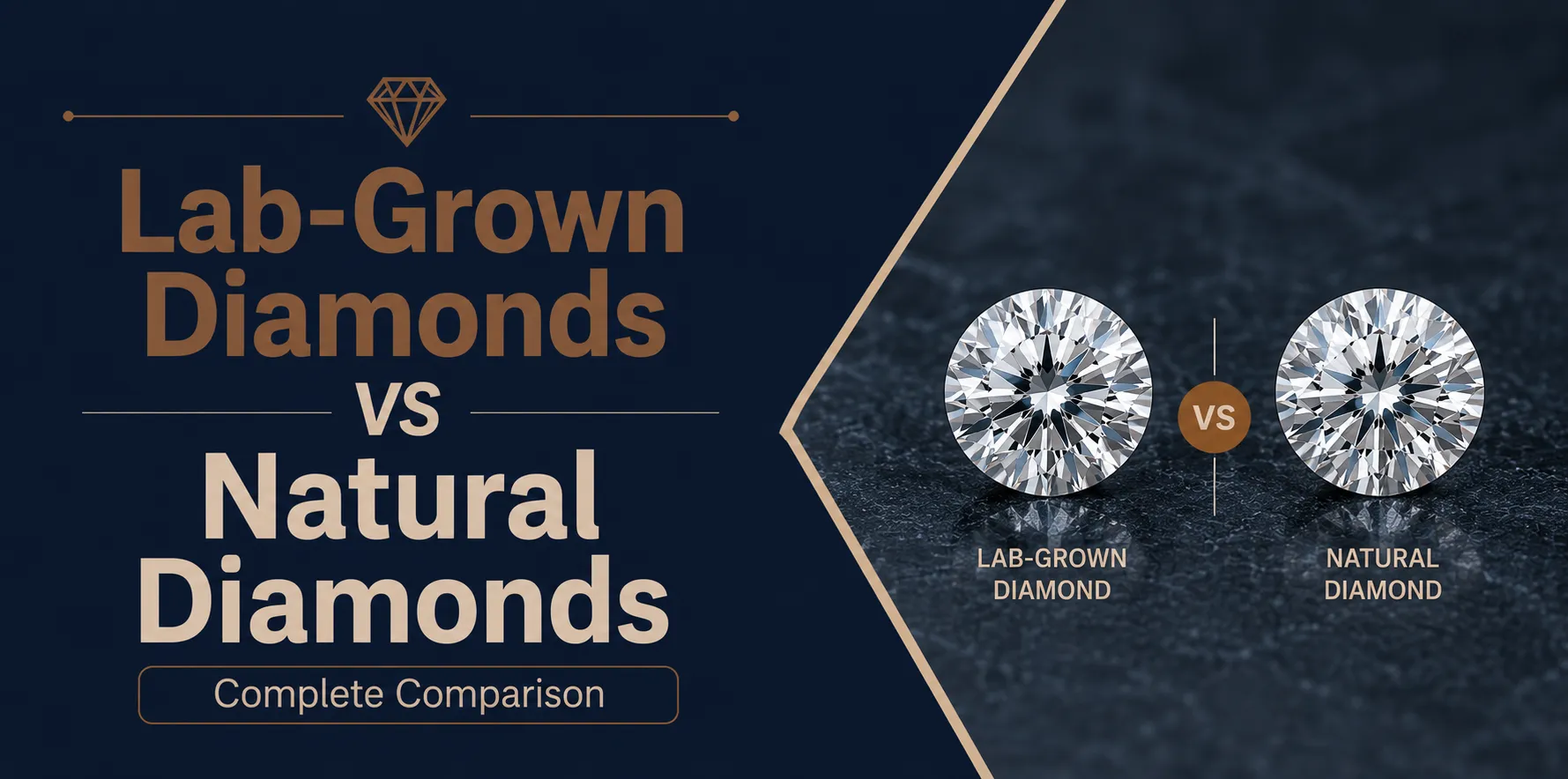
Choosing between a lab-grown diamond and a natural diamond is one of the biggest decisions modern jewelry buyers face. Both options offer exceptional beauty, brilliance, and durability, but they differ significantly in terms of origin, price, rarity, resale value, and overall purchasing considerations.
As lab-grown diamonds continue to gain popularity, many consumers are asking:
- Are lab-grown diamonds real?
- Do they look different from natural diamonds?
- Which option provides better value?
- Is a natural diamond still worth the premium price?
- Which type of diamond is right for me?
This comprehensive guide answers those questions and more, helping you make an informed buying decision.
Key Takeaways
- Lab-grown and natural diamonds are both real diamonds with the same chemical, physical, and optical properties.
- There is no visible difference between a lab-grown diamond and a natural diamond to the naked eye.
- Lab-grown diamonds typically cost 30%–70% less than comparable natural diamonds.
- Natural diamonds are rarer because they are formed over billions of years beneath the Earth’s surface.
- Both diamond types score 10 on the Mohs Hardness Scale, making them equally durable for everyday wear.
- Lab-grown diamonds offer better value for money, allowing buyers to purchase larger or higher-quality stones within the same budget.
- Natural diamonds generally have stronger resale demand and greater perceived rarity.
- Diamond quality depends on the 4Cs (Cut, Color, Clarity, and Carat Weight) rather than whether the diamond is lab-grown or natural.
- Certification from reputable grading laboratories such as IGI and GIA is essential when purchasing either type of diamond.
- The best choice depends on your priorities, whether that is affordability, size, rarity, tradition, or long-term value.
Quick Comparison: Lab-Grown vs Natural Diamonds
| Feature | Lab-Grown Diamonds | Natural Diamonds |
| Origin | Created in laboratory | Formed naturally underground |
| Composition | Pure carbon | Pure carbon |
| Appearance | Identical to natural | Identical to lab-grown |
| Hardness | 10 Mohs | 10 Mohs |
| Durability | Excellent | Excellent |
| Certification | Yes | Yes |
| Rarity | Not naturally rare | Naturally rare |
| Price | Lower | Higher |
| Resale Value | Generally lower | Typically stronger |
| Environmental Impact | Often lower | Depends on mining practices |
| Availability | High | Limited by mining supply |
What Are Lab-Grown Diamonds?
Lab-grown diamonds are real diamonds created in controlled laboratory environments using advanced technology.
Scientists replicate the same conditions that create natural diamonds beneath the Earth’s surface, allowing carbon atoms to form a genuine diamond crystal.
Lab-grown diamonds are:
- Real diamonds
- Chemically identical to natural diamonds
- Physically identical to natural diamonds
- Optically identical to natural diamonds
Most consumers cannot distinguish a lab-grown diamond from a mined diamond without specialized testing equipment.
What Are Natural Diamonds?
Natural diamonds are diamonds that formed within the Earth over billions of years.
Extreme heat and pressure deep beneath the planet’s surface caused carbon atoms to crystallize, creating natural diamonds that were eventually brought closer to the surface through volcanic activity.
Their rarity, age, and natural origin contribute significantly to their value and desirability.
How Does Each Type Work?
How Natural Diamonds Are Formed
Natural diamonds develop:
- Approximately 90–150 miles beneath the Earth
- Under extreme pressure
- At temperatures exceeding 2,000°F
- Over one to three billion years
After formation, geological processes move diamonds closer to the surface where they can be mined.
How Lab-Grown Diamonds Are Created
Manufacturers use two primary methods:
HPHT (High Pressure High Temperature)
This method recreates the intense heat and pressure found deep underground.
CVD (Chemical Vapor Deposition)
This method uses carbon-rich gases that gradually deposit carbon atoms onto a diamond seed crystal.
The result is a real diamond that shares the same atomic structure as a mined diamond.
Do Lab-Grown and Natural Diamonds Look Different?
No.
This is perhaps the biggest misconception among buyers.
To the naked eye:
- They sparkle the same
- They reflect light the same
- They possess the same brilliance
- They have the same fire and scintillation
Even experienced jewelers often require advanced equipment to identify a diamond’s origin.
Appearance Winner
Tie
Most buyers will never see a visual difference.
Diamond Quality Comparison
Whether lab-grown or natural, diamond quality is graded using the 4Cs:
Cut
Determines brilliance and sparkle.
Color
Measures how colorless a diamond appears.
Clarity
Evaluates internal inclusions and blemishes.
Carat Weight
Measures size and weight.
A high-quality lab-grown diamond can easily outperform a lower-quality natural diamond and vice versa.
Quality Winner
Tie
Quality depends on the individual diamond, not its origin.
Durability Comparison
Both diamonds rank:
10 on the Mohs Hardness Scale
This means both options offer:
- Exceptional scratch resistance
- Long-term durability
- Everyday wearability
- Lifetime performance
Durability Winner
Tie
There is no meaningful difference.
Cost Considerations
Price is where the largest difference exists.
Lab-Grown Diamond Pricing
Lab-grown diamonds typically cost:
- 30% to 70% less
- Larger sizes for the same budget
- Better specifications for the same spending level
Example:
A 2-carat lab-grown diamond may cost similar to a 1-carat natural diamond of comparable quality.
Natural Diamond Pricing
Natural diamonds command premium pricing due to:
- Geological rarity
- Mining costs
- Limited supply
- Market demand
- Historical value perception
Cost Winner
Lab-Grown Diamonds
For pure value and purchasing power, lab-grown diamonds provide a clear advantage.
Is It Worth It?
Are Lab-Grown Diamonds Worth It?
For many buyers, yes.
They provide:
- Real diamond beauty
- Significant savings
- Larger stone options
- Excellent quality
Many modern consumers prioritize appearance and value over geological origin.
Are Natural Diamonds Worth It?
For many buyers, yes.
Natural diamonds offer:
- Rarity
- Historical significance
- Emotional appeal
- Stronger long-term market perception
Some buyers place great importance on owning a diamond created by nature over billions of years.
Resale and Long-Term Value
This category is often misunderstood.
Lab-Grown Diamond Resale
Lab-grown diamonds generally:
- Have lower resale demand
- Experience greater price fluctuations
- Are purchased primarily for enjoyment rather than investment
Natural Diamond Resale
Natural diamonds generally:
- Maintain stronger resale demand
- Benefit from limited supply
- Hold greater collector appeal
However, even natural diamonds should not be viewed primarily as investments.
Resale Winner
Natural Diamonds
Natural diamonds typically perform better in secondary markets.
Sustainability Considerations
Environmental impact varies depending on production and mining practices.
Lab-Grown Diamonds
Potential advantages:
- Reduced land disruption
- No traditional mining
- Lower ecological footprint in many cases
Potential concerns:
- Energy-intensive manufacturing
- Carbon footprint varies by producer
Natural Diamonds
Potential advantages:
- Some mines operate under strict environmental standards
- Mining supports employment in many regions
Potential concerns:
- Land disturbance
- Resource extraction impacts
Sustainability Winner
Depends on the producer
Responsible sourcing matters more than the category alone.
Pros and Cons of Lab-Grown Diamonds
Pros
Better Value
Buyers often receive larger diamonds for the same budget.
Real Diamond Properties
They are genuine diamonds.
Excellent Quality
Available in outstanding cut, color, and clarity grades.
Increasing Availability
Wide selection across jewelry categories.
Cons
Lower Resale Value
Secondary market demand remains limited.
Ongoing Price Changes
Production technology continues evolving.
Less Perceived Rarity
Some buyers prefer naturally formed diamonds.
Pros and Cons of Natural Diamonds
Pros
Natural Origin
Formed over billions of years.
Greater Rarity
Limited natural supply enhances desirability.
Better Resale Potential
Generally stronger secondary market performance.
Traditional Prestige
Long-established luxury status.
Cons
Higher Cost
Comparable diamonds can cost significantly more.
Smaller Size for Budget
Buyers may need to compromise on carat weight.
Mining Impact
Environmental considerations vary by source.
Who Should Buy Lab-Grown Diamonds?
Lab-grown diamonds are ideal for:
Value-Focused Buyers
Those wanting maximum size and quality for their budget.
Engagement Ring Shoppers
Couples prioritizing appearance over origin.
First-Time Diamond Buyers
Consumers seeking affordability without sacrificing beauty.
Custom Jewelry Customers
Larger center stones become more accessible.
Who Should Buy Natural Diamonds?
Natural diamonds are ideal for:
Traditional Buyers
Those who value natural rarity.
Luxury Collectors
Individuals attracted to rare gemstones.
Heritage-Oriented Shoppers
People who appreciate geological history and symbolism.
Resale-Conscious Buyers
Those concerned about long-term market demand.
Common Mistakes Buyers Make
Mistake #1: Assuming Lab-Grown Diamonds Are Fake
Lab-grown diamonds are real diamonds.
Mistake #2: Focusing Only on Carat Size
Cut quality often affects beauty more than size.
Mistake #3: Ignoring Certification
Always purchase certified diamonds.
Trusted grading organizations include:
- IGI
- GIA
Mistake #4: Treating Diamonds as Investments
Most diamonds should be purchased for personal enjoyment rather than financial return.
Mistake #5: Choosing Origin Over Quality
A well-cut diamond often appears more impressive than a larger stone with poor proportions.
Expert Recommendations
Industry experts generally recommend focusing on the following factors regardless of diamond type:
Prioritize Cut Quality
Cut has the greatest impact on brilliance and sparkle.
Verify Certification
Always request an independent grading report.
Compare Multiple Stones
Review several options before making a final decision.
Understand Your Priorities
Ask yourself:
- Do I value size and savings?
- Do I value rarity and natural origin?
- Is resale important?
- What matters most emotionally?
Your answers often determine the best choice.
Lab-Grown vs Natural Diamonds: Side-by-Side Verdict
| Category | Winner |
| Appearance | Tie |
| Durability | Tie |
| Quality Potential | Tie |
| Affordability | Lab-Grown |
| Value for Money | Lab-Grown |
| Rarity | Natural |
| Prestige | Natural |
| Resale Potential | Natural |
| Budget Flexibility | Lab-Grown |
Frequently Asked Questions
Are lab-grown diamonds real diamonds?
Yes. They are chemically, physically, and optically identical to natural diamonds.
Which sparkles more?
Neither. Sparkle depends on cut quality, not origin.
Can a jeweler tell the difference?
Usually not through visual inspection alone. Specialized testing equipment is often required.
Which is better for engagement rings?
Both are excellent choices. The best option depends on budget, priorities, and personal preference.
Do lab-grown diamonds last forever?
Yes. They offer the same durability as natural diamonds.
Final Verdict
The debate between lab-grown diamonds and natural diamonds ultimately comes down to personal priorities rather than quality differences.
If your goal is maximizing size, quality, and value while staying within budget, lab-grown diamonds are often the smarter choice. If you value rarity, natural origin, and traditional prestige, a natural diamond may be worth the premium.
Both options can be stunning, durable, and meaningful when selected carefully. The key is choosing a certified diamond that aligns with your budget, lifestyle, and long-term expectations.
For buyers seeking expertly crafted diamond jewelry, engagement rings, and custom designs, Custom Karat offers both lab-grown and natural diamond options, helping you find the perfect balance of beauty, quality, and value for every occasion.

About Author Brijesh Sharma
Brijesh Sharma is a jewelry retail industry author who shares expert insights on diamonds, lab-grown jewelry, custom designs, and smart jewelry buying. His content helps customers understand quality, pricing, trends, and craftsmanship so they can make confident jewelry purchase decisions.