No products added!


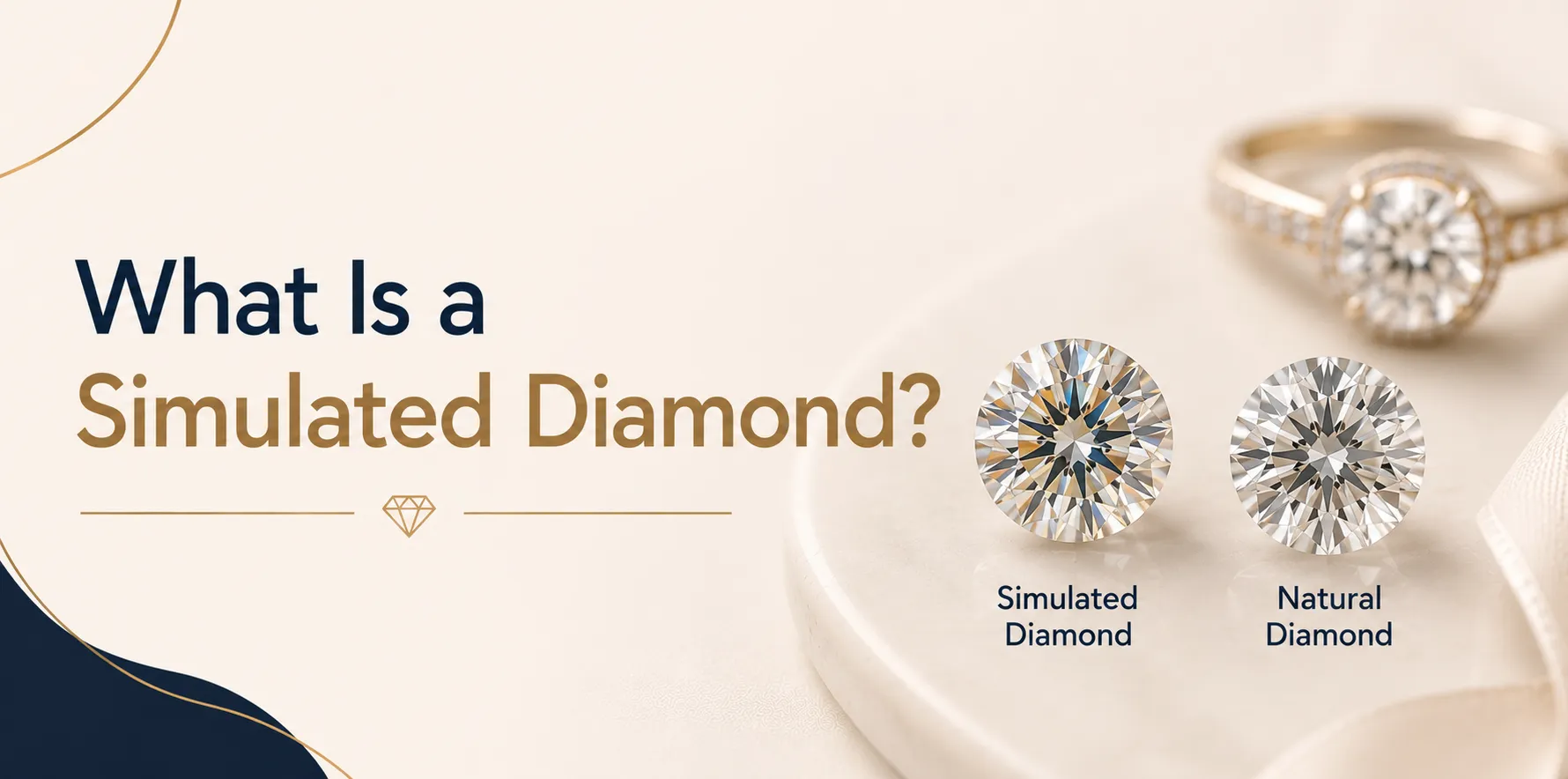
A simulated diamond is a stone that looks like a diamond but is not a real diamond.
Many buyers confuse simulated diamonds with lab-grown diamonds, but they are completely different. A lab-grown diamond is a real diamond created in a controlled laboratory environment. A simulated diamond only imitates the appearance of a diamond and does not have the same chemical composition, hardness, durability, or long-term value.
Common simulated diamonds include cubic zirconia, moissanite, white sapphire, glass, and crystal. These stones may be used in fashion jewelry or budget-friendly designs, but they should always be clearly described as diamond alternatives, not real diamonds.
This guide explains what simulated diamonds are, the different types, how they compare with lab-grown diamonds, and what buyers should check before purchasing.
Key Takeaways
- A simulated diamond looks like a diamond but is not a real diamond.
- Simulated diamonds do not have the same chemical or physical properties as natural or lab-grown diamonds.
- Common simulants include cubic zirconia, moissanite, white sapphire, glass, and crystal.
- Lab-grown diamonds are real diamonds, while simulated diamonds are diamond look-alikes.
- Simulated diamonds are usually much cheaper than natural or lab-grown diamonds.
- Moissanite is durable and brilliant but still not a diamond.
- Certification and seller disclosure are important when buying diamond jewelry online.
- For fine jewelry, engagement rings, and custom pieces, lab-grown or natural diamonds usually offer stronger long-term value.
What Is a Simulated Diamond?
A simulated diamond is a gemstone or material designed to look like a diamond.
It may have a similar white appearance, sparkle, or shape, but it is not made of diamond crystal. This means it does not have the same hardness, brilliance, structure, or value as a real diamond.
Simulated diamonds are also called:
- Diamond simulants
- Diamond alternatives
- Imitation diamonds
- Diamond look-alikes
- Faux diamonds
A simulated diamond can be attractive and affordable, but buyers should understand exactly what they are purchasing.
Are Simulated Diamonds Real Diamonds?
No, simulated diamonds are not real diamonds.
They may look similar to diamonds, but they are made from different materials. For example, cubic zirconia is made from zirconium dioxide, while moissanite is made from silicon carbide.
A real diamond can be either:
- Natural diamond
- Lab-grown diamond
Both natural and lab-grown diamonds are real diamonds. Simulated diamonds are not.
This distinction is very important when comparing price, durability, certification, and long-term value.
Simulated Diamonds vs Lab-Grown Diamonds
This is one of the most common buyer confusions.
A lab-grown diamond is not the same as a simulated diamond.
| Factor | Simulated Diamond | Lab-Grown Diamond |
| Is It a Real Diamond? | No | Yes |
| Composition | Different material | Carbon diamond crystal |
| Appearance | Looks like diamond | Looks like diamond because it is diamond |
| Hardness | Varies by material | Same hardness as diamond |
| Value | Usually lower | Higher than simulants |
| Certification | Usually not graded like diamonds | Can be graded by labs such as IGI or GIA |
| Best For | Fashion jewelry or budget alternatives | Fine jewelry, engagement rings, custom jewelry |
| Disclosure Needed | Should be clearly disclosed as simulated | Should be disclosed as lab-grown |
The main difference is simple:
- A simulated diamond looks like a diamond.
- A lab-grown diamond is a diamond.
Simulated Diamonds vs Natural Diamonds
Natural diamonds form underground over long periods of time.
Simulated diamonds are made from different materials and are used to imitate the diamond look.
| Factor | Simulated Diamond | Natural Diamond |
| Origin | Man-made or natural alternative material | Formed underground |
| Composition | Not diamond | Carbon diamond crystal |
| Rarity | Usually not rare | Naturally rare |
| Price | Usually much lower | Usually higher |
| Durability | Depends on material | Very durable |
| Long-Term Value | Lower | Usually stronger |
| Use | Fashion or budget jewelry | Fine jewelry and luxury pieces |
Natural diamonds are usually chosen by buyers who value traditional rarity, natural origin, and long-term symbolism.
Simulated diamonds are usually chosen when appearance and affordability matter more than diamond authenticity.
Common Types of Simulated Diamonds
There are several types of diamond simulants. Each one has a different appearance, price, durability, and level of sparkle.
1. Cubic Zirconia
Cubic zirconia, also called CZ, is one of the most common simulated diamonds. It is affordable, widely available, and often used in fashion jewelry.
What It Looks Like
Cubic zirconia can look bright and sparkly when new. However, it may appear more glassy than a diamond and can lose shine more quickly with regular wear.
Durability
CZ is not as hard as diamond. It can scratch, dull, or show wear over time, especially in rings and daily-wear jewelry.
Best For
Cubic zirconia is best for budget-friendly fashion jewelry, temporary jewelry, or styles where long-term value is not the priority.
2. Moissanite
Moissanite is a popular diamond alternative known for strong sparkle and fire. It is more durable than cubic zirconia and often used in engagement-style jewelry.
What It Looks Like
Moissanite can look very brilliant and may show more rainbow-like fire than a diamond. Some buyers love this extra sparkle, while others feel it looks different from a diamond.
Durability
Moissanite is durable and suitable for regular wear. However, it is still not a diamond and should not be sold or described as one.
Best For
Moissanite is best for buyers who want a durable, sparkly diamond alternative at a lower price than diamond.
3. White Sapphire
White sapphire is a natural gemstone that can be used as a diamond alternative. It has a clean white appearance but does not sparkle like a diamond.
What It Looks Like
White sapphire has a softer, more subtle shine. It may look less brilliant than diamond or moissanite, especially under certain lighting.
Durability
White sapphire is fairly durable, but it can show scratches and cloudiness with wear. It may need more cleaning to maintain its appearance.
Best For
White sapphire is best for buyers who want a natural gemstone alternative, not a diamond imitation with strong brilliance.
4. Glass
Glass is one of the lowest-cost diamond simulants. It may be used in costume jewelry, but it does not offer diamond-like durability or value.
What It Looks Like
Glass can look shiny at first but usually lacks diamond-like brilliance. It can also scratch, chip, or dull quickly.
Durability
Glass is much softer and less durable than diamond. It is not suitable for fine jewelry or long-term daily wear.
Best For
Glass is best for low-cost costume jewelry, not engagement rings or meaningful fine jewelry.
5. Crystal
Crystal stones are sometimes used as diamond look-alikes in fashion jewelry. They are decorative and affordable but not suitable as real diamond substitutes.
What It Looks Like
Crystal can create sparkle under light, especially in decorative jewelry. However, it does not match the brilliance, hardness, or value of diamonds.
Durability
Crystal is not as durable as diamond, moissanite, or sapphire. It can scratch, chip, or lose shine with regular use.
Best For
Crystal is best for fashion accessories, not fine diamond jewelry.
6. Synthetic White Spinel
Synthetic white spinel is another diamond simulant sometimes used in jewelry. It is less common today but may still appear in older or budget-focused pieces.
What It Looks Like
It can appear clean and white but usually does not have the same sparkle or light performance as diamond.
Durability
It is more durable than glass but not as hard as diamond. It may show signs of wear over time.
Best For
Synthetic spinel is best for low-cost jewelry or vintage-style costume pieces.
Why Do People Buy Simulated Diamonds?
People buy simulated diamonds for different reasons.
The main reasons include:
Lower Price
Simulated diamonds are usually much cheaper than natural or lab-grown diamonds. This makes them attractive for buyers who want the look of diamond jewelry without the diamond price.
Fashion Use
Simulants are often used in fashion jewelry. They allow buyers to try trendy styles without making a major investment.
Temporary Jewelry
Some buyers use simulated diamonds for travel jewelry, temporary engagement rings, or event pieces. This helps reduce the risk of losing expensive jewelry.
Larger Look for Less
Simulants allow buyers to choose larger stones at a lower cost. However, the trade-off is lower authenticity, durability, and long-term value.
Do Simulated Diamonds Look Like Real Diamonds?
Some simulated diamonds can look similar to diamonds at first glance. However, trained jewelers and gemologists can usually tell the difference using professional tools.
Differences may appear in:
- Sparkle pattern
- Rainbow fire
- Weight
- Hardness
- Surface wear
- Light reflection
- Heat conductivity
- Magnified appearance
Moissanite can be difficult for untrained buyers to identify because it is very brilliant and durable. Cubic zirconia may look bright when new but often looks more glassy and can dull over time.
Are Simulated Diamonds Certified?
Simulated diamonds are generally not certified in the same way as real diamonds.
Natural and lab-grown diamonds may come with grading reports that describe cut, color, clarity, carat, measurements, and origin.
Simulated stones may come with product descriptions or gem identification reports, but they are not graded as real diamonds.
If a seller claims a simulated diamond is “certified diamond,” buyers should be careful and verify exactly what the certificate means.
Simulated Diamonds and Diamond Testing
Some simulated diamonds can be identified with simple testing, but at-home tests are not always reliable.
For example:
- Cubic zirconia may fail many diamond tester checks.
- Moissanite may pass some basic thermal diamond testers.
- Glass and crystal may be easier to detect.
- Professional testers can better separate diamonds from simulants.
The safest way to confirm a stone is to ask a trained jeweler or gemological laboratory.
Simulated Diamonds vs Lab-Grown Diamonds: Which Should You Buy?
The right choice depends on your purpose and budget.
Choose Simulated Diamonds If:
- You want a low-cost fashion piece.
- You are buying temporary jewelry.
- You do not need real diamond value.
- You want a large look at a very low price.
- You understand the stone is not a diamond.
Choose Lab-Grown Diamonds If:
- You want a real diamond.
- You want fine jewelry quality.
- You are buying an engagement ring.
- You want better long-term durability.
- You want certification options.
- You want better value than natural diamonds.
- You are designing custom jewelry.
For most fine jewelry buyers, lab-grown diamonds offer a stronger balance of beauty, authenticity, durability, and value.
Simulated Diamonds for Engagement Rings
Simulated diamonds can be used in engagement-style rings, but buyers should understand the trade-offs.
A simulated diamond engagement ring may cost less, but it may not offer the same durability, authenticity, or long-term value as a natural or lab-grown diamond.
Cubic zirconia can scratch or dull over time. White sapphire may lose brightness. Moissanite is more durable, but it is still not a diamond.
For buyers who want a real diamond engagement ring with better value, lab-grown diamonds are usually a stronger choice.
Simulated Diamonds in Custom Jewelry
Simulated diamonds can be used in fashion custom jewelry, but they may not be ideal for premium fine jewelry.
For custom pieces such as rings, pendants, bracelets, earrings, men’s jewelry, and bridal jewelry, the choice of stone affects the final value and durability.
If the goal is affordable fashion, simulants can work. If the goal is real diamond jewelry, lab-grown or natural diamonds are better options.
How to Avoid Confusion When Buying Online
Online diamond shopping can be confusing because sellers may use terms that sound similar.
Buyers should understand the difference between:
- Simulated diamond
- Lab-grown diamond
- Laboratory-created diamond
- Synthetic diamond
- Natural diamond
- Moissanite
- Cubic zirconia
- Diamond alternative
Before buying, check the exact wording.
A trustworthy seller should clearly explain whether the stone is natural, lab-grown, or simulated.
Buyer Checklist Before Buying Simulated or Lab-Grown Diamonds
Before purchasing, ask:
- Is the stone a real diamond or a simulant?
- Is it natural, lab-grown, or simulated?
- What material is the stone made from?
- Is there a grading report?
- Can the report number be verified?
- Is the stone suitable for daily wear?
- What metal is used in the jewelry?
- Is the seller clearly disclosing the stone type?
- Is the price realistic?
- Is there a return or exchange policy?
- Is the jewelry made for fashion use or fine jewelry use?
This checklist helps buyers avoid misleading claims and make a more confident decision.
Common Mistakes Buyers Make
Thinking Simulated Means Lab-Grown
This is the biggest mistake. A lab-grown diamond is a real diamond. A simulated diamond only looks like one.
Buying Without Reading the Stone Description
Some listings use words like “diamond-like,” “diamond alternative,” or “simulated diamond.” Buyers should read carefully before assuming the stone is real diamond.
Choosing Only by Price
A lower price may mean the stone is not a diamond. Always check what material is being sold.
Assuming Moissanite Is Diamond
Moissanite is durable and beautiful, but it is not diamond. It should be described as moissanite, not as diamond.
Ignoring Certification
For real diamond purchases, certification helps verify quality and origin. This is especially important for engagement rings and high-value jewelry.
Expert Tips for Buyers
Check the Exact Stone Type
Do not rely only on photos.
Confirm whether the stone is natural diamond, lab-grown diamond, moissanite, cubic zirconia, white sapphire, or another material.
Ask for Certification When Buying Diamonds
If the seller claims the stone is a real diamond, ask for a grading report. Certification is important for lab-grown and natural diamonds.
Understand the Purpose
For fashion jewelry, simulated diamonds may be acceptable. For engagement rings, bridal jewelry, or meaningful custom pieces, real diamonds are usually a better choice.
Compare Long-Term Value
A simulated diamond may cost less upfront, but it may not offer the same durability or long-term satisfaction. Lab-grown diamonds can offer better value while still being real diamonds.
Buy From a Transparent Seller
A trustworthy seller should clearly explain the stone type, metal, certification, pricing, and return policy. Transparency is especially important when buying online.
Why Choose Custom Karat for Diamond Jewelry?
Custom Karat helps buyers create diamond jewelry with transparency, quality guidance, and design control.
Instead of confusing buyers with unclear stone descriptions, Custom Karat focuses on helping customers choose the right diamond or gemstone option for their style, budget, and purpose.
Custom Karat offers:
Lab-Grown and Natural Diamond Options
Buyers can choose lab-grown diamonds for better value or natural diamonds for traditional rarity.
This gives more flexibility when designing engagement rings, pendants, necklaces, bracelets, earrings, men’s jewelry, and bridal pieces.
Clear Diamond Guidance
Custom Karat helps buyers understand the difference between lab-grown diamonds, natural diamonds, moissanite, gemstones, and simulated options. This makes the buying process more transparent.
Custom Jewelry Design
Buyers can create rings, pendants, necklaces, bracelets, earrings, men’s jewelry, hip hop jewelry, bridal jewelry, and personalized pieces. Each design can be created around personal style, size, budget, and occasion.
CAD Design Previews
CAD previews allow buyers to review the jewelry design before production. This helps confirm stone placement, proportions, setting style, and final appearance.
Premium Metal Choices
Buyers can choose from gold, white gold, rose gold, platinum, sterling silver, gold vermeil, or suitable custom finishes. The right metal improves durability, comfort, and long-term wear.
Transparent Pricing
Pricing depends on stone choice, diamond quality, metal, design complexity, craftsmanship, and finishing. This helps buyers understand what they are paying for.
Expert Craftsmanship
Each piece is made with attention to stone setting, polish, comfort, durability, and long-term wearability. A beautiful stone still needs strong craftsmanship to become fine jewelry.
Secure USA Shipping
Finished jewelry is securely packed and shipped to customers in the USA. This gives buyers confidence when ordering custom jewelry online.
Final Verdict
A simulated diamond is not a real diamond. It is a diamond look-alike made from a different material.
Simulated diamonds can be useful for fashion jewelry, temporary pieces, and budget-friendly styles. However, they do not offer the same authenticity, durability, certification, or long-term value as lab-grown or natural diamonds.
Lab-grown diamonds are real diamonds and are usually a stronger option for buyers who want fine jewelry quality, engagement rings, custom jewelry, and better value than natural diamonds.
Before buying, always check whether the stone is simulated, lab-grown, or natural. A transparent seller should clearly disclose the stone type and provide proper details.
Custom Karat helps buyers create custom diamond jewelry with lab-grown or natural diamond options, clear guidance, CAD approval, premium materials, transparent pricing, and expert craftsmanship.
FAQs
What is a simulated diamond?
A simulated diamond is a stone that looks like a diamond but is not a real diamond.
Is a simulated diamond the same as a lab-grown diamond?
No. A lab-grown diamond is a real diamond. A simulated diamond only imitates the look of a diamond.
Are simulated diamonds fake diamonds?
They are diamond look-alikes, not real diamonds. They may be used honestly when clearly described as simulated stones.
What are common types of simulated diamonds?
Common types include cubic zirconia, moissanite, white sapphire, glass, crystal, and synthetic white spinel.
Is moissanite a simulated diamond?
Yes. Moissanite is often used as a diamond alternative, but it is not a diamond.
Are lab-grown diamonds real diamonds?
Yes. Lab-grown diamonds are real diamonds created in controlled laboratory environments.
Are simulated diamonds good for engagement rings?
They can be used for budget or temporary engagement-style rings, but lab-grown or natural diamonds are usually better for fine engagement rings.
Do simulated diamonds last long?
Durability depends on the material. Moissanite is durable, while cubic zirconia, glass, and crystal may scratch or dull faster.
Can jewelers tell simulated diamonds from real diamonds?
Yes. Trained jewelers and gemological laboratories can use testing tools to separate diamonds from simulants.
Should I buy simulated or lab-grown diamonds?
Choose simulated diamonds for low-cost fashion jewelry. Choose lab-grown diamonds if you want real diamond jewelry with better value.

About Author Brijesh Sharma
Brijesh Sharma is a jewelry retail industry author who shares expert insights on diamonds, lab-grown jewelry, custom designs, and smart jewelry buying. His content helps customers understand quality, pricing, trends, and craftsmanship so they can make confident jewelry purchase decisions.