No products added!

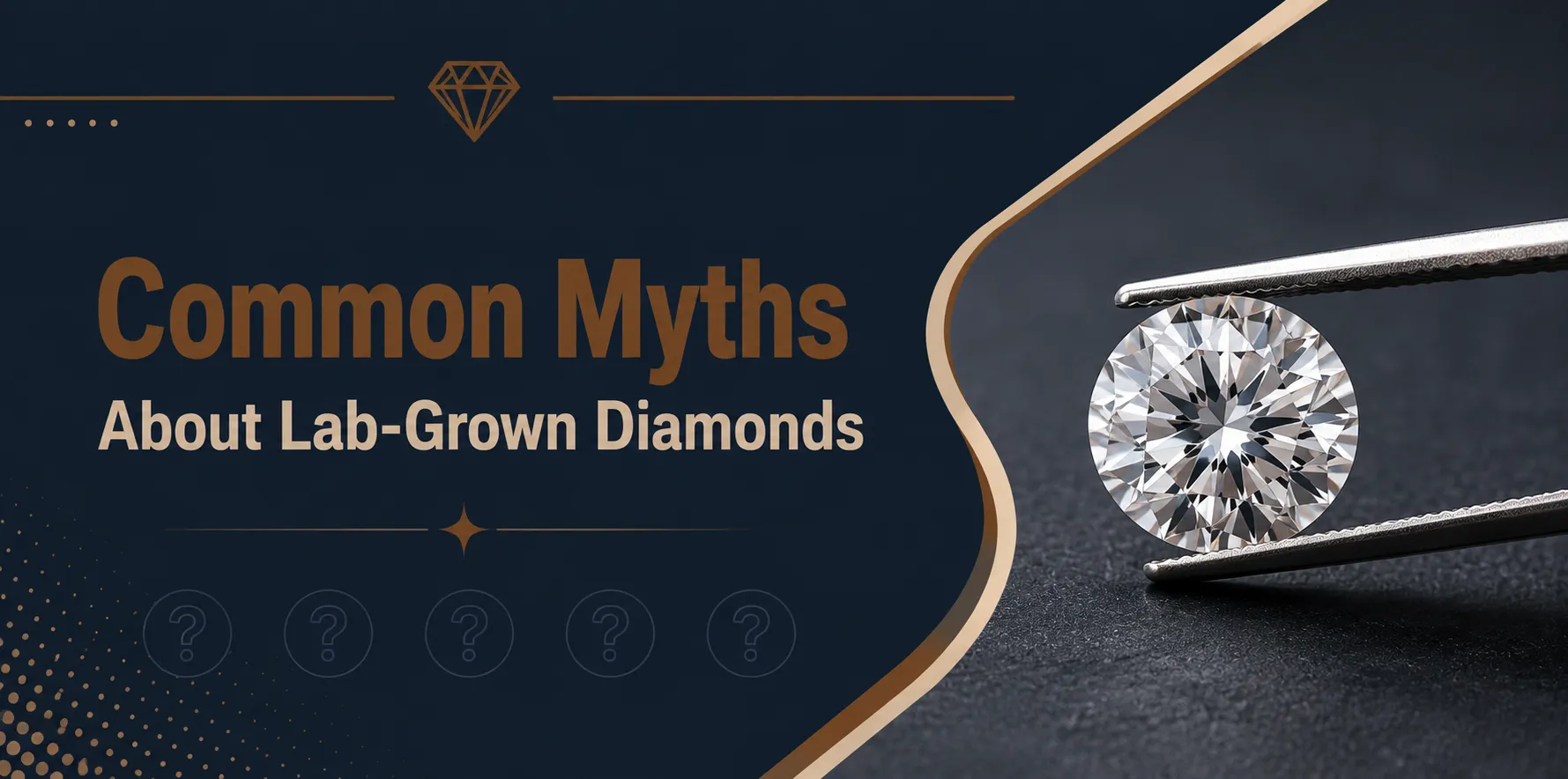
Lab-grown diamonds have become one of the fastest-growing segments of the jewelry industry. As their popularity continues to rise, so do the misconceptions surrounding them.
Many consumers still believe that lab-grown diamonds are fake, less durable, or significantly different from natural diamonds. In reality, most of these assumptions are based on outdated information or misunderstandings about how lab-grown diamonds are created.
Whether you’re shopping for an engagement ring, wedding jewelry, or a custom diamond piece, understanding the facts can help you make a more informed decision.
In this guide, we’ll debunk the most common myths about lab-grown diamonds and explain what buyers should actually know before making a purchase.
Key Takeaways
- Lab-grown diamonds are real diamonds, not imitation stones.
- They have the same chemical, physical, and optical properties as natural diamonds.
- Lab-grown diamonds are just as durable as mined diamonds.
- Most people cannot visually distinguish a lab-grown diamond from a natural diamond.
- Lab-grown diamonds are certified by major gemological laboratories.
- They offer significant cost savings compared to natural diamonds.
- Lab-grown diamonds are increasingly popular among Millennials and Gen Z buyers.
- Diamond quality depends on cut, color, clarity, and carat weight—not origin.
- Lab-grown diamonds are suitable for engagement rings, wedding jewelry, and everyday wear.
- Understanding the facts helps buyers avoid common purchasing mistakes.
What Is a Lab-Grown Diamond?
Before addressing the myths, it’s important to understand what a lab-grown diamond actually is.
A lab-grown diamond is a genuine diamond created in a controlled laboratory environment using advanced technology.
These diamonds possess the same:
- Carbon composition
- Crystal structure
- Hardness
- Brilliance
- Fire
- Sparkle
as natural diamonds.
The only difference is where they are formed.
Natural diamonds develop underground over billions of years, while lab-grown diamonds are created in laboratories over several weeks.
Myth #1: Lab-Grown Diamonds Are Fake Diamonds
The Truth
This is the most common misconception.
Lab-grown diamonds are not fake diamonds.
They are real diamonds made of pure carbon atoms arranged in the exact same crystal structure as natural diamonds.
Many people confuse lab-grown diamonds with diamond simulants such as:
- Cubic Zirconia
- Moissanite
- White Sapphire
Unlike simulants, lab-grown diamonds possess the same physical and chemical characteristics as mined diamonds.
Expert Verdict
False. Lab-grown diamonds are genuine diamonds.
Myth #2: Lab-Grown Diamonds Look Different
The Truth
Lab-grown diamonds and natural diamonds appear identical to the naked eye.
Both exhibit:
- Brilliance
- Fire
- Sparkle
- Transparency
- Light performance
Even professional jewelers often require specialized testing equipment to determine a diamond’s origin.
Expert Verdict
False. There is no visible difference.
Myth #3: Lab-Grown Diamonds Are Less Durable
The Truth
Durability is determined by a diamond’s crystal structure, not its origin.
Both natural and lab-grown diamonds rank:
10 on the Mohs Hardness Scale
This means both offer:
- Exceptional scratch resistance
- Long-term durability
- Everyday wearability
Lab-grown diamonds can last for generations when properly cared for.
Expert Verdict
False. Lab-grown diamonds are equally durable.
Myth #4: Lab-Grown Diamonds Lose Their Sparkle Over Time
The Truth
A diamond’s sparkle does not disappear because it was grown in a laboratory.
Sparkle is influenced by:
- Cut quality
- Cleanliness
- Light performance
Both lab-grown and natural diamonds maintain their brilliance indefinitely.
If a diamond appears dull, it usually needs cleaning rather than replacement.
Expert Verdict
False. Sparkle remains unchanged over time.
Myth #5: Lab-Grown Diamonds Are Not Certified
The Truth
Lab-grown diamonds are routinely graded and certified by respected gemological organizations.
Trusted certification laboratories include:
- IGI
- GIA
Certification reports typically include:
- Carat weight
- Color grade
- Clarity grade
- Cut grade
- Measurements
- Growth method
Expert Verdict
False. Certified lab-grown diamonds are widely available.
Myth #6: Lab-Grown Diamonds Have No Value
The Truth
Lab-grown diamonds absolutely have value.
Consumers purchase them because they offer:
- Real diamond beauty
- Excellent durability
- Lower purchase costs
- Strong value for money
However, many buyers confuse “value” with “resale value.”
While natural diamonds generally maintain stronger resale demand, lab-grown diamonds still provide substantial value as luxury jewelry purchases.
Expert Verdict
Misleading. They have value, though resale dynamics differ.
Myth #7: Lab-Grown Diamonds Are Mass-Produced and Low Quality
The Truth
Quality varies among both natural and lab-grown diamonds.
Lab-grown diamonds are graded using the same standards as natural diamonds:
The 4Cs
- Cut
- Color
- Clarity
- Carat Weight
Many lab-grown diamonds exhibit exceptional quality and can rival or exceed the appearance of natural diamonds.
Expert Verdict
False. Quality depends on the individual diamond.
Myth #8: Natural Diamonds Are Always Better
The Truth
“Better” depends entirely on the buyer’s priorities.
Natural Diamonds Offer
- Geological rarity
- Historical significance
- Stronger resale demand
- Traditional prestige
Lab-Grown Diamonds Offer
- Better affordability
- Larger sizes for the budget
- Modern appeal
- Greater customization flexibility
Neither option is universally superior.
Expert Verdict
False. The best choice depends on personal preferences.
Myth #9: Lab-Grown Diamonds Cannot Be Used for Engagement Rings
The Truth
Lab-grown diamonds are increasingly popular for engagement rings.
Many couples choose them because they can:
- Maximize size
- Improve quality
- Stay within budget
- Create custom designs
From a durability standpoint, lab-grown diamonds are perfectly suited for everyday engagement ring wear.
Expert Verdict
False. They are excellent engagement ring diamonds.
Myth #10: Jewelers Can Instantly Identify Lab-Grown Diamonds
The Truth
This is not usually possible through visual inspection alone.
Modern lab-grown diamonds are so similar to natural diamonds that specialized testing equipment is often required to determine their origin.
Professional gemological laboratories use advanced technology to identify subtle growth characteristics.
Expert Verdict
False. Specialized equipment is typically required.
Myth #11: Lab-Grown Diamonds Are a Passing Trend
The Truth
Lab-grown diamonds have evolved from a niche product into a major segment of the jewelry industry.
Several factors continue driving growth:
- Increased consumer awareness
- Improved technology
- Greater affordability
- Growing demand among younger buyers
- Expanding retail availability
Most industry analysts expect demand to continue growing over the coming years.
Expert Verdict
False. Lab-grown diamonds are an established and growing market category.
Cost Considerations
One of the primary reasons consumers explore lab-grown diamonds is affordability.
Compared to natural diamonds, buyers can often receive:
- Larger carat weights
- Better clarity grades
- Higher color grades
for the same budget.
This pricing advantage has made lab-grown diamonds especially attractive to modern consumers seeking maximum value.
Common Mistakes Buyers Make
Believing Online Myths Without Research
Always verify information from reputable jewelry sources.
Assuming All Lab-Grown Diamonds Are Identical
Quality varies significantly from diamond to diamond.
Ignoring Certification
Certification remains essential regardless of origin.
Prioritizing Carat Weight Alone
Cut quality often impacts beauty more than size.
Focusing Only on Price
Value should be evaluated alongside quality and craftsmanship.
Expert Recommendations
Industry professionals recommend:
Buy Certified Diamonds
Look for grading reports from respected laboratories.
Focus on the 4Cs
Quality matters more than origin.
Prioritize Cut Quality
Excellent cuts maximize sparkle and brilliance.
Compare Multiple Options
Review different diamonds before making a final decision.
Purchase From Reputable Jewelers
Choose retailers that provide transparency and documentation.
Frequently Asked Questions
Are lab-grown diamonds real diamonds?
Yes. Lab-grown diamonds are genuine diamonds with the same chemical and physical properties as natural diamonds.
Can you tell the difference between lab-grown and natural diamonds?
Not by visual inspection alone. Specialized equipment is usually required.
Do lab-grown diamonds sparkle like natural diamonds?
Yes. Their brilliance and fire are identical when cut to similar standards.
Are lab-grown diamonds durable?
Yes. They rank 10 on the Mohs Hardness Scale and are suitable for everyday wear.
Are lab-grown diamonds certified?
Yes. Many are graded by organizations such as IGI and GIA.
Are lab-grown diamonds cheaper?
Generally, yes. They often cost significantly less than comparable natural diamonds.
Are lab-grown diamonds good for engagement rings?
Absolutely. They offer beauty, durability, and excellent value.
Will lab-grown diamonds become more popular?
Most industry experts expect demand to continue increasing as consumer awareness grows.
Final Verdict
The growing popularity of lab-grown diamonds has brought with it a variety of myths and misconceptions. The reality is that lab-grown diamonds are genuine diamonds that offer the same beauty, durability, and brilliance as natural diamonds.
While natural diamonds continue to appeal to buyers who value rarity and tradition, lab-grown diamonds have earned their place in the modern jewelry market by providing exceptional value, transparency, and accessibility.
For buyers seeking certified lab-grown diamond jewelry, engagement rings, and custom-made designs, Custom Karat offers expertly crafted pieces that combine modern innovation, premium craftsmanship, and outstanding value for today’s diamond shoppers.

About Author Brijesh Sharma
Brijesh Sharma is a jewelry retail industry author who shares expert insights on diamonds, lab-grown jewelry, custom designs, and smart jewelry buying. His content helps customers understand quality, pricing, trends, and craftsmanship so they can make confident jewelry purchase decisions.