No products added!


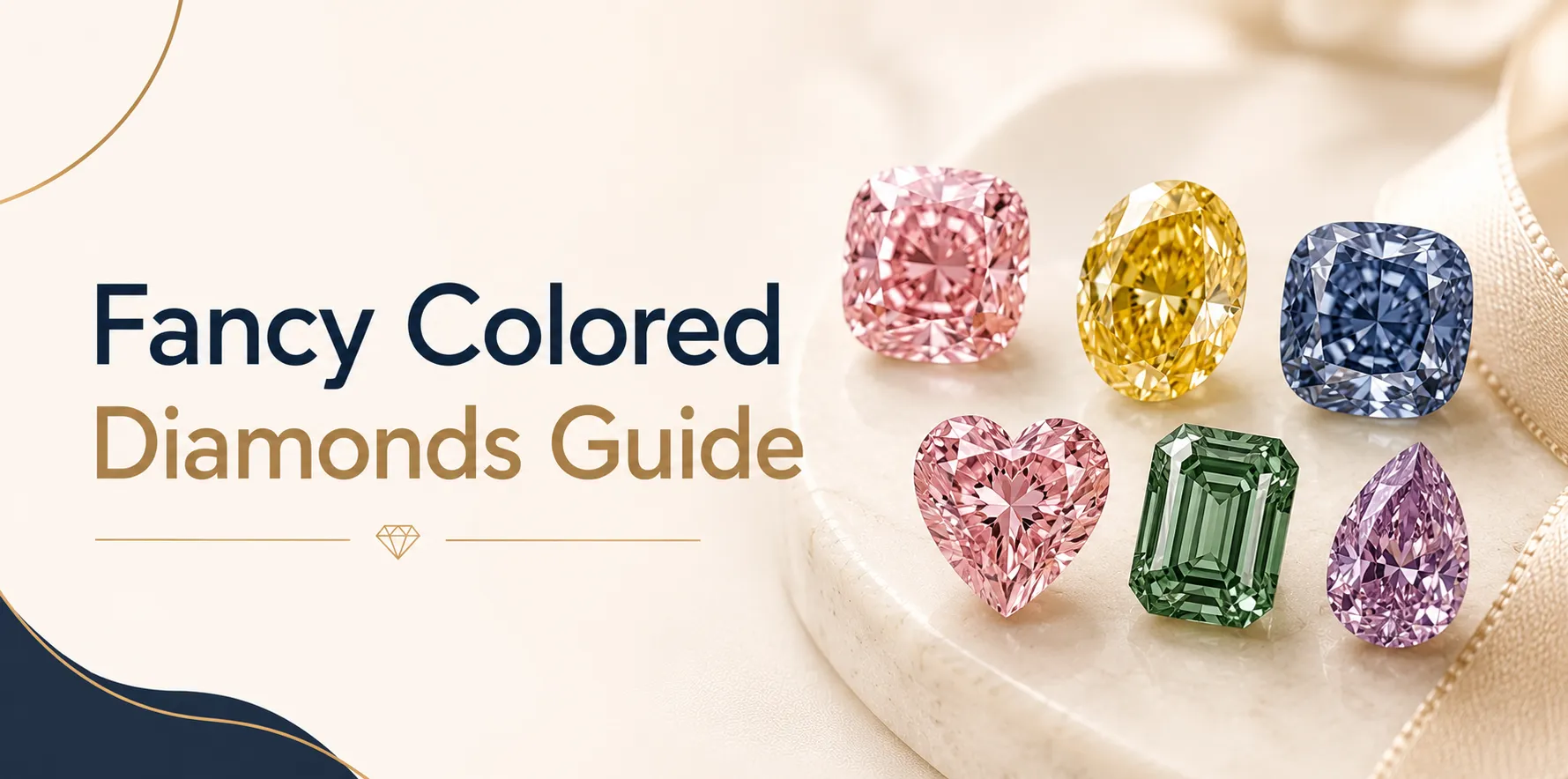
Fancy colored diamonds are diamonds that naturally show noticeable color beyond the normal white diamond color range.
Unlike traditional white diamonds, where less color is usually considered better, fancy colored diamonds are valued for the strength, beauty, and rarity of their color. A vivid pink, blue, green, yellow, or orange diamond can be far more valuable than a colorless diamond of similar size, depending on rarity and quality.
Fancy colored diamonds are used in engagement rings, pendants, earrings, bracelets, men’s jewelry, bridal jewelry, and custom statement pieces. They are especially popular among buyers who want jewelry that feels unique, expressive, and different from traditional white diamond designs.
This guide explains what fancy colored diamonds are, common colors, rarity, value factors, and buying tips.
Key Takeaways
- Fancy colored diamonds are valued for their visible body color.
- Color strength, rarity, origin, carat weight, and certification strongly affect value.
- GIA evaluates fancy colored diamonds using hue, tone, and saturation.
- Yellow and brown diamonds are generally more available than pink, blue, green, red, or orange diamonds.
- Fancy Vivid and Fancy Intense colors usually command higher prices than lighter color grades.
- Natural fancy colored diamonds are usually rarer and more expensive than treated or lab-grown colored diamonds.
- Certification is essential to confirm whether the color is natural, treated, or lab-grown.
- Custom jewelry allows buyers to use colored diamonds creatively in rings, pendants, earrings, bracelets, and statement designs.
What Are Fancy Colored Diamonds?
Fancy colored diamonds are diamonds that show noticeable color outside the normal D-to-Z white diamond color scale.
In white diamonds, buyers usually look for less color. In fancy colored diamonds, buyers look for attractive and visible color.
Fancy colored diamonds can appear in many colors, including:
- Yellow
- Brown
- Pink
- Blue
- Green
- Orange
- Red
- Purple
- Violet
- Gray
- Black
The color may be soft and subtle or strong and vivid. The more attractive, rare, and intense the color, the more valuable the diamond may become.
How Are Fancy Colored Diamonds Graded?
Fancy colored diamonds are graded differently from white diamonds.
White diamonds are graded based on the absence of color. Fancy colored diamonds are graded based on the presence, strength, and quality of color.
The main color factors are:
Hue
Hue refers to the diamond’s main color. For example, a diamond may be yellow, pink, blue, green, orange, or brown.
Tone
Tone describes how light or dark the color appears. A diamond may have a pale tone, medium tone, deep tone, or dark appearance.
Saturation
Saturation refers to the strength or intensity of the color.
A diamond with stronger saturation usually appears richer and more valuable than a weakly colored diamond.
Fancy Colored Diamond Color Grades
Fancy colored diamonds may receive grades that describe the strength of their color.
Common fancy color descriptions include:
- Faint
- Very Light
- Light
- Fancy Light
- Fancy
- Fancy Intense
- Fancy Vivid
- Fancy Deep
- Fancy Dark
In many cases, Fancy Intense and Fancy Vivid diamonds are more valuable because they show stronger and more attractive color.
However, value also depends on the color itself. A Fancy Vivid yellow diamond and a Fancy Vivid pink diamond may not have the same rarity or price.
Popular Fancy Colored Diamond Colors
Fancy colored diamonds come in many shades. Each color has its own rarity, personality, and buyer appeal.
Yellow Diamonds
Yellow diamonds are one of the most popular fancy colored diamond choices. They get their color mainly from nitrogen within the diamond structure.
Appearance
Yellow diamonds can range from soft champagne-like tones to rich golden yellow. Fancy Intense Yellow and Fancy Vivid Yellow diamonds are especially popular for engagement rings and custom jewelry.
Rarity and Value
Yellow diamonds are generally more available than pink, blue, green, red, or orange diamonds. This can make them a strong option for buyers who want a colored diamond look without reaching the highest rarity price levels.
Best For
Yellow diamonds work beautifully in engagement rings, halo rings, pendants, earrings, and luxury statement jewelry. They pair especially well with yellow gold, white gold, and two-tone settings.
Brown and Champagne Diamonds
Brown diamonds are among the more available fancy colored diamonds. They are often marketed as champagne, cognac, or chocolate diamonds depending on tone and branding.
Appearance
Brown diamonds can range from light champagne to deep cognac brown. They often create a warm, earthy, and elegant look.
Rarity and Value
Brown diamonds are usually more affordable than many rare fancy colors. However, well-cut stones with attractive tone and even color can still look luxurious.
Best For
Brown and champagne diamonds are popular for men’s rings, vintage-style jewelry, warm-tone bridal designs, pendants, and everyday luxury pieces. They pair well with yellow gold and rose gold.
Pink Diamonds
Pink diamonds are highly desirable because of their romantic color and rarity. They are often used in luxury engagement rings, collector jewelry, and high-end custom designs.
Appearance
Pink diamonds can appear soft blush, rose, purplish pink, orangy pink, or vivid pink. The modifier color can affect appearance and value.
Rarity and Value
Natural pink diamonds are rare and often expensive, especially in stronger color grades. Fancy Intense Pink and Fancy Vivid Pink diamonds usually command strong buyer interest.
Best For
Pink diamonds are ideal for engagement rings, anniversary jewelry, bridal pieces, heart pendants, and feminine custom designs. They pair beautifully with rose gold, white gold, and platinum.
Blue Diamonds
Blue diamonds are among the most famous and valuable fancy colored diamonds. Their color is often linked to boron within the diamond structure.
Appearance
Blue diamonds can range from pale blue to deep, vivid blue. Some may have grayish or greenish modifiers.
Rarity and Value
Natural blue diamonds are very rare. Strong blue color, larger size, and high-quality certification can significantly increase value.
Best For
Blue diamonds work well in luxury engagement rings, men’s rings, pendants, earrings, and collector-style jewelry. They pair beautifully with platinum and white gold.
Green Diamonds
Green diamonds are rare and unique. Natural green color can be difficult to verify, which makes certification especially important.
Appearance
Green diamonds can range from light green to deep green. Some may have yellowish, bluish, or grayish modifiers.
Rarity and Value
Natural green diamonds are rare, especially when the color is strong and evenly distributed. Because green color can also be treated, buyers should always request certification that confirms color origin.
Best For
Green diamonds are suitable for nature-inspired jewelry, unique engagement rings, pendants, and luxury custom pieces. They pair well with yellow gold, white gold, and platinum.
Red Diamonds
Red diamonds are among the rarest fancy colored diamonds. Even small red diamonds can be extremely valuable.
Appearance
Red diamonds usually show a strong red body color. Some stones may have purplish or brownish modifiers.
Rarity and Value
Natural red diamonds are exceptionally rare. Because of this rarity, they are usually collector-level diamonds rather than everyday jewelry stones.
Best For
Red diamonds are best for collectors, rare custom jewelry, luxury statement pieces, and investment-style purchases.
Orange Diamonds
Orange diamonds are rare and visually striking. Pure orange diamonds are especially difficult to find.
Appearance
Orange diamonds may appear pure orange or include yellowish, brownish, or pinkish modifiers. Fancy Vivid Orange diamonds are highly desirable.
Rarity and Value
Natural orange diamonds are rare, especially when the orange color is strong and pure. Modifier colors can affect value depending on buyer preference and market demand.
Best For
Orange diamonds work well in bold rings, pendants, earrings, and custom statement jewelry. They pair nicely with yellow gold and rose gold.
Purple and Violet Diamonds
Purple and violet diamonds are rare and distinctive. They are often chosen by buyers who want a unique color with a luxury feel.
Appearance
Purple diamonds may show pinkish or reddish modifiers. Violet diamonds may show bluish or grayish tones.
Rarity and Value
Natural purple and violet diamonds are rare, especially in strong saturation. Their value depends heavily on color strength, tone, size, and certification.
Best For
Purple and violet diamonds are suitable for custom rings, pendants, earrings, and expressive luxury jewelry.
Black Diamonds
Black diamonds are bold, dramatic, and modern. They are popular in men’s jewelry, gothic-inspired designs, hip hop jewelry, and statement pieces.
Appearance
Black diamonds usually appear opaque or near-opaque with a dark surface appearance. They do not sparkle like white diamonds because their beauty comes from bold contrast rather than brilliance.
Rarity and Value
Natural black diamonds can be valuable, but many black diamonds in jewelry may be treated to improve or create a consistent black color. Certification helps confirm whether the color is natural or treated.
Best For
Black diamonds are ideal for men’s rings, wedding bands, pendants, earrings, bracelets, and bold custom jewelry.
They pair well with white gold, black rhodium, yellow gold, and platinum.
Natural vs Treated vs Lab-Grown Fancy Colored Diamonds
Not all fancy colored diamonds are the same.
Before buying, it is important to understand the origin of the color.
| Type | Meaning | Buyer Note |
| Natural Fancy Colored Diamond | Color formed naturally inside the earth | Usually rare and more expensive |
| Treated Colored Diamond | Color improved or changed through treatment | Usually more affordable |
| Lab-Grown Colored Diamond | Diamond created in a lab with color present or introduced | Real diamond, but not mined |
| Simulated Colored Diamond | Looks like a colored diamond but is not diamond | Lower value and different material |
Natural fancy colored diamonds usually command the highest value when the color is rare and certified.
Lab-grown colored diamonds can offer a more accessible way to create colorful diamond jewelry.
Treated diamonds can be beautiful, but the treatment must be disclosed clearly.
What Makes Fancy Colored Diamonds Valuable?
Fancy colored diamond value depends on several factors.
Color is usually the most important, but it is not the only thing that matters.
1. Color Strength
The stronger and more attractive the color, the higher the value may be. Fancy Intense and Fancy Vivid diamonds often cost more than Fancy Light or lighter grades.
However, the exact value depends on the color. A vivid rare color may cost far more than a vivid common color.
2. Color Rarity
Some colors are much rarer than others. Red, blue, pink, green, purple, and orange diamonds are generally rarer than yellow and brown diamonds.
Rarity plays a major role in price, especially for natural diamonds.
3. Color Origin
Color origin is extremely important. A naturally colored diamond is usually more valuable than a treated diamond of similar appearance.
This is why certification should clearly state whether the color is natural, treated, or lab-grown.
4. Color Evenness
Even color distribution can improve visual appeal. A diamond with uneven color zoning may appear less attractive than one with smooth, balanced color.
For fancy colored diamonds, color beauty often matters more than perfect clarity.
5. Carat Weight
Larger fancy colored diamonds are rarer. As carat weight increases, price can rise sharply, especially for rare colors such as pink, blue, green, red, and orange.
However, size should still be balanced with color strength and beauty.
6. Diamond Shape
Shape can affect how color appears. Fancy shapes such as radiant, cushion, oval, pear, and emerald are often used for colored diamonds because they can help show color more strongly.
Round diamonds may show brilliance well, but they may not always retain or display color as strongly as some fancy shapes.
7. Clarity
For fancy colored diamonds, clarity is important, but color usually matters more. A visible inclusion may affect value, but buyers often prioritize attractive color over flawless clarity.
Still, diamonds with severe inclusions, cracks, chips, or cloudiness should be reviewed carefully.
8. Cut Quality
Cut affects how color and light appear in the diamond. For fancy colored diamonds, cutters may focus on maximizing color intensity rather than only maximizing white sparkle.
A well-cut colored diamond should show attractive color, good proportions, and pleasing visual performance.
9. Certification
Certification is essential for fancy colored diamonds.
A grading report can confirm:
- Diamond origin
- Color grade
- Color origin
- Carat weight
- Shape
- Measurements
- Clarity
- Cut details
- Treatments if detected
- Report number
For high-value colored diamonds, buyers should never rely only on seller descriptions.
Best Settings for Fancy Colored Diamonds
The setting can enhance or weaken the appearance of a colored diamond. The right metal and design should support the diamond’s color.
Yellow Gold Settings
Yellow gold enhances warm-colored diamonds such as yellow, orange, champagne, brown, and cognac diamonds. It can make the color appear richer and more luxurious.
Rose Gold Settings
Rose gold pairs beautifully with pink, champagne, brown, and romantic color tones. It creates a soft and feminine appearance.
White Gold or Platinum Settings
White metals create contrast and can make colored diamonds stand out. They work well with blue, green, pink, black, and high-contrast designs.
Halo Settings
A white diamond halo can make a colored diamond appear brighter and more defined. A colored diamond halo can create a bolder and more dramatic look.
Bezel Settings
Bezel settings offer a modern look and strong protection. They can work well for colored diamonds used in daily-wear rings or pendants.
Fancy Colored Diamonds in Engagement Rings
Fancy colored diamonds are a strong choice for engagement rings because they feel personal and distinctive.
Popular engagement ring choices include:
- Yellow diamond engagement rings
- Pink diamond engagement rings
- Blue diamond engagement rings
- Champagne diamond rings
- Black diamond engagement rings
- Green diamond rings
- Two-tone colored diamond rings
Before choosing a colored diamond engagement ring, buyers should check color origin, certification, durability, setting style, and long-term wearability.
Fancy Colored Diamonds in Custom Jewelry
Fancy colored diamonds work beautifully in custom jewelry because they allow more creative freedom.
They can be used in:
- Custom rings
- Diamond pendants
- Diamond necklaces
- Tennis bracelets
- Earrings
- Men’s rings
- Hip hop jewelry
- Bridal jewelry
- Personalized gifts
Custom design allows buyers to combine colored diamonds with white diamonds, gemstones, two-tone metals, engraving, or symbolic details.
Lab-Grown Fancy Colored Diamonds
Lab-grown fancy colored diamonds are real diamonds created in controlled laboratory environments.
They can offer buyers a more accessible way to enjoy colored diamond jewelry.
Lab-grown fancy colored diamonds are popular for:
- Yellow diamond rings
- Pink diamond jewelry
- Blue diamond pendants
- Colored diamond earrings
- Men’s jewelry
- Custom statement pieces
They usually cost less than natural fancy colored diamonds of similar appearance and size, but they should always be clearly disclosed as lab-grown.
Treated Fancy Colored Diamonds
Some diamonds are treated to improve or change their color.
Treatments may make colored diamonds more affordable, but buyers should know exactly what they are purchasing.
A treated diamond should always be clearly disclosed.
Buyers should ask:
- Is the color natural or treated?
- What treatment was used?
- Is the treatment permanent?
- Is the diamond certified?
- Does the report mention treatment?
- Is the price fair for a treated stone?
Treated diamonds can be beautiful, but they should not be priced or represented as natural-color diamonds.
Fancy Colored Diamond Buying Checklist
Before buying a fancy colored diamond, check:
- What is the diamond’s main color?
- Does it have a modifier color?
- What is the color grade?
- Is the color natural, treated, or lab-grown?
- Is the diamond certified?
- Can the report number be verified?
- How strong is the color saturation?
- Is the color evenly distributed?
- What is the carat weight?
- What is the diamond shape?
- Are there visible inclusions?
- Does the setting enhance the color?
- Is the final jewelry price transparent?
This checklist helps buyers avoid confusion and compare colored diamonds more confidently.
Common Mistakes Buyers Make
Buying Without Certification
Certification is essential for fancy colored diamonds. Without a report, it is difficult to confirm color grade, origin, treatment status, or value.
Confusing Natural, Treated, and Lab-Grown Color
Natural colored diamonds, treated diamonds, and lab-grown colored diamonds can look similar but have very different values. Buyers should always check disclosure and documentation.
Choosing Only by Carat Size
A larger colored diamond is not always better. Color strength, rarity, origin, and appearance often matter more than size alone.
Ignoring Modifier Colors
Modifier colors can affect beauty and value. For example, a purplish pink diamond and a brownish pink diamond may have different market appeal.
Choosing the Wrong Metal
The metal can change how the diamond color appears. Yellow gold may enhance warm colors, while white gold can create stronger contrast.
Assuming All Colored Diamonds Are Rare
Some colored diamonds are much rarer than others.
Yellow and brown diamonds are generally more available, while red, blue, pink, green, and orange are usually much rarer.
Expert Tips for Buying Fancy Colored Diamonds
Prioritize Color First
For fancy colored diamonds, color is usually the most important value factor. Focus on hue, tone, saturation, and overall beauty before obsessing over clarity.
Verify Color Origin
Always confirm whether the color is natural, treated, or lab-grown. This has a major impact on value and buyer confidence.
Choose the Right Shape
Fancy shapes often show color better than round diamonds. Radiant, cushion, oval, pear, and emerald cuts are popular choices for colored diamonds.
Match Metal to Color
The setting should support the diamond’s color. Yellow gold enhances warm colors, rose gold complements pink and champagne tones, and white metals create contrast.
Use Certification for High-Value Stones
For expensive fancy colored diamonds, certification is not optional. A reliable report protects the buyer and helps verify the diamond’s details.
Consider Lab-Grown Colored Diamonds
If natural fancy colored diamonds are outside budget, lab-grown colored diamonds can offer real diamond beauty with more design flexibility.
Why Choose Custom Karat for Fancy Colored Diamond Jewelry?
Custom Karat helps buyers create colored diamond jewelry with more control over stone choice, design, metal, and budget.
Instead of choosing from standard designs, buyers can build jewelry around their preferred color, style, and occasion.
Custom Karat offers:
Natural and Lab-Grown Colored Diamond Options
Buyers can choose natural fancy colored diamonds for rarity or lab-grown colored diamonds for better value and design flexibility. This makes it easier to create jewelry that fits both style and budget.
Custom Jewelry Design
Custom Karat can help create engagement rings, pendants, earrings, necklaces, bracelets, men’s jewelry, bridal jewelry, and statement pieces. Each design can be built around the chosen diamond color.
Diamond Quality Guidance
Buyers can compare color, clarity, carat, shape, certification, and overall appearance before finalizing the design. This helps avoid confusion between natural, treated, and lab-grown colored diamonds.
CAD Design Previews
CAD previews allow buyers to review the jewelry before production. This helps confirm stone placement, proportions, setting style, and final appearance.
Premium Metal Choices
Buyers can choose yellow gold, white gold, rose gold, platinum, sterling silver, gold vermeil, or suitable custom finishes. The right metal helps enhance the colored diamond’s appearance.
Transparent Pricing
Pricing depends on diamond color, rarity, origin, size, metal, design complexity, craftsmanship, and finishing. This helps buyers understand what affects the final cost.
Expert Craftsmanship
Each piece is made with attention to stone setting, polish, durability, comfort, and long-term wearability. A rare colored diamond should be paired with a setting that protects and enhances it.
Secure USA Shipping
Finished jewelry is securely packed and shipped to customers in the USA. This gives buyers confidence when ordering custom colored diamond jewelry online.
Final Verdict
Fancy colored diamonds are valued for their color, rarity, and individuality.
Unlike white diamonds, where buyers usually seek less color, fancy colored diamonds are prized for attractive color strength and beauty.
The most important factors are hue, tone, saturation, color origin, rarity, carat weight, shape, certification, and setting design.
Natural fancy colored diamonds can be extremely rare and valuable, especially in colors such as red, blue, pink, green, and orange. Lab-grown fancy colored diamonds offer a more accessible way to create colorful real diamond jewelry.
Before buying, always verify whether the color is natural, treated, or lab-grown. Certification and transparent seller guidance are essential.
Custom Karat helps buyers create fancy colored diamond jewelry with natural or lab-grown diamond options, CAD approval, premium materials, transparent pricing, and expert craftsmanship.
FAQs
What are fancy colored diamonds?
Fancy colored diamonds are diamonds that show noticeable body color beyond the normal white diamond color range.
Are fancy colored diamonds real diamonds?
Yes. Fancy colored diamonds can be real diamonds, whether natural or lab-grown. Simulated colored stones are not real diamonds.
Which fancy colored diamond is the rarest?
Red diamonds are among the rarest, followed by colors such as blue, pink, green, purple, and orange depending on quality and saturation.
Are yellow diamonds rare?
Yellow diamonds are fancy colored diamonds, but they are generally more available than pink, blue, green, red, or orange diamonds.
What makes a colored diamond valuable?
Color strength, rarity, origin, carat weight, shape, clarity, certification, and overall beauty affect value.
What does Fancy Vivid mean?
Fancy Vivid describes a strong and highly saturated color grade in fancy colored diamonds.
Are lab-grown colored diamonds real diamonds?
Yes. Lab-grown colored diamonds are real diamonds created in controlled laboratory environments.
Are treated colored diamonds valuable?
Treated colored diamonds can be beautiful, but they are usually less valuable than natural-color diamonds and should be clearly disclosed.
Do colored diamonds need certification?
Yes. Certification is very important because it helps confirm color grade, origin, and treatment status.
Can I design custom jewelry with fancy colored diamonds?
Yes. Fancy colored diamonds can be used in custom engagement rings, pendants, necklaces, earrings, bracelets, men’s jewelry, and bridal designs.

About Author Brijesh Sharma
Brijesh Sharma is a jewelry retail industry author who shares expert insights on diamonds, lab-grown jewelry, custom designs, and smart jewelry buying. His content helps customers understand quality, pricing, trends, and craftsmanship so they can make confident jewelry purchase decisions.