No products added!

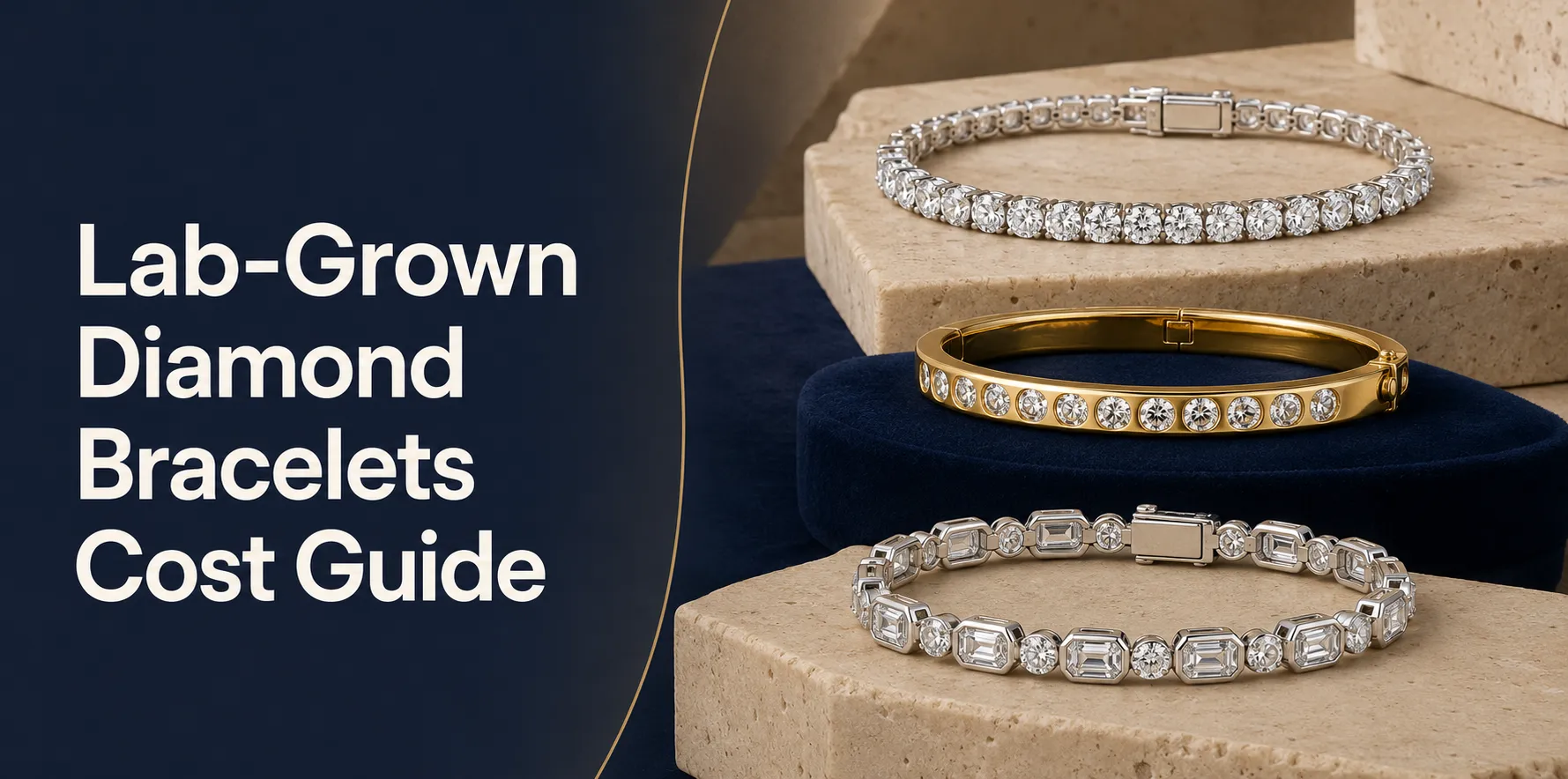
Lab-grown diamond bracelets are one of the smartest ways to own real diamond jewelry with premium sparkle, strong design flexibility, and better cost control.
Whether you are buying a tennis bracelet, diamond bangle, Cuban bracelet, charm bracelet, station bracelet, cuff bracelet, or custom men’s diamond bracelet, lab-grown diamonds allow buyers to achieve a luxury look at a more accessible price than many natural diamond options.
But the cheapest bracelet is not always the best bracelet.
A low-priced bracelet with weak metal, poor clasp quality, inconsistent diamonds, or loose settings can become a poor purchase over time. The real goal is to get the lowest possible cost for a premium-quality lab-grown diamond bracelet.
This guide explains how much lab-grown diamond bracelets cost, what affects pricing, how buyers can save money, and how Custom Karat helps customers create premium custom diamond bracelets without unnecessary retail markups.
Key Takeaways
- Lab-grown diamond bracelets use real diamonds created in controlled laboratory environments.
- Lab-grown diamond bracelets usually cost less than natural diamond bracelets of similar size and quality.
- Bracelet cost depends on total carat weight, diamond count, metal type, metal weight, bracelet length, clasp, setting, and craftsmanship.
- Tennis bracelets usually cost more than station bracelets because they use more diamonds and more setting work.
- Buyers can reduce cost by choosing smart diamond grades, practical metal, optimized bracelet length, and direct custom manufacturing.
- 14K gold, eye-clean diamonds, near-colorless grades, and CAD-reviewed design can help lower cost without making the bracelet look cheap.
- Custom Karat helps buyers control cost through lab-grown diamond options, direct manufacturer value, CAD previews, transparent pricing, and premium craftsmanship.
- The best bracelet balances sparkle, security, comfort, durability, and long-term value.
What Is a Lab-Grown Diamond Bracelet?
A lab-grown diamond bracelet is a bracelet made with diamonds created in a laboratory instead of mined from the earth.
GIA explains that laboratory-grown diamonds are essentially chemically and optically the same as natural diamonds, and specialized testing is needed to separate them from mined diamonds.
Lab-grown diamonds can be used in many bracelet styles, including:
- Tennis bracelets
- Diamond bangles
- Cuban link bracelets
- Station bracelets
- Charm bracelets
- Cuff bracelets
- ID bracelets
- Bridal bracelets
- Men’s diamond bracelets
- Custom diamond bracelets
Are Lab-Grown Diamond Bracelets Real Diamond Bracelets?
Yes, lab-grown diamond bracelets are real diamond bracelets.
A lab-grown diamond is not cubic zirconia, moissanite, glass, white sapphire, or a simulated diamond. It is a real diamond created in a controlled laboratory environment.
The FTC also advises sellers to clearly disclose when diamonds are laboratory-created so buyers do not mistake them for mined diamonds.
| Diamond Type | Meaning |
| Natural Diamond | Formed underground |
| Lab-Grown Diamond | Created in a laboratory |
| Simulated Diamond | Looks like diamond but is not diamond |
How Much Does a Lab-Grown Diamond Bracelet Cost?
Lab-grown diamond bracelet cost can vary widely depending on diamond weight, metal, setting, design, clasp, and craftsmanship.
As a broad buyer estimate, lab-grown diamond bracelets may range from $500 to $15,000+, while larger custom Cuban bracelets, tennis bracelets, and luxury statement pieces can cost more.
Current online retail examples show how much pricing can vary. Brilliant Earth lists lab diamond bracelet examples from around $495 for a petite lab diamond bracelet to several thousand dollars for higher-carat tennis bracelets, while Blue Nile lists a 2 ct. lab-grown diamond tennis bracelet in 14K white gold at a discounted price near $2,037 at the time of search.
This is why buyers should not compare only by price. A bracelet’s true value depends on the full product: diamonds, metal, clasp, setting, comfort, finishing, and long-term durability.
Lab-Grown Diamond Bracelet Cost Chart
The price ranges below are educational estimates only. Actual pricing changes based on diamond quality, metal, design, bracelet length, craftsmanship, certification, and market conditions.
| Bracelet Type | Approximate Cost Range |
| Simple Lab-Grown Diamond Bracelet | $500 – $1,500+ |
| Lab-Grown Diamond Station Bracelet | $700 – $3,000+ |
| Lab-Grown Diamond Tennis Bracelet | $1,000 – $8,000+ |
| 2 Carat Lab-Grown Diamond Tennis Bracelet | $1,500 – $3,500+ |
| 5 Carat Lab-Grown Diamond Tennis Bracelet | $3,000 – $7,000+ |
| Lab-Grown Diamond Bangle | $1,200 – $7,000+ |
| Lab-Grown Diamond Charm Bracelet | $700 – $4,000+ |
| Men’s Lab-Grown Diamond Bracelet | $1,500 – $15,000+ |
| Lab-Grown Diamond Cuban Bracelet | $2,000 – $15,000+ |
| Custom Lab-Grown Diamond Bracelet | Depends on diamond, metal, length, design, and craftsmanship |
A simple station bracelet usually costs much less than a full tennis bracelet or iced-out Cuban bracelet because it uses fewer diamonds and less setting work.
Why Lab-Grown Diamond Bracelets Cost Less Than Natural Diamond Bracelets
Lab-grown diamond bracelets usually cost less because the diamonds are created through technology instead of being mined from the earth.
Natural diamond pricing is affected by rarity, mining, distribution, and traditional retail structures. Lab-grown diamonds are more scalable, which gives buyers more cost flexibility.
This means buyers may be able to choose:
- Higher total carat weight
- Better clarity
- Brighter diamonds
- Longer bracelet length
- More detailed design
- Premium metal
- Better clasp quality
- Custom bracelet design
For diamond bracelets, this value matters because many bracelet styles use multiple diamonds. A tennis bracelet, for example, may include dozens of diamonds, so diamond cost has a major impact on final pricing.
What Affects Lab-Grown Diamond Bracelet Cost?
A lab-grown diamond bracelet price is not based only on total carat weight. The complete bracelet affects the final cost.
Main pricing factors include:
- Total carat weight
- Diamond count
- Diamond size
- Diamond cut quality
- Diamond color grade
- Diamond clarity grade
- Diamond shape
- Metal type
- Metal weight
- Bracelet length
- Setting style
- Clasp quality
- Safety lock
- Bracelet flexibility
- CAD work
- Stone setting labor
- Polishing and finishing
- Custom engraving
- Design complexity
- Direct or retail pricing model
To get the lowest cost for a premium bracelet, buyers need to understand which features truly improve quality and which upgrades are unnecessary.
Factor 1: Total Carat Weight
Total carat weight is one of the biggest cost factors in diamond bracelets.
Unlike a ring, where one center diamond may carry most of the cost, bracelets often use many diamonds. A 2-carat bracelet, 5-carat bracelet, and 10-carat bracelet can look and cost very different.
Smart cost-saving tip:
Choose a total carat weight that gives the right wrist presence without overpaying for size you do not need.
For example, a 3-carat tennis bracelet can look elegant and premium for daily wear, while a 7-carat or 10-carat bracelet creates a bolder luxury statement.
Factor 2: Diamond Count
Diamond count affects both appearance and labor cost.
A bracelet with many small diamonds may require more stone setting work. A bracelet with fewer larger diamonds may cost more because each diamond is larger.
For example:
- A station bracelet may use fewer diamonds.
- A tennis bracelet uses diamonds across the full bracelet.
- A Cuban bracelet may use many small pavé diamonds.
- A bangle may use diamonds only on the top half.
Smart cost-saving tip:
Choose strategic diamond placement instead of full coverage if you want a premium look at a lower cost.
Factor 3: Diamond Cut
Cut affects sparkle.
A bracelet with well-cut diamonds will look brighter and more premium. A bracelet with poorly cut stones may look dull even if the total carat weight is high.
For tennis bracelets and multi-stone bracelets, diamond consistency is especially important. The stones should sparkle evenly across the bracelet.
Smart cost-saving tip:
Do not sacrifice cut quality only to increase total carat weight. Smaller well-cut diamonds can look better than larger dull stones.
Factor 4: Diamond Color
Diamond color affects how white or warm the stones appear.
For white gold or platinum bracelets, colorless and near-colorless diamonds usually create a cleaner look. For yellow gold or rose gold bracelets, slightly warmer diamonds can still look beautiful.
For tennis bracelets, color consistency matters. If one diamond looks noticeably warmer than the others, the bracelet may look uneven.
Smart cost-saving tip:
Choose G-H or near-colorless diamonds for strong value instead of automatically paying for D-F color.
Factor 5: Diamond Clarity
Clarity refers to inclusions and blemishes.
For bracelets, most diamonds are smaller than engagement ring center stones, so buyers often do not need flawless clarity.
VS1, VS2, and eye-clean diamonds are often excellent choices.
Smart cost-saving tip:
Choose eye-clean diamonds instead of paying extra for flawless or VVS clarity that may not be visible during normal wear.
Factor 6: Diamond Shape
Diamond shape affects cost, design, and appearance.
Popular diamond shapes for bracelets include:
- Round
- Oval
- Emerald
- Baguette
- Princess
- Pear
- Marquise
- Cushion
Round diamonds are classic and common in tennis bracelets. Baguette, emerald, oval, and marquise diamonds can create a more distinctive luxury look but may increase cost depending on matching and setting work.
Smart cost-saving tip:
Round diamonds usually offer strong availability and classic sparkle. Fancy shapes can look premium, but matching them across a bracelet may cost more.
Factor 7: Metal Type
Metal affects cost, durability, and appearance.
Popular bracelet metals include:
- 10K gold
- 14K gold
- 18K gold
- Yellow gold
- White gold
- Rose gold
- Platinum
- Sterling silver
- Gold vermeil
Platinum usually costs more than gold. 18K gold usually costs more than 14K or 10K because it contains more gold.
Smart cost-saving tip:
Choose 14K gold for a strong balance of durability, luxury, and cost. For selected budget-conscious designs, 10K gold can also be considered.
Factor 8: Metal Weight
Bracelets can use a lot of metal. A thin station bracelet uses less metal than a heavy Cuban bracelet, thick bangle, or large men’s bracelet.
Metal weight affects:
- Final price
- Bracelet feel
- Durability
- Comfort
- Long-term wear
Smart cost-saving tip:
Use enough metal for strength, but avoid unnecessary weight that increases cost without improving the design.
Custom Karat can help balance metal weight and durability during the custom design process.
Factor 9: Setting Style
The setting holds each diamond in place. Bracelets move more than rings and pendants, so setting quality is very important.
Common bracelet settings include:
| Setting Style | Cost Impact |
| Prong Setting | High sparkle, common in tennis bracelets |
| Bezel Setting | Secure and smooth, may use more metal |
| Channel Setting | Clean and protective, good for men’s bracelets |
| Pavé Setting | Sparkly but labor-intensive |
| Half-Coverage Setting | Lower cost than full diamond coverage |
| Custom Setting | Depends on design complexity |
Smart cost-saving tip:
Choose a setting that gives sparkle and security without unnecessary labor complexity.
Factor 10: Clasp and Safety Lock
The clasp is one of the most important parts of a diamond bracelet.
A low-cost bracelet with a weak clasp can be risky because the bracelet may fall off and get lost.
Common clasp options include:
- Lobster clasp
- Box clasp
- Hidden clasp
- Safety lock
- Double safety clasp
For tennis bracelets and high-value diamond bracelets, a safety lock or double safety clasp is strongly recommended.
Smart cost-saving tip:
Do not reduce cost by choosing a weak clasp. Clasp security protects the entire bracelet.
Factor 11: Bracelet Length
Bracelet length affects both cost and comfort.
A longer bracelet needs more metal and more diamonds, which increases price.
Common bracelet lengths include:
| Bracelet Length | Common Fit |
| 6.5 inches | Smaller wrist |
| 7 inches | Standard women’s bracelet length |
| 7.5 inches | Slightly loose women’s fit or smaller men’s fit |
| 8 inches | Common men’s bracelet length |
| 8.5 inches+ | Larger wrist or loose fit |
Smart cost-saving tip:
Choose the correct length instead of buying extra length you do not need. A bracelet that fits properly looks better, feels more secure, and avoids unnecessary cost.
How to Get a Lab-Grown Diamond Bracelet at the Lowest Practical Cost
Getting the lowest cost does not mean buying a weak or poor-quality bracelet. It means getting the best possible price for premium quality.
Here is how buyers can save without compromising the final product.
1. Choose Lab-Grown Instead of Natural Diamonds
This is the biggest cost-saving step.
Lab-grown diamonds usually allow buyers to get real diamond sparkle at a lower cost than comparable natural diamonds.
Example:
A buyer wants a 5-carat tennis bracelet.
A natural diamond version may be significantly more expensive. A lab-grown diamond version can help the buyer achieve a similar real diamond look at a more accessible cost.
This is why lab-grown diamonds are ideal for bracelets, where total carat weight can increase quickly.
2. Buy Direct Instead of Paying Retail Markups
Traditional jewelry pricing may include:
- Supplier margin
- Distributor margin
- Retail store margin
- Showroom cost
- Inventory holding cost
- Brand markup
Custom Karat helps buyers access direct manufacturer value.
This means more of the buyer’s budget can go into the bracelet itself: diamonds, metal, clasp, setting, craftsmanship, and finishing.
3. Choose Smart Diamond Grades
Most buyers do not need the highest grade in every category.
A smart value combination may include:
- Well-cut diamonds
- G-H color
- VS1 or VS2 clarity
- Eye-clean appearance
- Consistent diamond matching
- Practical total carat weight
- Quality metal and clasp
This type of bracelet can look premium without the higher cost of D color and flawless clarity.
4. Choose 14K Gold Instead of Platinum
Platinum is premium, but it is not required for every bracelet. 14K gold is durable, beautiful, and more cost-effective for many bracelet designs.
It works well for:
- Tennis bracelets
- Bangles
- Station bracelets
- Charm bracelets
- Men’s bracelets
- Cuban bracelets
- Custom diamond bracelets
For selected designs, 10K gold may also help reduce cost while keeping durability.
5. Optimize Bracelet Length
A bracelet that is too long costs more and may not fit properly. For example, if a buyer needs a 7-inch bracelet but purchases a 7.5-inch bracelet, they may pay for extra diamonds and metal that do not improve the fit.
Custom sizing helps buyers avoid unnecessary cost.
6. Choose Half-Coverage or Station Designs
A full tennis bracelet gives continuous sparkle, but it costs more because diamonds go around the entire wrist.
Buyers who want a lower cost can consider:
- Station bracelet
- Half tennis bracelet
- Half bangle
- Diamond-accent bracelet
- Paperclip diamond bracelet
- Charm bracelet with diamond accents
These designs can still look premium while using fewer diamonds.
7. Use CAD Approval Before Production
CAD approval helps buyers review the bracelet before it is made.
This helps confirm:
- Bracelet length
- Diamond placement
- Stone size
- Link thickness
- Clasp design
- Metal weight
- Safety lock
- Overall proportions
CAD helps reduce costly design changes later and gives buyers better control over the final price.
Real-Life Example 1: Saving on a 5-Carat Lab-Grown Diamond Tennis Bracelet
Buyer Goal
A customer wants a premium tennis bracelet with strong sparkle for daily and occasion wear.
Expensive Retail Approach
The buyer may be shown:
- Higher retail markup
- Fixed bracelet length
- Platinum or 18K gold only
- Premium clarity grades
- Limited customization
- Standard clasp options
This can increase cost quickly.
Smart Custom Karat Approach
Custom Karat can help the buyer choose:
- Lab-grown diamonds
- G-H color
- VS1 or VS2 clarity
- 14K white gold
- Correct wrist length
- Secure box clasp with safety lock
- CAD-approved bracelet structure
- Direct manufacturer pricing
Buyer Benefit
The bracelet can still look bright, elegant, and premium. The savings come from lab-grown diamond value, smart diamond grades, practical metal choice, correct sizing, and reduced retail markup.
Real-Life Example 2: Saving on a Men’s Diamond Cuban Bracelet
Buyer Goal
A customer wants a bold men’s Cuban bracelet with diamond coverage.
Expensive Retail Approach
A ready-made Cuban bracelet may include high retail markup, fixed metal weight, and limited control over diamond placement.
The buyer may pay for excessive metal weight or full pavé coverage that is not necessary for the desired look.
Smart Custom Karat Approach
Custom Karat can reduce cost by helping choose:
- 10K or 14K gold
- Lab-grown diamonds
- Strategic diamond placement
- Practical link thickness
- Secure clasp
- CAD-reviewed proportions
- Custom finish
Buyer Benefit
The buyer gets a bold, premium-looking bracelet while avoiding unnecessary metal weight, overcomplicated diamond coverage, and retail markup.
Real-Life Example 3: Saving on a Diamond Bangle
Buyer Goal
A buyer wants an elegant diamond bangle for gifting.
Expensive Retail Approach
A retail bangle may have a fixed size, fixed diamond count, and limited metal options. The buyer may pay more for a design that is not properly customized to wrist size or style preference.
Smart Custom Karat Approach
Custom Karat can help adjust:
- Bangle size
- Diamond count
- Diamond placement
- Metal type
- Metal thickness
- Clasp or hinge structure
- Finish
- CAD-approved design
Buyer Benefit
The buyer gets a premium bangle that fits better and avoids unnecessary diamonds or metal weight.
Real-Life Example 4: Saving on a Station Bracelet
Buyer Goal
A customer wants a simple diamond bracelet for everyday wear.
Expensive Retail Approach
The buyer may compare tennis bracelets and feel the price is too high. A full tennis bracelet may not be necessary for daily styling.
Smart Custom Karat Approach
Custom Karat can suggest:
- Lab-grown diamond station bracelet
- Fewer but well-placed diamonds
- 14K gold chain
- Secure lobster clasp
- Comfortable length
- Eye-clean diamonds
Buyer Benefit
The buyer gets real diamond sparkle at a lower cost because the design uses strategic diamond placement instead of full diamond coverage.
Lab-Grown Diamond Bracelet Cost by Style
Lab-Grown Diamond Tennis Bracelet Cost
A tennis bracelet usually costs more than a simple bracelet because it uses diamonds across the full wrist.
Main cost factors include:
- Total carat weight
- Diamond count
- Bracelet length
- Metal type
- Clasp quality
- Setting style
- Diamond consistency
- Stone setting labor
Brilliant Earth notes that tennis bracelet prices vary widely and generally start around a thousand dollars, scaling upward based on gemstone, total carat weight, metal, and setting quality.
Lab-Grown Diamond Station Bracelet Cost
A station bracelet usually costs less than a full tennis bracelet. It uses diamonds spaced along the chain instead of continuous diamond coverage.
Main cost factors include:
- Diamond count
- Chain type
- Diamond size
- Metal type
- Clasp quality
- Bracelet length
Station bracelets are a strong option for buyers who want real diamond sparkle at a lower cost.
Lab-Grown Diamond Bangle Cost
Diamond bangles are more structured than tennis bracelets. They may use diamonds only on the top half or across the full bangle.
Main cost factors include:
- Metal weight
- Bangle thickness
- Diamond count
- Diamond placement
- Hinge or clasp structure
- Design complexity
- Stone setting labor
A half-diamond bangle can reduce cost while still looking premium from the top view.
Lab-Grown Diamond Cuban Bracelet Cost
A Cuban bracelet can cost more because it usually uses heavier metal and detailed diamond setting.
Main cost factors include:
- Link size
- Metal weight
- Bracelet length
- Diamond coverage
- Pavé setting labor
- Clasp strength
- Custom finish
Lab-grown diamonds help reduce cost, especially when the design requires many small diamonds.
Lab-Grown Diamond Charm Bracelet Cost
A charm bracelet cost depends on the number of charms, diamond accents, metal, and personalization.
Main cost factors include:
- Charm count
- Diamond count
- Bracelet chain
- Metal type
- Engraving
- Custom symbols
- Clasp quality
Charm bracelets can be cost-effective because buyers can start simple and add more details over time.
Custom Lab-Grown Diamond Bracelet Cost
Custom bracelet cost depends on the full design.
A simple custom station bracelet may be affordable, while a custom iced-out Cuban bracelet or high-carat tennis bracelet will cost more.
Main cost factors include:
- CAD design
- Diamond selection
- Total carat weight
- Metal type
- Bracelet length
- Stone setting
- Clasp design
- Polishing
- Quality control
- Custom details
Lab-Grown Diamond Bracelet Cost-Saving Tips
| Cost Area | Smart Saving Tip |
| Total Carat Weight | Choose the right sparkle level, not the highest number |
| Diamond Color | Choose G-H or near-colorless grades for value |
| Diamond Clarity | Choose eye-clean VS diamonds instead of flawless |
| Metal | Choose 14K gold instead of platinum |
| Bracelet Length | Choose the correct size to avoid extra cost |
| Setting | Choose secure but efficient setting styles |
| Clasp | Do not compromise on clasp security |
| Design | Consider station, half-coverage, or strategic diamond placement |
| Custom Bracelet | Use CAD to optimize design before production |
| Buying Channel | Choose direct manufacturer value |
What Does “Lowest Cost” Mean for Lab-Grown Diamond Bracelets?
Lowest cost should not mean:
- Fake diamonds
- Thin metal
- Weak clasp
- Loose stones
- Poor polish
- Unclear diamond quality
- No safety lock
- No quality control
- No customer support
For premium lab-grown diamond bracelets, lowest cost should mean:
- Lowest avoidable markup
- Best diamond quality for the budget
- Smart total carat weight
- Correct bracelet length
- Secure clasp
- Strong setting
- Practical metal choice
- Transparent pricing
- CAD-approved design
- Premium finishing
This is how buyers get a bracelet that looks expensive without overpaying.
Expert Tips to Save More on Lab-Grown Diamond Bracelets
Start With a Clear Budget
Tell the jeweler your target budget first. A good custom jeweler can design around the budget instead of pushing unnecessary upgrades.
Prioritize Diamond Consistency
For bracelets, consistency matters. Diamonds should look balanced in size, color, clarity, and sparkle.
Choose Eye-Clean Diamonds
VS1, VS2, or eye-clean diamonds often offer excellent value. You do not need flawless clarity for most bracelet designs.
Use Near-Colorless Grades
G-H color can look bright and premium in many bracelets while costing less than D-F color.
Choose 14K Gold
14K gold is durable, beautiful, and cost-effective for many bracelet designs.
Consider Half-Coverage Designs
A half-coverage bangle or station bracelet can create a luxury look while using fewer diamonds.
Do Not Compromise on Clasp
Spend where it matters. A secure clasp protects the bracelet and gives peace of mind.
Use CAD for Cost Control
CAD helps refine the bracelet before production. This prevents unnecessary metal weight, incorrect length, or extra diamonds that increase price.
Final Verdict
Lab-grown diamond bracelets are one of the best ways to get real diamond sparkle at a lower cost than many natural diamond options.
The lowest price is not always the best deal. The smarter choice is a bracelet that gives the best value for comparable quality.
Buyers can save more by choosing lab-grown diamonds, eye-clean clarity, near-colorless grades, 14K gold, correct bracelet length, secure clasp design, CAD-approved structure, and direct custom manufacturing.
Custom Karat helps buyers create premium lab-grown diamond bracelets at the lowest practical cost through lab-grown diamond options, smart quality selection, CAD approval, transparent pricing, direct manufacturer value, expert craftsmanship, and secure USA shipping.
For buyers who want a premium diamond bracelet without unnecessary retail overpricing, Custom Karat is a strong choice.
FAQs
How much does a lab-grown diamond bracelet cost?
A lab-grown diamond bracelet can cost from around $500 to $15,000+, depending on total carat weight, diamond quality, metal, bracelet length, setting, clasp, and craftsmanship.
How much does a lab-grown diamond tennis bracelet cost?
A lab-grown diamond tennis bracelet may cost around $1,000 to $8,000+, depending on total carat weight, metal, diamond quality, and setting style.
Are lab-grown diamond bracelets cheaper than natural diamond bracelets?
Yes. Lab-grown diamond bracelets usually cost less than natural diamond bracelets of similar size and quality.
How can I get a lab-grown diamond bracelet at the lowest cost?
Choose lab-grown diamonds, eye-clean clarity, near-colorless color, 14K gold, correct bracelet length, efficient diamond placement, and direct custom manufacturing through a brand like Custom Karat.
Does lower cost mean lower quality?
Not always. Lower cost can come from avoiding retail markups and choosing smart quality grades. It should not mean weak metal, poor clasp, or unclear diamond quality.
What clarity gives the best value for diamond bracelets?
VS1, VS2, and eye-clean diamonds usually offer excellent value because they look clean without the high cost of flawless clarity.
What color grade gives the best value?
G-H color often gives a bright near-colorless look at a better cost than D-F color.
What metal is best for saving money?
14K gold is often the best balance of durability, luxury, and cost. 10K gold can reduce cost further for selected bracelet designs.
Is a tennis bracelet more expensive than a station bracelet?
Yes. A tennis bracelet usually costs more because it uses diamonds across the full bracelet, while a station bracelet uses diamonds at intervals.
Can Custom Karat make a custom lab-grown diamond bracelet within my budget?
Yes. Custom Karat can help adjust diamond size, total carat weight, metal, bracelet length, setting, clasp, and design details to create a premium custom bracelet around your budget.

About Author Priyanka Kale
Priyanka Kale is a jewelry retail industry author who shares knowledge on diamonds, lab-grown jewelry, custom designs, and jewelry buying tips. Her content helps customers understand quality, pricing, trends, and craftsmanship before making confident jewelry purchase decisions.