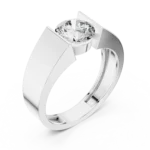
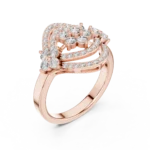
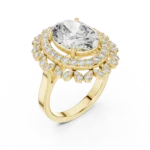
No products added!
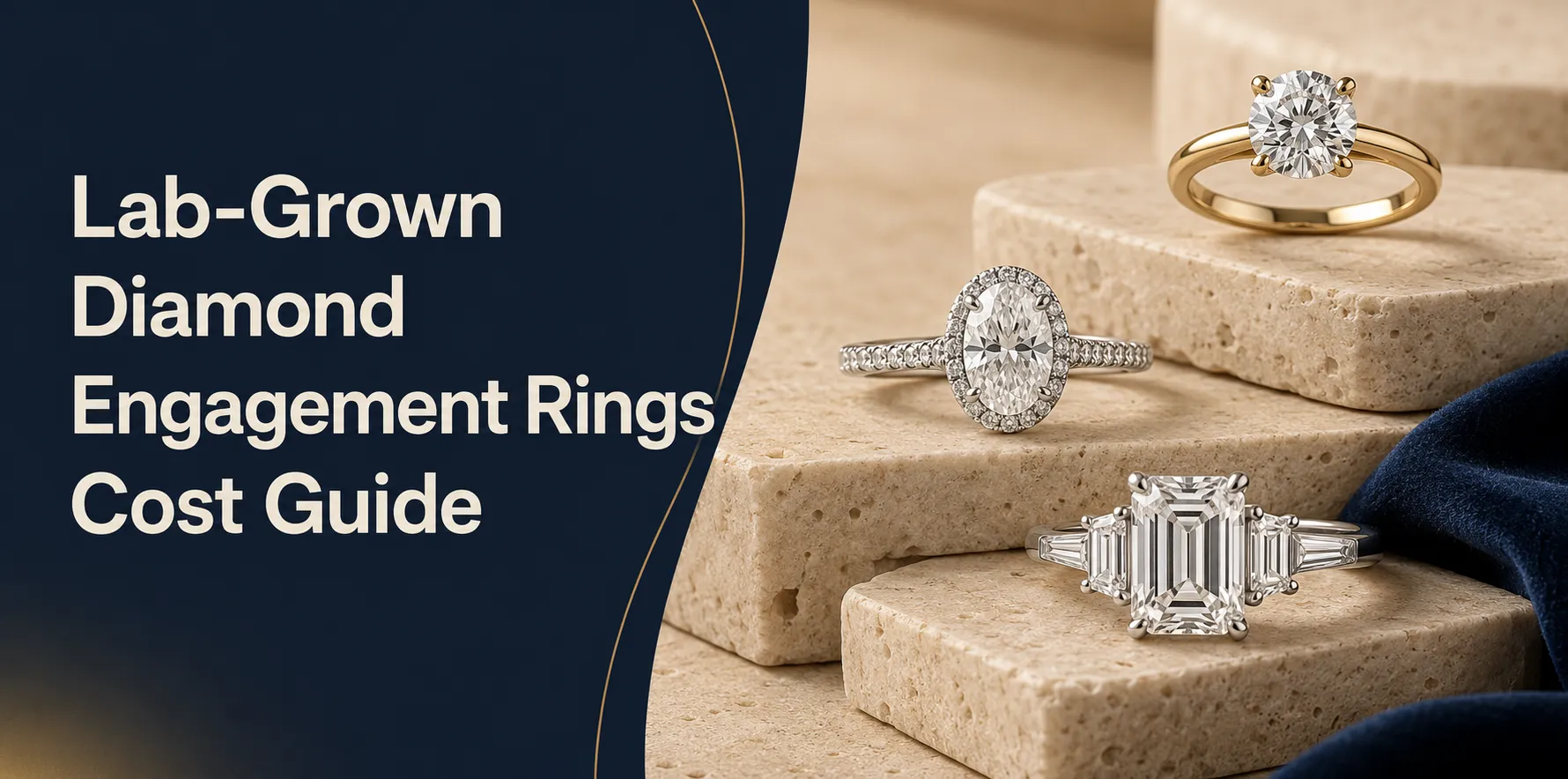
Lab-grown diamond engagement rings are one of the smartest choices for buyers who want real diamond beauty, a meaningful proposal ring, and better cost control.
Whether you are buying a solitaire ring, halo ring, hidden halo ring, pavé ring, three-stone ring, vintage-inspired ring, oval engagement ring, emerald-cut ring, or a fully custom engagement ring, lab-grown diamonds allow buyers to create a premium look at a more accessible price than many natural diamond options.
But the cheapest engagement ring is not always the best engagement ring.
A low-priced ring with weak prongs, thin metal, poor diamond quality, no certification, or unclear craftsmanship may not give long-term value. The smarter goal is to get the lowest possible cost for a premium-quality lab-grown diamond engagement ring.
This guide explains how much lab-grown diamond engagement rings cost, what affects pricing, how buyers can save money, and how Custom Karat helps customers create premium custom engagement rings without unnecessary retail markups.
Key Takeaways
- Lab-grown diamond engagement rings use real diamonds created in controlled laboratory environments.
- Lab-grown diamonds are essentially chemically and optically similar to natural diamonds, and professional testing is needed to reliably separate them from mined diamonds.
- Lab-grown diamond engagement rings usually cost less than natural diamond rings of similar size and quality.
- Final cost depends on center diamond size, cut, color, clarity, shape, certification, metal, setting style, side stones, band width, and craftsmanship.
- Solitaire rings usually cost less than halo, pavé, three-stone, and custom engagement rings.
- Buyers can reduce cost by choosing lab-grown diamonds, eye-clean clarity, near-colorless grades, 14K gold, practical setting details, and direct custom manufacturing.
- The lowest cost should mean the best price for comparable premium quality, not cheap jewelry.
- Custom Karat helps buyers control cost through direct manufacturer value, CAD previews, transparent pricing, smart diamond selection, and premium craftsmanship.
What Is a Lab-Grown Diamond Engagement Ring?
A lab-grown diamond engagement ring is an engagement ring made with a diamond created in a laboratory instead of mined from the earth.
These diamonds are real diamonds. They offer diamond sparkle, brilliance, hardness, and beauty, but their origin is laboratory-created. GIA explains that laboratory-grown diamonds are essentially chemically and optically the same as natural diamonds, which is why specialized testing is required to identify their origin.
Lab-grown diamonds can be used in many engagement ring styles, including:
- Solitaire engagement rings
- Halo engagement rings
- Hidden halo engagement rings
- Pavé engagement rings
- Three-stone engagement rings
- Cathedral engagement rings
- Bezel engagement rings
- Vintage-inspired rings
- Oval engagement rings
- Emerald-cut engagement rings
- Cushion-cut engagement rings
- Pear-shaped engagement rings
- Custom engagement rings
Are Lab-Grown Diamond Engagement Rings Real Diamond Rings?
Yes, lab-grown diamond engagement rings are real diamond rings.
A lab-grown diamond is not cubic zirconia, moissanite, glass, white sapphire, or a simulated diamond. Simulated stones only look like diamonds, while lab-grown diamonds are actual diamonds created in controlled laboratory environments.
The FTC advises sellers to clearly disclose laboratory-created diamonds so buyers understand they are not mined diamonds.
| Diamond Type | Meaning |
| Natural Diamond | Formed underground |
| Lab-Grown Diamond | Created in a laboratory |
| Simulated Diamond | Looks like diamond but is not diamond |
How Much Does a Lab-Grown Diamond Engagement Ring Cost?
A lab-grown diamond engagement ring can cost anywhere from $800 to $12,000+, depending on diamond size, quality, metal, setting, side stones, certification, and craftsmanship.
As a broad buyer estimate:
- A simple 1-carat lab-grown diamond engagement ring may cost around $800 to $3,000+.
- A 2-carat lab-grown diamond engagement ring may cost around $1,800 to $6,000+.
- A 3-carat lab-grown diamond engagement ring may cost around $3,000 to $12,000+.
- A custom lab-grown diamond engagement ring can cost more depending on complexity.
Current online examples show how pricing can vary. Brilliant Earth’s lab-grown diamond inventory included examples such as a 2.97 ct oval lab-grown diamond listed at $4,120, while Blue Nile’s lab-grown diamond listings showed 1.65 ct E-VS1 round lab-grown diamonds around $1,315 at the time of search. These examples show why buyers should compare diamond size, grade, shape, and setting together instead of judging only by one price.
Lab-Grown Diamond Engagement Ring Cost Chart
The price ranges below are educational estimates only. Actual pricing changes based on diamond quality, metal price, setting design, craftsmanship, certification, and market conditions.
| Ring Type | Approximate Cost Range |
| Simple Lab-Grown Diamond Engagement Ring | $800 – $2,500+ |
| 1 Carat Lab-Grown Diamond Engagement Ring | $800 – $3,000+ |
| 1.5 Carat Lab-Grown Diamond Engagement Ring | $1,300 – $4,500+ |
| 2 Carat Lab-Grown Diamond Engagement Ring | $1,800 – $6,000+ |
| 3 Carat Lab-Grown Diamond Engagement Ring | $3,000 – $12,000+ |
| Solitaire Lab-Grown Diamond Engagement Ring | $800 – $5,000+ |
| Halo Lab-Grown Diamond Engagement Ring | $1,200 – $7,000+ |
| Pavé Lab-Grown Diamond Engagement Ring | $1,300 – $8,000+ |
| Three-Stone Lab-Grown Diamond Engagement Ring | $1,800 – $10,000+ |
| Custom Lab-Grown Diamond Engagement Ring | Depends on diamond, metal, design, and craftsmanship |
A solitaire ring usually costs less than a halo, pavé, or three-stone ring because it uses fewer diamonds and a simpler setting.
Why Lab-Grown Diamond Engagement Rings Cost Less Than Natural Diamond Engagement Rings
Lab-grown diamond engagement rings usually cost less because the diamond is created through technology instead of being mined from the earth.
Natural diamond pricing is affected by rarity, mining, distribution, inventory, and traditional retail structures. Lab-grown diamonds are more scalable, which gives buyers more flexibility when choosing diamond size, quality, and design.
This means buyers may be able to choose:
- A larger center diamond
- Better clarity
- Brighter color grade
- More detailed setting
- Side stones
- Hidden halo details
- Premium metal
- Custom CAD design
- Better overall value within budget
What Affects Lab-Grown Diamond Engagement Ring Cost?
The price of a lab-grown diamond engagement ring is not based only on carat size. The complete ring affects the final cost.
Main pricing factors include:
- Center diamond size
- Diamond cut quality
- Diamond color grade
- Diamond clarity grade
- Diamond shape
- Certification
- Metal type
- Metal weight
- Ring size
- Band width
- Setting style
- Side stones
- Hidden halo details
- Pavé diamonds
- CAD work
- Stone setting labor
- Polishing and finishing
- Custom engraving
- Design complexity
- Direct or retail pricing model
To get the lowest cost for a premium ring, buyers need to understand which details truly add value and which upgrades may be unnecessary.
Factor 1: Center Diamond Size
Center diamond size is one of the biggest cost factors.
A 1-carat diamond usually costs less than a 2-carat diamond of similar quality. A 3-carat diamond will usually cost more again because larger stones cost more, even in lab-grown diamonds.
Smart cost-saving tip:
Choose slightly below major carat points.
For example:
- 0.90 carat instead of 1.00 carat
- 1.40 carat instead of 1.50 carat
- 1.90 carat instead of 2.00 carat
The diamond can look very similar in real life but may cost less.
Factor 2: Diamond Cut
Cut affects sparkle, brilliance, and beauty.
A lower-priced diamond with weak cut may look dull, even if it is large. A smaller well-cut diamond can look brighter and more premium.
For engagement rings, cut is one of the most important quality factors because the center diamond is the main focus.
Smart cost-saving tip:
Do not reduce cut quality only to increase size. Prioritize sparkle first, then adjust color, clarity, or carat.
Factor 3: Diamond Color
Diamond color affects how white or warm the diamond appears.
D-F color diamonds are premium and very white, but they usually cost more. G-H diamonds often look bright and beautiful in many engagement ring settings while costing less.
For yellow gold and rose gold rings, slightly warmer diamonds can still look beautiful because the metal already has warmth.
Smart cost-saving tip:
Choose G-H or near-colorless diamonds for strong value instead of automatically paying for D-F color.
Factor 4: Diamond Clarity
Clarity refers to inclusions and blemishes.
Many buyers overpay for flawless or VVS clarity even when the difference is not visible without magnification. For most engagement rings, VS1, VS2, or eye-clean diamonds offer excellent value.
Smart cost-saving tip:
Choose eye-clean clarity instead of paying extra for flawless clarity. This helps reduce cost while keeping the ring beautiful in real life.
Factor 5: Diamond Shape
Diamond shape affects appearance, cost, and size impression.
Popular lab-grown diamond engagement ring shapes include:
- Round
- Oval
- Cushion
- Emerald
- Pear
- Princess
- Radiant
- Marquise
- Asscher
- Heart
Round diamonds are classic and brilliant. Oval, pear, marquise, and emerald shapes can appear larger for their carat weight. Cushion and radiant shapes are popular for soft sparkle and modern style.
Smart cost-saving tip:
If the buyer wants a larger look without increasing carat weight, consider oval, pear, marquise, or radiant shapes.
Factor 6: Certification
Certification helps verify diamond quality and origin.
A diamond grading report may include:
- Lab-grown origin
- Carat weight
- Shape
- Measurements
- Color grade
- Clarity grade
- Cut details
- Polish
- Symmetry
- Laser inscription
- Report number
GIA Report Check allows buyers to confirm that the information on a GIA report matches what is archived in GIA’s database.
Smart cost-saving tip:
Do not overpay for vague diamond descriptions. Ask for certification or clear diamond quality details, especially for center stones.
Factor 7: Metal Type
Metal affects cost, durability, color, and long-term wear.
Popular engagement ring metals include:
- 10K gold
- 14K gold
- 18K gold
- Yellow gold
- White gold
- Rose gold
- Platinum
- Sterling silver
Platinum usually costs more than gold. 18K gold usually costs more than 14K or 10K because it contains more gold.
Smart cost-saving tip:
Choose 14K gold for a strong balance of durability, beauty, and cost. Choose platinum when a premium naturally white metal is preferred.
Factor 8: Band Width and Metal Weight
Band width and metal weight affect cost. A thin solitaire band usually costs less than a wide band, thick band, split shank, or heavy custom ring because it uses less metal.
However, the band should not be too thin. A weak band can reduce durability.
Smart cost-saving tip:
Use enough metal for strength, but avoid unnecessary thickness that increases cost without improving the design.
CAD review helps balance beauty, comfort, and durability.
Factor 9: Setting Style
Setting style affects price because it changes diamond count, metal use, and labor.
| Setting Style | Cost Impact |
| Solitaire | Usually most cost-effective |
| Halo | Higher because of accent diamonds |
| Hidden Halo | Adds detail and cost |
| Pavé | Higher because of small stone setting labor |
| Three-Stone | Higher because of side diamonds |
| Bezel | May use more metal |
| Cathedral | Depends on structure |
| Custom Setting | Depends on complexity |
Smart cost-saving tip:
Choose a setting that gives strong visual impact without unnecessary complexity.
Factor 10: Side Stones and Pavé Diamonds
Side stones and pavé diamonds add sparkle, but they also increase cost.
A solitaire ring uses one main diamond. A pavé ring uses small diamonds along the band. A three-stone ring uses two side diamonds. A halo ring uses smaller diamonds around the center stone.
Smart cost-saving tip:
Use side stones strategically.
A hidden halo or delicate pavé detail can add sparkle without making the ring overly expensive.
Factor 11: Custom Design Complexity
Custom engagement ring cost depends on design complexity.
A simple custom solitaire ring may be affordable. A detailed custom ring with hidden halo, side stones, engraving, two-tone metal, unique gallery, and custom CAD work will cost more.
Custom design cost may include:
- CAD design
- Wax model
- Casting
- Stone setting
- Polishing
- Finishing
- Quality control
- Engraving
- Custom details
Smart cost-saving tip:
Use CAD to refine the design before production. Remove details that do not improve beauty, durability, comfort, or meaning.
How to Get a Lab-Grown Diamond Engagement Ring at the Lowest Practical Cost
Getting the lowest cost does not mean buying a weak or low-quality ring. It means getting the best possible price for comparable premium quality.
1. Choose Lab-Grown Instead of Natural Diamonds
This is the biggest cost-saving step.
Lab-grown diamonds usually allow buyers to get real diamond sparkle at a lower cost than comparable natural diamonds.
Example:
A buyer wants a 2-carat oval engagement ring.
A natural diamond version may push the budget much higher. A lab-grown diamond version can help the buyer achieve the same real diamond look at a more accessible cost.
2. Buy Direct Instead of Paying Retail Markups
Traditional jewelry pricing may include:
- Supplier margin
- Distributor margin
- Retail store margin
- Showroom cost
- Inventory holding cost
- Brand markup
Custom Karat helps buyers access direct manufacturer value.
This means more of the buyer’s budget can go into the actual engagement ring: diamond quality, metal, setting, craftsmanship, polish, and finishing.
3. Choose Smart Diamond Grades
Most buyers do not need the highest grade in every category.
A smart value combination may include:
- Excellent or very good cut
- G-H color
- VS1 or VS2 clarity
- Eye-clean appearance
- Certified or clearly documented diamond
- Shape selected for visual size
This type of diamond can look premium without the higher cost of D color and flawless clarity.
4. Choose 14K Gold for Balanced Value
14K gold is one of the best choices for balancing durability, beauty, and cost.
It works well for:
- Solitaire rings
- Halo rings
- Pavé rings
- Hidden halo rings
- Three-stone rings
- Oval engagement rings
- Custom engagement rings
10K gold can reduce cost further for selected designs, while 18K gold and platinum are better for buyers who want a more premium metal option.
5. Choose a Clean Setting
A clean, balanced setting can look more premium than an overcomplicated design.
Buyers can reduce cost by avoiding unnecessary details such as:
- Excessive hidden diamonds
- Very thick bands
- Overly complex galleries
- Too many pavé rows
- Premium metal upgrades without need
- High clarity grades for tiny accent stones
Luxury comes from proportion, sparkle, polish, and craftsmanship.
6. Use CAD Approval Before Production
CAD approval helps buyers review the ring before it is made.
This helps confirm:
- Diamond size
- Ring proportions
- Band width
- Setting height
- Side stone layout
- Metal thickness
- Engraving placement
- Final design balance
CAD helps reduce costly changes later and gives buyers better control over the final price.
Real-Life Example 1: Saving on a 2-Carat Oval Engagement Ring
Buyer Goal
A customer wants a premium 2-carat oval engagement ring with an elegant look.
Expensive Retail Approach
The buyer may be shown:
- D color diamond
- VVS clarity
- Platinum setting
- Branded retail markup
- Fixed design
- Limited customization
This can increase the price quickly.
Smart Custom Karat Approach
Custom Karat can help the buyer choose:
- Lab-grown oval diamond
- G-H color
- VS1 or VS2 clarity
- Excellent cut
- 14K white gold
- Clean solitaire or hidden halo setting
- CAD-approved design
- Direct manufacturer pricing
Buyer Benefit
The ring can still look bright, elegant, and premium. The buyer saves by avoiding unnecessary color and clarity premiums, choosing practical metal, and reducing traditional retail markup.
Real-Life Example 2: Saving on a Solitaire Engagement Ring
Buyer Goal
A customer wants a classic solitaire engagement ring.
Expensive Retail Approach
A retail store may push a higher color or clarity grade that is not visually necessary. The buyer may also pay more for a fixed setting with limited customization.
Smart Custom Karat Approach
Custom Karat can help choose:
- Lab-grown round, oval, or emerald diamond
- Excellent cut
- G-H color
- VS clarity
- 14K gold setting
- Comfortable band width
- CAD-reviewed proportions
Buyer Benefit
The ring looks timeless, bright, and premium while avoiding unnecessary clarity and color premiums.
Real-Life Example 3: Saving on a Hidden Halo Engagement Ring
Buyer Goal
A customer wants a modern hidden halo engagement ring with extra sparkle.
Expensive Retail Approach
A ready-made hidden halo ring may include:
- Fixed diamond quality
- Higher retail markup
- Extra pavé details not needed
- Premium metal upgrade
- Limited CAD control
Smart Custom Karat Approach
Custom Karat can help adjust:
- Center diamond size
- Hidden halo diamond count
- Band width
- Metal type
- Accent stone quality
- Setting height
- CAD-approved structure
Buyer Benefit
The buyer gets a sparkling custom hidden halo ring while controlling cost through smart diamond placement and direct custom manufacturing.
Real-Life Example 4: Saving on a Three-Stone Engagement Ring
Buyer Goal
A customer wants a three-stone engagement ring with symbolic meaning.
Expensive Retail Approach
A retail three-stone ring may include large side stones, premium clarity grades, and a higher branded markup.
Smart Custom Karat Approach
Custom Karat can help choose:
- Lab-grown center diamond
- Balanced side stone size
- Eye-clean clarity
- Near-colorless diamonds
- 14K gold
- CAD-approved proportions
- Secure setting
Buyer Benefit
The ring keeps the meaningful three-stone look while avoiding unnecessary side-stone cost and overgrading.
Lab-Grown Diamond Engagement Ring Cost by Style
Solitaire Lab-Grown Diamond Engagement Ring Cost
A solitaire engagement ring is usually one of the most cost-effective engagement ring styles.
It features one center diamond and keeps the design clean.
Main cost factors include:
- Center diamond size
- Diamond shape
- Cut quality
- Metal type
- Band width
- Prong or bezel setting
- Certification
- Craftsmanship
A solitaire ring is ideal for buyers who want maximum diamond focus without extra design complexity.
Halo Lab-Grown Diamond Engagement Ring Cost
A halo engagement ring usually costs more than a solitaire because it uses smaller diamonds around the center stone.
Main cost factors include:
- Center diamond size
- Halo diamond count
- Accent diamond quality
- Setting labor
- Metal type
- Ring design complexity
A halo ring can make the center diamond look larger, but it also adds labor and accent stone cost.
Hidden Halo Lab-Grown Diamond Engagement Ring Cost
A hidden halo ring adds diamonds beneath the center stone. It gives sparkle from side angles and creates a modern luxury detail.
Main cost factors include:
- Center diamond size
- Hidden halo diamond count
- Gallery design
- Setting height
- Accent diamond quality
- Stone setting labor
A hidden halo can be a smart way to add detail without covering the full band in diamonds.
Pavé Lab-Grown Diamond Engagement Ring Cost
A pavé engagement ring uses small diamonds along the band. It looks bright and luxurious but costs more because each small diamond must be set carefully.
Main cost factors include:
- Center diamond size
- Pavé diamond count
- Band length covered with pavé
- Setting precision
- Metal type
- Ring structure
A half-pavé band can reduce cost compared to full pavé while still adding strong sparkle.
Three-Stone Lab-Grown Diamond Engagement Ring Cost
A three-stone ring includes a center diamond and two side stones. It usually costs more than a solitaire because it uses additional diamonds.
Main cost factors include:
- Center diamond size
- Side diamond size
- Side diamond matching
- Metal type
- Setting structure
- Craftsmanship
This style is meaningful and luxurious, but side stone size should be balanced carefully to control cost.
Oval Lab-Grown Diamond Engagement Ring Cost
Oval engagement rings are popular because oval diamonds can appear larger than some other shapes of the same carat weight.
Main cost factors include:
- Oval diamond size
- Cut quality
- Bow-tie visibility
- Color and clarity
- Setting style
- Metal type
An oval solitaire can offer a large, elegant look at a practical cost.
Emerald-Cut Lab-Grown Diamond Engagement Ring Cost
Emerald-cut engagement rings look clean, elegant, and sophisticated.
Main cost factors include:
- Emerald diamond size
- Clarity grade
- Color grade
- Setting style
- Side stones
- Metal type
Because emerald cuts show inclusions more easily, buyers may prefer slightly higher clarity.
Custom Lab-Grown Diamond Engagement Ring Cost
Custom engagement ring cost depends on the full design.
A simple custom solitaire ring may be affordable, while a custom ring with hidden halo, pavé band, side stones, engraving, two-tone metal, or unique structure will cost more.
Main cost factors include:
- CAD design
- Diamond selection
- Center diamond size
- Metal type
- Setting style
- Side stones
- Stone setting
- Polishing
- Quality control
- Custom details
Lab-Grown Diamond Engagement Ring Cost-Saving Tips
| Cost Area | Smart Saving Tip |
| Diamond Type | Choose lab-grown diamonds instead of natural diamonds |
| Center Diamond | Choose slightly below major carat points |
| Diamond Color | Choose G-H or near-colorless grades for value |
| Diamond Clarity | Choose eye-clean VS diamonds instead of flawless |
| Diamond Shape | Choose oval, pear, radiant, or marquise for larger visual size |
| Metal | Choose 14K gold for balance of durability and cost |
| Setting | Choose solitaire or clean hidden halo for value |
| Pavé | Use half-pavé instead of full pavé |
| Side Stones | Keep side stones balanced, not oversized |
| Custom Design | Use CAD to optimize before production |
| Buying Channel | Choose direct manufacturer value |
What Does “Lowest Cost” Mean for Lab-Grown Diamond Engagement Rings?
Lowest cost should not mean:
- Fake diamonds
- Thin metal
- Weak prongs
- Poor polish
- Loose stones
- No certification
- Unclear diamond quality
- Poor setting structure
- No CAD review
- No customer support
For premium lab-grown diamond engagement rings, lowest cost should mean:
- Lowest avoidable markup
- Real lab-grown diamond
- Best diamond quality for budget
- Smart diamond size
- Eye-clean clarity
- Practical metal choice
- Secure setting
- Comfortable fit
- Transparent pricing
- CAD-approved design
- Premium finishing
This is how buyers get an engagement ring that looks beautiful without overpaying.
Final Verdict
Lab-grown diamond engagement rings are one of the best ways to get real diamond beauty, meaningful design, and premium customization at a lower cost than many natural diamond options.
The lowest price is not always the best deal. The smarter choice is an engagement ring that gives the best value for comparable quality.
Buyers can save more by choosing lab-grown diamonds, eye-clean clarity, near-colorless grades, 14K gold, smart setting details, CAD-approved design, and direct custom manufacturing.
Custom Karat helps buyers create premium lab-grown diamond engagement rings at the lowest practical cost through lab-grown diamond options, smart quality selection, CAD approval, transparent pricing, direct manufacturer value, expert craftsmanship, and secure USA shipping.
For buyers who want a beautiful custom engagement ring without unnecessary retail overpricing, Custom Karat is a strong choice.
FAQs
How much does a lab-grown diamond engagement ring cost?
A lab-grown diamond engagement ring can cost from around $800 to $12,000+, depending on diamond size, quality, metal, setting, craftsmanship, and customization.
How much does a 1-carat lab-grown diamond engagement ring cost?
A 1-carat lab-grown diamond engagement ring may cost around $800 to $3,000+, depending on cut, color, clarity, shape, metal, and setting style.
How much does a 2-carat lab-grown diamond engagement ring cost?
A 2-carat lab-grown diamond engagement ring may cost around $1,800 to $6,000+, depending on diamond quality, metal, certification, and setting.
Are lab-grown diamond engagement rings cheaper than natural diamond engagement rings?
Yes. Lab-grown diamond engagement rings usually cost less than natural diamond engagement rings of similar size and quality.
How can I get a lab-grown diamond engagement ring at the lowest cost?
Choose lab-grown diamonds, eye-clean clarity, near-colorless color, 14K gold, a clean setting, CAD approval, and direct custom manufacturing through a brand like Custom Karat.
Does lower cost mean lower quality?
Not always. Lower cost can come from avoiding retail markups and choosing smart diamond grades. It should not mean weak metal, poor setting, loose stones, or unclear diamond quality.
What clarity gives the best value for engagement rings?
VS1, VS2, and eye-clean diamonds usually offer excellent value because they look clean without the high cost of flawless clarity.
What color grade gives the best value?
G-H color often gives a bright near-colorless look at a better cost than D-F color.
What setting is most affordable for a lab-grown diamond engagement ring?
A solitaire setting is usually the most cost-effective. Halo, pavé, hidden halo, and three-stone settings usually cost more because they use extra diamonds and setting labor.
Can Custom Karat make a custom lab-grown diamond engagement ring within my budget?
Yes. Custom Karat can help adjust diamond size, quality, metal, setting, side stones, and design details to create a premium custom engagement ring around your budget.

About Author Priyanka Kale
Priyanka Kale is a jewelry retail industry author who shares knowledge on diamonds, lab-grown jewelry, custom designs, and jewelry buying tips. Her content helps customers understand quality, pricing, trends, and craftsmanship before making confident jewelry purchase decisions.