No products added!

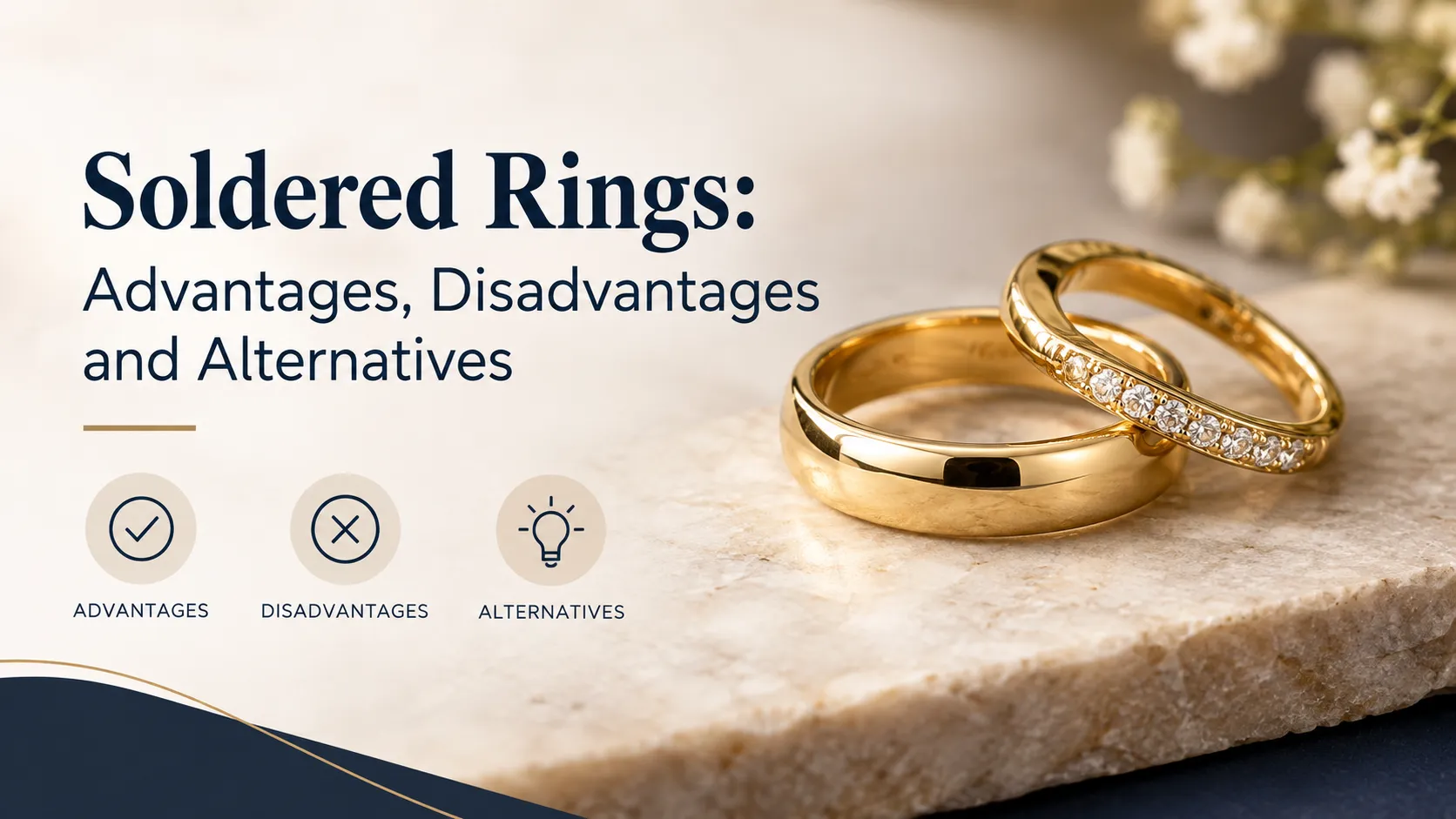
Soldering permanently fuses two or more rings, usually an engagement ring and a wedding band, so they sit flush and never shift out of alignment. It’s a great fix for rings that keep spinning or rubbing against each other, but it’s permanent, it affects resale and resizing, and it’s not the only way to solve the same problem. Fusion bands, ring guards, and custom-designed sets can achieve the same look without welding the metal together.
If your rings keep twisting on your finger or the stones keep catching on your wedding band, soldering probably crossed your mind. It’s worth understanding what you’re actually committing to before a jeweler fires up a torch.
Key Takeaways
- Soldering permanently joins rings together using heat and metal filler, so they stop spinning and stay perfectly aligned.
- It’s not reversible without cost. Un-soldering requires another trip to a jeweler, and the process can leave faint marks or affect finish.
- Resizing a soldered set is harder and pricier, since both rings usually need to be resized together.
- Resale value takes a hit. Soldered rings are typically harder to sell separately, since buyers expect a single ring, not a fused pair.
- It’s best suited for rings you’re certain you’ll wear together forever, not a temporary fix for alignment annoyance.
What Soldering Actually Involves
A jeweler positions your rings exactly how you want them to sit, then uses a small torch and metal solder (a filler metal with a lower melting point than the rings themselves) to fuse them at the point where they touch. Done well, the seam is barely visible and the rings behave as one solid piece from that point forward.
It’s a quick process, usually done in a single visit, and it solves a genuinely annoying problem: rings that rotate independently, gap unevenly, or catch on each other throughout the day.
The Advantages
- No more misalignment: This is the main reason people solder. Once fused, your engagement ring and wedding band stay in the exact position you set them in, no more waking up with your solitaire twisted to the side of your hand.
- A cleaner, more finished look: Soldered rings sit flush against each other, which reads as a single, intentional design rather than two separate rings that happen to be worn together. For stacked or interlocking designs, this often looks noticeably better than two independent bands.
- Less wear between the rings: When rings shift against each other constantly, the friction can wear down the metal over years, especially at contact points. A soldered set eliminates that friction.
- One less thing to think about: You put one unit on in the morning instead of managing two rings that might not sit right that day. For a lot of people, that convenience alone is worth it.
The Disadvantages
- It’s permanent, and permanent decisions carry risk: Life circumstances change. Some people solder rings and later want to wear them separately for travel, sizing, or simply a different look and that requires another jeweler visit to reverse, not something you can undo yourself.
- Resizing gets more complicated and more expensive: If your finger size changes, a jeweler has to resize both rings as a connected unit, which is a more delicate and often costlier job than resizing a single band. In some cases, the rings need to be un-soldered, resized separately, then re-soldered.
- It can affect resale value: If you ever need to sell one of the rings, a soldered set is harder to sell as two separate pieces. Buyers are shopping for a ring, not a permanently fused pair, which narrows your resale market.
- The seam isn’t always invisible: A skilled jeweler minimizes it, but depending on the ring designs and metals involved, a faint line or slight color difference at the solder point is sometimes visible up close, especially between different metal purities or if the rings weren’t originally designed to sit together.
Not reversible without professional help. Unlike a ring guard you can simply remove, un-soldering requires cutting the joint and re-finishing both rings, which takes time and money.
Alternatives to Soldering
If the appeal is the flush, unified look without the permanence, a few options solve the same problem differently.
- Fusion or contour wedding bands. These are designed with a custom-cut edge that hugs the exact silhouette of your engagement ring, so they sit flush without ever being physically joined. You get the seamless look and keep the ability to wear each ring separately.
- Ring guards or spacers. A small metal band worn between or around your rings holds them in place and stops spinning, without any permanent alteration to either ring. These are removable, adjustable, and far cheaper than soldering.
- A designed matched set. If you’re building your engagement ring and wedding band at the same time, having them designed together from the start, so the profiles are made to interlock naturally, solves the alignment problem before it exists. This avoids the need to solder two rings that were never designed with each other in mind.
- Interlocking or “toi et moi” style bands. Some ring designs physically interlock by shape rather than by metal fusion, giving a similar unified appearance with the flexibility to separate them if needed.
The right choice usually comes down to how certain you are that you’ll always want to wear both rings together, versus wanting the flexibility to change your mind later without a jeweler’s torch involved.
Should You Solder Your Rings?
A simple way to think about it: soldering makes the most sense when the rings genuinely bother you as-is (constant spinning, visible gapping, catching on clothing) and you’re confident you’ll wear them together indefinitely. If either of those isn’t true, an alternative like a contour band or ring guard usually gets you the same day-to-day comfort without giving up flexibility later.
It also matters how the rings were designed in the first place. Two rings bought separately, at different times, from different collections, are more likely to need soldering to sit well together, simply because they weren’t built with each other in mind.
The Bottom Line
Soldering solves a real problem, but it’s a one-way decision for what’s usually a fixable design issue. Before committing to it, it’s worth asking whether the actual goal is “these rings need to physically become one,” or just “these rings need to sit together properly,” because those two goals have very different solutions.
That second option is usually the better starting point. When an engagement ring and wedding band are designed together from the start, rather than bought separately and forced to fit later, the alignment problem tends to solve itself. Custom Karat lets you build both pieces as a set, matched to each other’s profile from day one, whether you start from an existing design or shape the whole thing from scratch, so you’re not stuck choosing between soldering, a spacer, or two rings that never quite sit right together.
Frequently Asked Questions
Does soldering damage the rings?
Done correctly by an experienced jeweler, soldering shouldn’t damage the rings structurally. The main risks are a visible seam or a slight finish difference at the joint, which is more likely with mismatched metals or poorly matched ring profiles.
Can soldered rings be separated later?
Yes, but it requires a jeweler to cut the joint and refinish both rings, which takes time and adds cost. It’s not something that can be undone at home.
Is soldering expensive?
It’s generally an affordable service on its own, especially compared to buying a new custom-designed set. The bigger cost usually comes later, if the rings ever need to be resized or separated.
What’s a good alternative to soldering if I don’t want anything permanent?
Ring guards or spacers are the most common non-permanent alternative. They hold rings in place and stop spinning without any physical alteration to either ring, and they can be removed anytime.
Can you resize a soldered ring set?
Yes, but it’s more complex than resizing a single ring, since both rings are usually resized together or temporarily un-soldered, resized, and then re-soldered.
Should engagement rings and wedding bands be designed together to avoid needing to solder?
It helps significantly. Rings designed as a matched set from the start tend to sit flush naturally, which removes the alignment problem that leads most people to consider soldering in the first place.

About Author Gautami Teliwadekar
Gautami brings over 10 years of experience in the jewelry industry, with expertise in fine jewelry, custom designs, diamonds, gemstones, and evolving jewelry trends. At Custom Karat, she combines her industry knowledge and passion for craftsmanship to help customers make confident, informed choices when creating jewelry that reflects their unique style.