No products added!

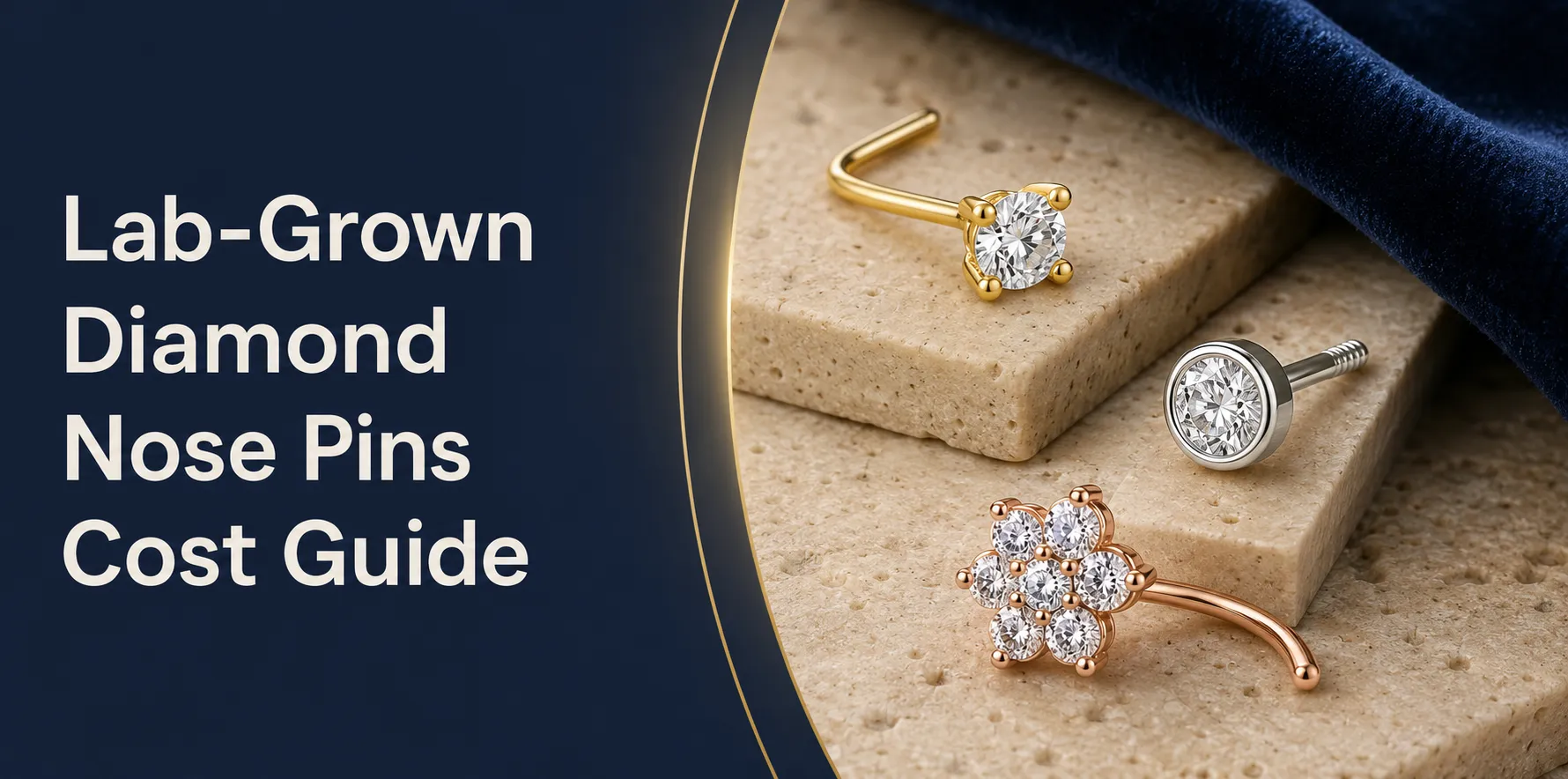
Lab-grown diamond nose pins are a smart choice for buyers who want real diamond sparkle in a small, elegant, and highly wearable jewelry piece.
Whether you are buying a simple diamond nose stud, bezel-set nose pin, prong-set nose pin, screw nose pin, L-shaped nose pin, flat-back nose pin, bridal nose pin, floral nose pin, heart nose pin, or custom nose jewelry, lab-grown diamonds allow buyers to get a premium look at a more accessible cost than many natural diamond options.
But the cheapest nose pin is not always the best nose pin.
A low-priced nose pin with weak metal, poor finishing, uncomfortable backing, sharp prongs, or unclear diamond quality may not give long-term value. Since nose pins are worn directly on the nose, comfort, fit, metal quality, backing type, and setting security are just as important as sparkle.
This guide explains how much lab-grown diamond nose pins cost, what affects pricing, how buyers can save money, and how Custom Karat helps customers create premium custom nose pins at the lowest practical cost without compromising comfort or craftsmanship.
Key Takeaways
- Lab-grown diamond nose pins use real diamonds created in controlled laboratory environments.
- Lab-grown diamonds are chemically and optically similar to natural diamonds, and professional testing is needed to reliably separate them from mined diamonds.
- Lab-grown diamond nose pins usually cost less than natural diamond nose pins of similar size and quality.
- Cost depends on diamond size, metal type, backing style, post thickness, setting type, design complexity, and craftsmanship.
- Simple lab-grown diamond nose studs usually cost less than bridal, floral, heart, or custom nose pins.
- Buyers can reduce cost by choosing practical diamond size, eye-clean clarity, 14K gold, simple settings, and direct custom manufacturing.
- The lowest cost should mean the best price for premium quality, not cheap or uncomfortable jewelry.
- Custom Karat helps buyers control cost through smart diamond selection, CAD previews, transparent pricing, direct manufacturer value, and premium craftsmanship.
What Is a Lab-Grown Diamond Nose Pin?
A lab-grown diamond nose pin is nose jewelry made with a diamond created in a laboratory instead of mined from the earth.
These diamonds are real diamonds. They offer diamond brilliance, sparkle, hardness, and beauty, but their origin is laboratory-created.
Lab-grown diamond nose pins can be designed in many styles, including:
- Diamond nose studs
- Solitaire nose pins
- Bezel-set nose pins
- Prong-set nose pins
- Screw nose pins
- L-shaped nose pins
- Flat-back nose pins
- Floral diamond nose pins
- Heart diamond nose pins
- Bridal nose pins
- Custom nose jewelry
Are Lab-Grown Diamond Nose Pins Real Diamond Jewelry?
Yes, lab-grown diamond nose pins are real diamond jewelry.
A lab-grown diamond is not cubic zirconia, moissanite, glass, white sapphire, or a simulated diamond. Simulated stones only look like diamonds, while lab-grown diamonds are actual diamonds created in controlled laboratory environments.
The FTC advises sellers to clearly disclose when diamonds are laboratory-created so buyers understand they are not mined diamonds.
| Diamond Type | Meaning |
| Natural Diamond | Formed underground |
| Lab-Grown Diamond | Created in a laboratory |
| Simulated Diamond | Looks like diamond but is not diamond |
How Much Does a Lab-Grown Diamond Nose Pin Cost?
Lab-grown diamond nose pin cost can vary depending on diamond size, metal, backing style, setting design, and craftsmanship.
As a broad buyer estimate, lab-grown diamond nose pins may cost between $100 and $2,000+. Simple small diamond nose studs usually fall at the lower end, while bridal, custom, floral, heart, or larger diamond nose pins may cost more.
Current online examples show how pricing changes by metal, diamond size, and backing style. Body Candy lists a 14K white gold 2 mm lab-grown diamond nose ring at a sale price of $91.99, with options such as bone, L-shape, and nostril screw styles. Glamira’s lab-grown diamond nose pin listings show examples in 9K, 14K, and 18K gold with diamond weights from very small stones to 0.15 ct, with prices shown across a wide range depending on design and metal.
This is why buyers should not compare only by price. A nose pin’s real value depends on the full product: diamond quality, metal safety, backing comfort, setting smoothness, post thickness, polish, and long-term wearability.
Lab-Grown Diamond Nose Pin Cost Chart
The price ranges below are educational estimates only. Actual pricing changes based on diamond quality, metal price, backing type, design, craftsmanship, and market conditions.
| Nose Pin Type | Approximate Cost Range |
| Simple Lab-Grown Diamond Nose Stud | $100 – $500+ |
| Bezel-Set Lab-Grown Diamond Nose Pin | $150 – $700+ |
| Prong-Set Lab-Grown Diamond Nose Pin | $150 – $700+ |
| Screw Lab-Grown Diamond Nose Pin | $150 – $800+ |
| L-Shaped Lab-Grown Diamond Nose Pin | $100 – $600+ |
| Flat-Back Lab-Grown Diamond Nose Pin | $150 – $800+ |
| Floral Lab-Grown Diamond Nose Pin | $250 – $1,200+ |
| Heart Lab-Grown Diamond Nose Pin | $250 – $1,000+ |
| Bridal Lab-Grown Diamond Nose Pin | $400 – $2,000+ |
| Custom Lab-Grown Diamond Nose Pin | Depends on diamond, metal, backing, and design |
A simple round diamond nose stud usually costs less than a bridal or floral nose pin because it uses less metal, fewer diamonds, and simpler setting work.
Why Lab-Grown Diamond Nose Pins Cost Less Than Natural Diamond Nose Pins
Lab-grown diamond nose pins usually cost less because the diamond is created through technology instead of being mined from the earth.
Natural diamond pricing is affected by rarity, mining, distribution, inventory, and traditional retail structures. Lab-grown diamonds give buyers more cost flexibility, especially for small jewelry pieces like nose pins.
This means buyers may be able to choose:
- Better diamond sparkle
- Cleaner diamond clarity
- Better metal quality
- More comfortable backing
- Custom design details
- Bridal or decorative styles
- Better finishing within budget
What Affects Lab-Grown Diamond Nose Pin Cost?
The price of a lab-grown diamond nose pin is not based only on the diamond. The complete nose pin affects the final cost.
Main pricing factors include:
- Diamond size
- Diamond shape
- Diamond quality
- Metal type
- Metal weight
- Setting style
- Backing type
- Post thickness
- Post length
- Design size
- Stone count
- CAD work
- Stone setting labor
- Polishing and finishing
- Custom details
- Direct or retail pricing model
To get the lowest cost for a premium product, buyers need to know which details truly improve comfort and quality.
Factor 1: Diamond Size
Diamond size is one of the biggest cost factors. A small 1.5 mm diamond nose stud usually costs less than a larger 2.5 mm or 3 mm diamond nose pin.
Common nose pin diamond sizes include:
| Diamond Size | Style Feel |
| 1.0 mm – 1.5 mm | Very subtle and minimal |
| 1.6 mm – 2.0 mm | Classic daily-wear size |
| 2.1 mm – 2.5 mm | More visible sparkle |
| 2.6 mm – 3.0 mm | Bold nose stud look |
| 3.0 mm+ | Bridal or statement styling |
Smart cost-saving tip:
Choose a practical diamond size for daily wear. A smaller well-cut diamond can look elegant and feel more comfortable than an oversized stone.
Factor 2: Diamond Cut
Cut affects sparkle. Since nose pin diamonds are small, cut quality matters because it helps the diamond reflect light better. A poorly cut diamond may look dull even if it is larger.
Smart cost-saving tip:
Do not choose size over sparkle. A well-cut smaller diamond can look brighter and more premium.
Factor 3: Diamond Color
Diamond color affects how white or warm the diamond appears.
For white gold or platinum nose pins, near-colorless diamonds usually look clean and bright. For yellow gold or rose gold nose pins, slightly warmer diamonds can still look beautiful because the metal tone adds warmth.
Smart cost-saving tip:
Choose G-H or near-colorless diamonds instead of automatically paying for D-F color. In small nose pins, slight color differences are often less noticeable.
Factor 4: Diamond Clarity
Clarity refers to inclusions and blemishes.
For small nose pin diamonds, most buyers do not need flawless clarity. VS or eye-clean diamonds can look beautiful while costing less than VVS or FL diamonds.
Smart cost-saving tip:
Choose eye-clean clarity instead of paying extra for flawless clarity.
Factor 5: Diamond Shape
Diamond shape affects appearance and cost.
Popular diamond shapes for nose pins include:
- Round
- Princess
- Heart
- Pear
- Marquise
- Floral cluster
- Custom shapes
Round diamonds are the most common and classic. Heart, pear, princess, and floral designs may cost more because they require more detailed setting and finishing.
Smart cost-saving tip:
Choose a round diamond for the most classic and cost-effective look. Choose custom shapes when the design meaning matters more than lowest cost.
Factor 6: Metal Type
Metal is very important for nose pins because the jewelry is worn close to the skin.
Popular metals include:
- 10K gold
- 14K gold
- 18K gold
- Yellow gold
- White gold
- Rose gold
- Platinum
- Sterling silver
For fine nose jewelry, 14K gold is often a practical balance of beauty, durability, and cost.
Smart cost-saving tip:
Choose 14K gold for daily-wear nose pins. Choose 18K gold or platinum when a more premium metal is preferred. Be careful with low-quality metals for nose jewelry.
Factor 7: Metal Weight
Nose pins are small, so metal weight may not seem important, but it still affects cost and comfort.
A thicker floral or bridal nose pin uses more metal than a simple solitaire stud.
Metal weight affects:
- Final price
- Comfort
- Strength
- Setting security
- Long-term wearability
Smart cost-saving tip:
Use enough metal for strength, but avoid unnecessary bulk. A nose pin should feel secure, not heavy.
Factor 8: Setting Style
The setting holds the diamond in place and affects both price and comfort.
Common setting styles include:
| Setting Style | Cost Impact |
| Prong Setting | Sparkly and classic |
| Bezel Setting | Smooth and secure |
| Flush Setting | Low-profile and practical |
| Cluster Setting | More detailed and usually higher cost |
| Floral Setting | Decorative and more labor-intensive |
| Custom Setting | Depends on design complexity |
Smart cost-saving tip:
Choose a simple prong or bezel setting for daily wear. A bezel setting may cost slightly more than a basic prong style, but it can offer a smoother and more secure feel.
Factor 9: Backing Type
Backing type affects comfort, security, and cost.
Popular backing options include:
- L-shaped
- Screw
- Flat-back
- Nose bone
- Custom backing
A simple L-shaped style may cost less, while screw, flat-back, or custom backings may cost more because they require more precise shaping.
Smart cost-saving tip:
Do not choose backing only by price. A comfortable and secure backing gives better long-term value.
Factor 10: Post Thickness and Length
Post thickness and length affect fit.
If the post is too thick, it may feel uncomfortable. If it is too thin, it may feel loose. If the post is too long, it may irritate the inside of the nose.
Smart cost-saving tip:
Choose the correct post size based on your existing piercing. Proper fit prevents discomfort and reduces the risk of buying a nose pin you cannot wear comfortably.
Factor 11: Design Complexity
A simple solitaire nose stud costs less than a floral, heart, bridal, or custom nose pin.
Custom design cost may include:
- CAD design
- Stone layout
- Metal shaping
- Backing customization
- Stone setting
- Polishing
- Finishing
- Quality control
Smart cost-saving tip:
Keep the design clean and wearable. Extra details should improve beauty, comfort, or meaning.
How to Get a Lab-Grown Diamond Nose Pin at the Lowest Practical Cost
Getting the lowest cost does not mean buying uncomfortable or poor-quality jewelry. It means getting the best possible price for premium quality.
1. Choose Lab-Grown Instead of Natural Diamonds
This is the biggest cost-saving step.
Lab-grown diamonds usually allow buyers to get real diamond sparkle at a lower cost than comparable natural diamonds.
Example:
A buyer wants a small diamond nose stud for daily wear. A lab-grown diamond version can offer real diamond beauty while helping the buyer save compared to many natural diamond options.
2. Choose a Practical Diamond Size
For nose pins, bigger is not always better. A 1.5 mm to 2.5 mm diamond can look elegant and feel comfortable for daily wear. A larger diamond may increase cost and may feel heavier or sit too high.
3. Choose Eye-Clean Clarity
Most buyers do not need flawless clarity in a small nose pin diamond. VS or eye-clean diamonds usually look beautiful and cost less than VVS or FL diamonds.
4. Choose 14K Gold for Balanced Value
14K gold is durable, attractive, and cost-effective for fine nose jewelry.
It works well for:
- Daily-wear nose pins
- Diamond nose studs
- Bezel nose pins
- Prong nose pins
- Bridal nose pins
- Custom nose jewelry
5. Keep the Design Lightweight
A lightweight design usually feels better and costs less. Avoid unnecessary metal thickness, oversized diamonds, or heavy decorative shapes unless the nose pin is intended for bridal or occasional wear.
6. Choose the Right Backing From the Start
A low-cost nose pin with the wrong backing may not be wearable. Choose the backing type that fits your piercing and comfort needs. This saves money by avoiding replacement purchases.
7. Use CAD Approval for Custom Designs
CAD approval helps buyers review the nose pin before production.
This helps confirm:
- Diamond placement
- Setting height
- Metal thickness
- Post structure
- Backing design
- Overall size
- Stone layout
- Final proportions
For small jewelry like nose pins, even tiny design changes can affect comfort.
Real-Life Example 1: Saving on a Daily-Wear Diamond Nose Stud
Buyer Goal
A customer wants a simple lab-grown diamond nose stud for daily wear.
Expensive Retail Approach
The buyer may be shown:
- Very high diamond clarity
- Larger diamond size than needed
- Premium metal upgrade
- Fixed backing style
- Higher retail markup
Smart Custom Karat Approach
Custom Karat can help choose:
- Lab-grown diamond
- Practical 1.5 mm to 2.0 mm size
- Eye-clean clarity
- 14K gold
- Comfortable backing
- Smooth low-profile setting
- Direct manufacturer pricing
Buyer Benefit
The nose pin looks bright and elegant while staying comfortable and cost-effective.
Real-Life Example 2: Saving on a Bridal Lab-Grown Diamond Nose Pin
Buyer Goal
A customer wants a decorative bridal nose pin for a wedding or special occasion.
Expensive Retail Approach
A ready-made bridal nose pin may include:
- Fixed diamond count
- Higher metal weight
- Limited backing options
- Extra design details not needed
- Higher showroom markup
Smart Custom Karat Approach
Custom Karat can help adjust:
- Diamond count
- Design size
- Metal type
- Setting style
- Backing type
- Stone placement
- CAD-approved proportions
Buyer Benefit
The buyer gets a bridal nose pin that looks special while avoiding unnecessary metal weight and extra stones.
Real-Life Example 3: Saving on a Bezel-Set Nose Pin
Buyer Goal
A customer wants a smooth and secure nose pin for everyday wear.
Expensive Retail Approach
The buyer may pay more for a larger diamond or premium clarity when the design does not need it.
Smart Custom Karat Approach
Custom Karat can suggest:
- Lab-grown diamond
- Bezel setting
- 14K gold
- Practical diamond size
- Low-profile structure
- Comfortable post length
Buyer Benefit
The nose pin feels smooth, secure, and premium without overpaying for unnecessary diamond grades.
Real-Life Example 4: Saving on a Custom Heart Nose Pin
Buyer Goal
A customer wants a heart-shaped nose pin for gifting or personal styling.
Expensive Retail Approach
A retail custom quote may include:
- Oversized design
- Extra metal thickness
- High customization fee
- Full diamond coverage
- Limited fit control
Smart Custom Karat Approach
Custom Karat can reduce cost by helping choose:
- Practical heart size
- Lab-grown diamond accent
- 14K rose, white, or yellow gold
- Smooth edges
- Comfortable backing
- CAD-reviewed shape
Buyer Benefit
The buyer gets a meaningful heart nose pin that looks premium and feels wearable without unnecessary design cost.
Lab-Grown Diamond Nose Pin Cost by Style
Simple Lab-Grown Diamond Nose Stud Cost
A simple diamond nose stud is usually the most cost-effective style.
Main cost factors include:
- Diamond size
- Metal type
- Setting style
- Backing type
- Post thickness
- Finishing quality
This is ideal for daily wear and minimal styling.
Bezel-Set Lab-Grown Diamond Nose Pin Cost
A bezel-set nose pin may cost slightly more than a basic prong style because it uses more metal around the diamond.
Main cost factors include:
- Diamond size
- Metal type
- Bezel thickness
- Post style
- Finishing smoothness
A bezel setting is a strong choice for buyers who want a secure and low-profile design.
Prong-Set Lab-Grown Diamond Nose Pin Cost
A prong-set nose pin is classic and sparkly.
Main cost factors include:
- Diamond size
- Number of prongs
- Metal type
- Prong finishing
- Backing style
Prong settings can be cost-effective, but the prongs must be smooth and secure.
Screw Lab-Grown Diamond Nose Pin Cost
A screw nose pin may cost more than a simple L-shaped style because the backing structure requires more shaping.
Main cost factors include:
- Diamond size
- Metal type
- Screw design
- Post thickness
- Comfort finishing
A screw backing can be a good option for buyers who want stronger hold.
Flat-Back Lab-Grown Diamond Nose Pin Cost
Flat-back nose pins may cost more because they require precise fitting and smooth finishing.
Main cost factors include:
- Diamond size
- Metal type
- Flat-back structure
- Post length
- Setting height
This style is useful for comfort-focused buyers.
Floral Lab-Grown Diamond Nose Pin Cost
Floral nose pins usually cost more than simple studs because they include more design work.
Main cost factors include:
- Flower size
- Diamond count
- Metal shaping
- Stone placement
- Setting labor
- Backing type
This style is popular for bridal and festive jewelry.
Heart Lab-Grown Diamond Nose Pin Cost
Heart nose pins can be simple or detailed.
Main cost factors include:
- Heart size
- Diamond shape
- Metal type
- Setting style
- Smooth finishing
- Backing structure
Heart nose pins are popular for gifting and personal styling.
Bridal Lab-Grown Diamond Nose Pin Cost
Bridal nose pins can cost more because they may include larger designs, decorative shaping, multiple stones, or custom details.
Main cost factors include:
- Diamond count
- Design size
- Metal type
- Stone setting
- Backing comfort
- CAD work
- Finishing quality
A bridal design should feel special but still be comfortable enough to wear during the event.
Custom Lab-Grown Diamond Nose Pin Cost
Custom nose pin cost depends on the full design. A simple custom diamond stud may be affordable, while a floral, heart, bridal, or symbolic custom design may cost more.
Main cost factors include:
- CAD design
- Diamond selection
- Metal type
- Backing type
- Post thickness
- Stone setting
- Polishing
- Quality control
- Custom details
Lab-Grown Diamond Nose Pin Cost-Saving Tips
| Cost Area | Smart Saving Tip |
| Diamond Type | Choose lab-grown diamonds instead of natural diamonds |
| Diamond Size | Choose practical daily-wear size |
| Diamond Color | Choose G-H or near-colorless grades for value |
| Diamond Clarity | Choose eye-clean VS diamonds instead of flawless |
| Metal | Choose 14K gold for durability and cost balance |
| Setting | Choose simple prong or bezel for daily wear |
| Backing | Select the right backing from the start |
| Design | Keep the design lightweight and smooth |
| Bridal Nose Pin | Use smart diamond placement instead of oversized design |
| Custom Design | Use CAD to optimize comfort and cost |
| Buying Channel | Choose direct manufacturer value |
What Does “Lowest Cost” Mean for Lab-Grown Diamond Nose Pins?
Lowest cost should not mean:
- Fake diamonds
- Poor metal
- Sharp prongs
- Rough finishing
- Weak backing
- Uncomfortable post
- Loose diamond setting
- Unclear diamond quality
- No quality control
- No customer support
For premium lab-grown diamond nose pins, lowest cost should mean:
- Lowest avoidable markup
- Real lab-grown diamond
- Smart diamond size
- Eye-clean clarity
- Skin-friendly metal
- Comfortable backing
- Secure setting
- Smooth polish
- Transparent pricing
- CAD-approved design when custom
- Premium finishing
This is how buyers get a nose pin that looks beautiful without overpaying.
Expert Tips to Save More on Lab-Grown Diamond Nose Pins
Start With a Clear Budget
Tell the jeweler your target budget first. A good custom jeweler can design around the budget instead of pushing unnecessary upgrades.
Choose Lab-Grown Diamonds
Lab-grown diamonds help buyers get real diamond sparkle at a lower cost than many natural diamond options.
Choose a Comfortable Size
A smaller, well-cut diamond can look elegant and feel better for daily wear. Do not choose size only for appearance.
Choose Eye-Clean Diamonds
VS or eye-clean diamonds usually offer excellent value. You do not need flawless clarity for most nose pins.
Choose 14K Gold
14K gold is durable, premium-looking, and cost-effective. It is a strong option for daily-wear nose jewelry.
Choose the Right Backing
Comfort and security matter. A properly selected backing helps avoid irritation, looseness, or replacement costs.
Keep the Design Smooth
Smooth edges, low-profile settings, and clean finishing are important for nose pins.
Use CAD for Custom Designs
CAD helps refine the nose pin before production. This prevents oversized designs, uncomfortable posts, weak settings, or unnecessary metal weight.
Final Verdict
Lab-grown diamond nose pins are one of the best ways to get real diamond sparkle, elegant styling, and custom design flexibility at a lower cost than many natural diamond options.
The lowest price is not always the best deal. The smarter choice is a nose pin that gives the best value for comparable quality.
Buyers can save more by choosing lab-grown diamonds, practical diamond size, eye-clean clarity, near-colorless grades, 14K gold, comfortable backing, smooth finishing, CAD-approved design, and direct custom manufacturing.
Custom Karat helps buyers create premium lab-grown diamond nose pins at the lowest practical cost through lab-grown diamond options, smart quality selection, CAD approval, transparent pricing, direct manufacturer value, expert craftsmanship, and secure USA shipping.
For buyers who want a beautiful custom diamond nose pin without unnecessary retail overpricing, Custom Karat is a strong choice.
FAQs
How much does a lab-grown diamond nose pin cost?
A lab-grown diamond nose pin can cost from around $100 to $2,000+, depending on diamond size, metal, backing type, setting style, craftsmanship, and customization.
How much does a simple lab-grown diamond nose stud cost?
A simple lab-grown diamond nose stud may cost around $100 to $500+, depending on diamond size, metal type, and backing style.
Are lab-grown diamond nose pins cheaper than natural diamond nose pins?
Yes. Lab-grown diamond nose pins usually cost less than natural diamond nose pins of similar size and quality.
What diamond size is best for a nose pin?
For daily wear, 1.5 mm to 2.5 mm is often practical. Larger sizes can work for bridal or statement styling.
What metal is best for saving money on diamond nose pins?
14K gold is often the best balance of durability, beauty, and cost. 10K gold may reduce cost further for selected designs, while 18K gold and platinum offer a more premium feel.
What clarity gives the best value for nose pins?
VS or eye-clean diamonds usually offer excellent value because tiny inclusions are difficult to see in small nose pin diamonds.
Is a bezel nose pin more expensive than a prong nose pin?
A bezel nose pin may cost slightly more because it uses more metal around the diamond, but it can offer a smoother and more secure feel.
Does lower cost mean lower quality?
Not always. Lower cost can come from avoiding retail markups and choosing smart diamond grades. It should not mean poor metal, rough finishing, weak backing, or unclear diamond quality.
Can I customize a lab-grown diamond nose pin?
Yes. You can customize diamond size, shape, metal, backing type, post thickness, setting style, and overall design.
Can Custom Karat make a custom lab-grown diamond nose pin within my budget?
Yes. Custom Karat can help adjust diamond size, metal, backing, setting, and design details to create a premium custom nose pin around your budget.

About Author Priyanka Kale
Priyanka Kale is a jewelry retail industry author who shares knowledge on diamonds, lab-grown jewelry, custom designs, and jewelry buying tips. Her content helps customers understand quality, pricing, trends, and craftsmanship before making confident jewelry purchase decisions.