No products added!


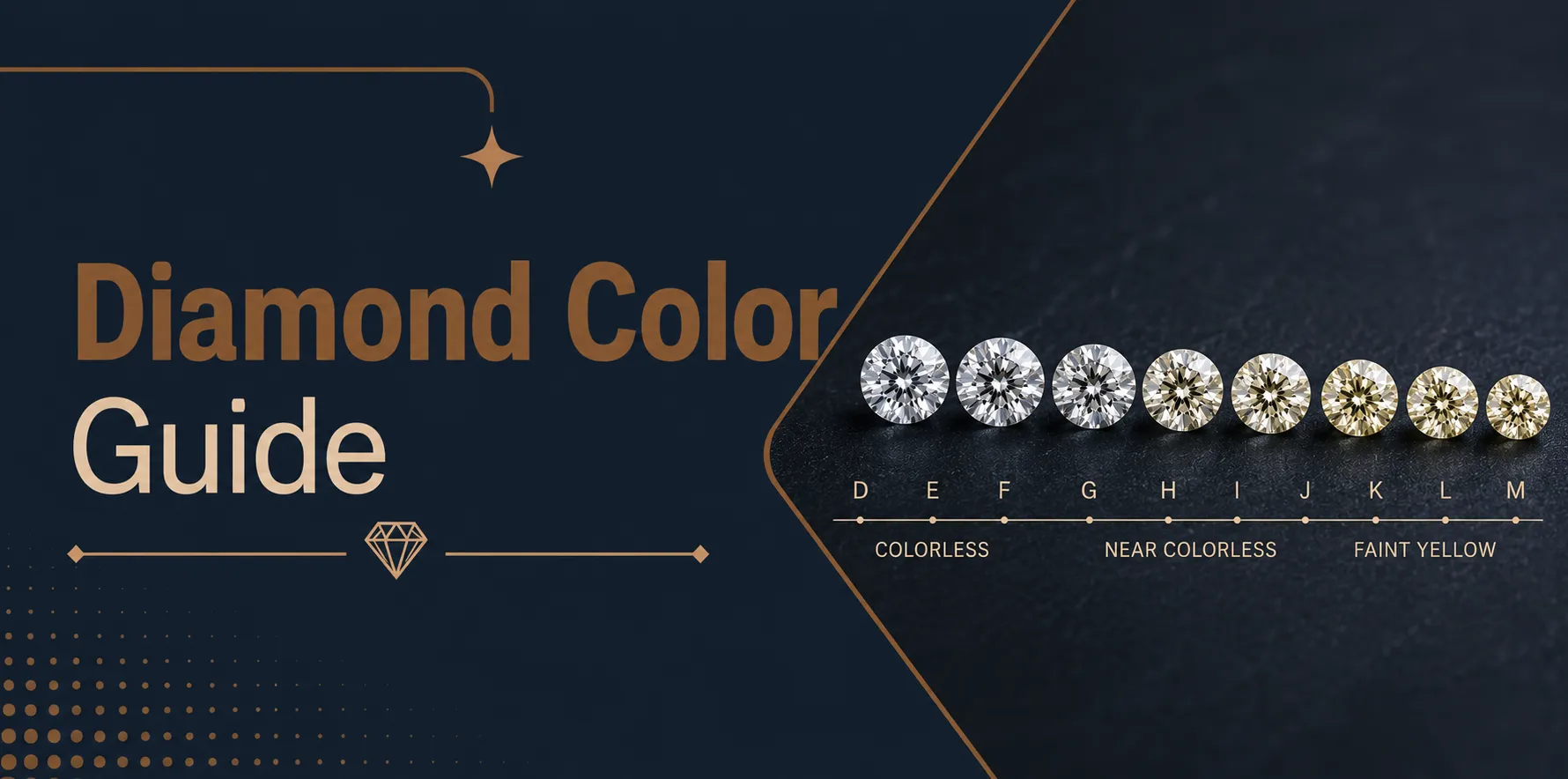
When shopping for a diamond, most buyers focus on carat weight and sparkle. However, one of the most important factors affecting a diamond’s beauty and value is its color grade.
Diamond color influences how white, bright, and visually appealing a diamond appears. Even slight differences in color can impact pricing significantly, making it essential for buyers to understand what they’re paying for.
Whether you’re purchasing an engagement ring, wedding jewelry, or a custom diamond piece, understanding diamond color grades can help you maximize beauty while staying within budget.
This complete guide explains everything you need to know about diamond color, including grading scales, pricing considerations, common mistakes, and expert recommendations.
Key Takeaways
- Diamond color measures the absence of color in a white diamond.
- The industry color scale ranges from D (colorless) to Z (light yellow or brown).
- Colorless diamonds are generally rarer and more expensive.
- Many buyers cannot visually distinguish between adjacent color grades.
- Diamond shape and setting can influence how color appears.
- Near-colorless diamonds often provide the best balance of beauty and value.
- Color is one of the four factors in the diamond grading system known as the 4Cs.
- Certification helps verify accurate color grading.
- The ideal color grade depends on budget, diamond shape, and personal preference.
- Understanding color grades helps buyers avoid unnecessary spending.
What Is Diamond Color?
Diamond color refers to the natural tint present within a diamond.
For traditional white diamonds, the less color visible, the higher the color grade.
Most diamonds contain trace amounts of yellow or brown coloration. These subtle color variations often become visible only when compared side by side.
The goal of diamond color grading is to measure how close a diamond comes to being completely colorless.
Why Diamond Color Matters
Diamond color affects:
- Visual appearance
- Brightness
- Perceived quality
- Market value
- Overall pricing
A higher color grade generally commands a higher price because colorless diamonds are less common.
However, the highest color grade is not always the smartest purchase for every buyer.
Understanding the Diamond Color Scale
The industry-standard grading scale was developed by the Gemological Institute of America and ranges from D to Z.
Diamond Color Chart
| Grade Range | Category | Appearance |
| D–F | Colorless | No visible color |
| G–J | Near Colorless | Slight warmth, difficult to detect |
| K–M | Faint Color | Noticeable tint in some lighting |
| N–R | Very Light Color | Visible yellow or brown tint |
| S–Z | Light Color | Easily noticeable color |
Let’s explore each category in detail.
D-F Color: Colorless Diamonds
What Is It?
D, E, and F diamonds represent the highest color grades available.
These diamonds display virtually no detectable color.
D Color
The rarest and most colorless grade.
E Color
Extremely colorless with minute traces of color detectable only by experts.
F Color
Still considered colorless with very slight color presence.
Pros
- Maximum whiteness
- Exceptional rarity
- Premium appearance
- High market demand
Cons
- Highest pricing
- Minimal visible difference from lower grades
Best For
- Luxury buyers
- Investment-minded shoppers
- Platinum and white gold settings
- Buyers seeking top-tier specifications
G-J Color: Near Colorless Diamonds
What Is It?
Near-colorless diamonds appear white to most observers.
Many buyers cannot distinguish them from D-F diamonds without professional comparison.
G Color
Outstanding balance of beauty and value.
H Color
One of the most popular engagement ring choices.
I Color
Slight warmth visible under certain conditions.
J Color
Offers significant savings while remaining attractive.
Pros
- Excellent value
- Beautiful appearance
- Lower pricing than colorless grades
- Widely available
Cons
- Minor warmth may be visible in some settings
Best For
- Most engagement rings
- Budget-conscious buyers
- Everyday jewelry
K-M Color: Faint Color Diamonds
What Is It?
These diamonds begin displaying noticeable warmth.
Color may become visible, especially in larger stones.
Pros
- Lower pricing
- Vintage appeal
- Unique character
Cons
- Noticeable tint in some lighting
- Less desirable in certain settings
Best For
- Yellow gold settings
- Vintage-inspired jewelry
- Buyers prioritizing size over color
N-Z Color: Noticeable Color Diamonds
What Is It?
Diamonds in this range display visible yellow or brown coloration.
These stones are no longer considered near-colorless.
Pros
- More affordable
- Distinct appearance
Cons
- Obvious color presence
- Lower market demand
Best For
- Buyers seeking unique appearance
- Specific design preferences
How Diamond Shape Affects Color
Not all diamond shapes display color equally.
Shapes That Hide Color Well
- Round Brilliant
- Cushion
- Oval
- Radiant
These cuts reflect more light and often mask slight color.
Shapes That Show Color More Easily
- Emerald
- Asscher
- Baguette
Step-cut diamonds have larger open facets that make color easier to detect.
How Metal Settings Affect Diamond Color
The metal surrounding a diamond can influence its appearance.
White Gold and Platinum
These metals emphasize whiteness and may reveal color more easily.
Recommended Grades:
- D-H
Yellow Gold
Yellow metal can mask slight warmth.
Recommended Grades:
- G-J
- Even K in some cases
Rose Gold
Rose gold complements warmer diamonds beautifully.
Recommended Grades:
- G-K
Is Higher Color Always Better?
Not necessarily.
Many consumers assume they must purchase the highest color grade available.
In reality:
- Most people cannot distinguish D from F.
- Many cannot distinguish F from G.
- Differences often require side-by-side comparison.
This is why many experts recommend focusing on overall appearance rather than chasing the highest possible grade.
Best Diamond Color for Value
For most buyers, the best balance of beauty and affordability falls within:
G-H Color
These grades offer:
- Bright white appearance
- Excellent visual performance
- Strong value for money
They remain among the most popular choices for engagement rings.
Cost Considerations
Diamond color significantly impacts price.
For example:
A D-color diamond can cost substantially more than a G-color diamond with otherwise identical specifications.
However, the visual difference may be difficult for most consumers to notice.
Smart Buying Strategy
Allocate more of your budget toward:
- Cut quality
- Carat weight
- Setting design
rather than paying premiums for color differences that may not be visible.
Common Mistakes Buyers Make
Mistake #1: Assuming D Color Is Always Necessary
Most buyers are perfectly satisfied with G-H diamonds.
Mistake #2: Ignoring Diamond Shape
Some shapes reveal color more readily than others.
Mistake #3: Overpaying for Invisible Differences
Small grading differences often carry large price premiums.
Mistake #4: Forgetting About Metal Color
The setting can dramatically affect perceived color.
Mistake #5: Buying Without Certification
Always verify color grades through independent certification.
Expert Recommendations
Industry professionals often suggest:
Prioritize Cut First
A well-cut diamond sparkles more regardless of color.
Choose G-H for Maximum Value
These grades provide exceptional appearance and affordability.
Consider Setting Metal
Match color grade to the chosen metal.
Review Diamonds in Person When Possible
Visual inspection helps determine personal preferences.
Buy Certified Diamonds
Certification ensures accurate grading.
Trusted laboratories include:
- IGI
- GIA
Diamond Color Recommendations by Budget
| Budget Goal | Recommended Color |
| Premium Luxury | D-F |
| Best Overall Value | G-H |
| Budget-Friendly | I-J |
| Maximum Size for Budget | J-K |
| Vintage Style Jewelry | K-M |
Frequently Asked Questions
What is the best diamond color grade?
For most buyers, G-H offers the best balance of appearance and value.
Can you see the difference between D and G color?
Most people cannot distinguish them without side-by-side comparison and professional lighting.
Does diamond color affect sparkle?
Not directly. Cut quality has a much greater impact on sparkle than color.
Is an H color diamond good?
Yes. H-color diamonds are among the most popular choices because they appear white while offering excellent value.
Which diamond shapes hide color best?
Round Brilliant, Oval, Cushion, and Radiant cuts typically conceal color better than step-cut shapes.
Should I prioritize color or clarity?
In most cases, prioritize cut first, then color, then clarity.
Do lab-grown diamonds follow the same color grading system?
Yes. Lab-grown diamonds are graded using the same D-to-Z color scale as natural diamonds.
Final Verdict
Understanding diamond color is one of the most effective ways to make a smarter diamond purchase. While colorless diamonds command premium prices, many buyers can achieve nearly identical visual results by choosing a near-colorless diamond and investing their savings elsewhere.
For most engagement rings and fine jewelry, G-H color diamonds deliver the ideal combination of beauty, brilliance, and value. The key is balancing color with cut, clarity, carat weight, and setting style to create a diamond that fits both your preferences and your budget.
For those searching for certified natural and lab-grown diamond jewelry, Custom Karat offers expertly crafted engagement rings, custom designs, and premium diamond selections that help buyers find the perfect balance of quality, beauty, and value.

About Author Brijesh Sharma
Brijesh Sharma is a jewelry retail industry author who shares expert insights on diamonds, lab-grown jewelry, custom designs, and smart jewelry buying. His content helps customers understand quality, pricing, trends, and craftsmanship so they can make confident jewelry purchase decisions.