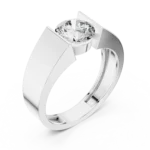
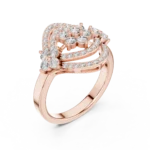
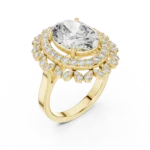
No products added!

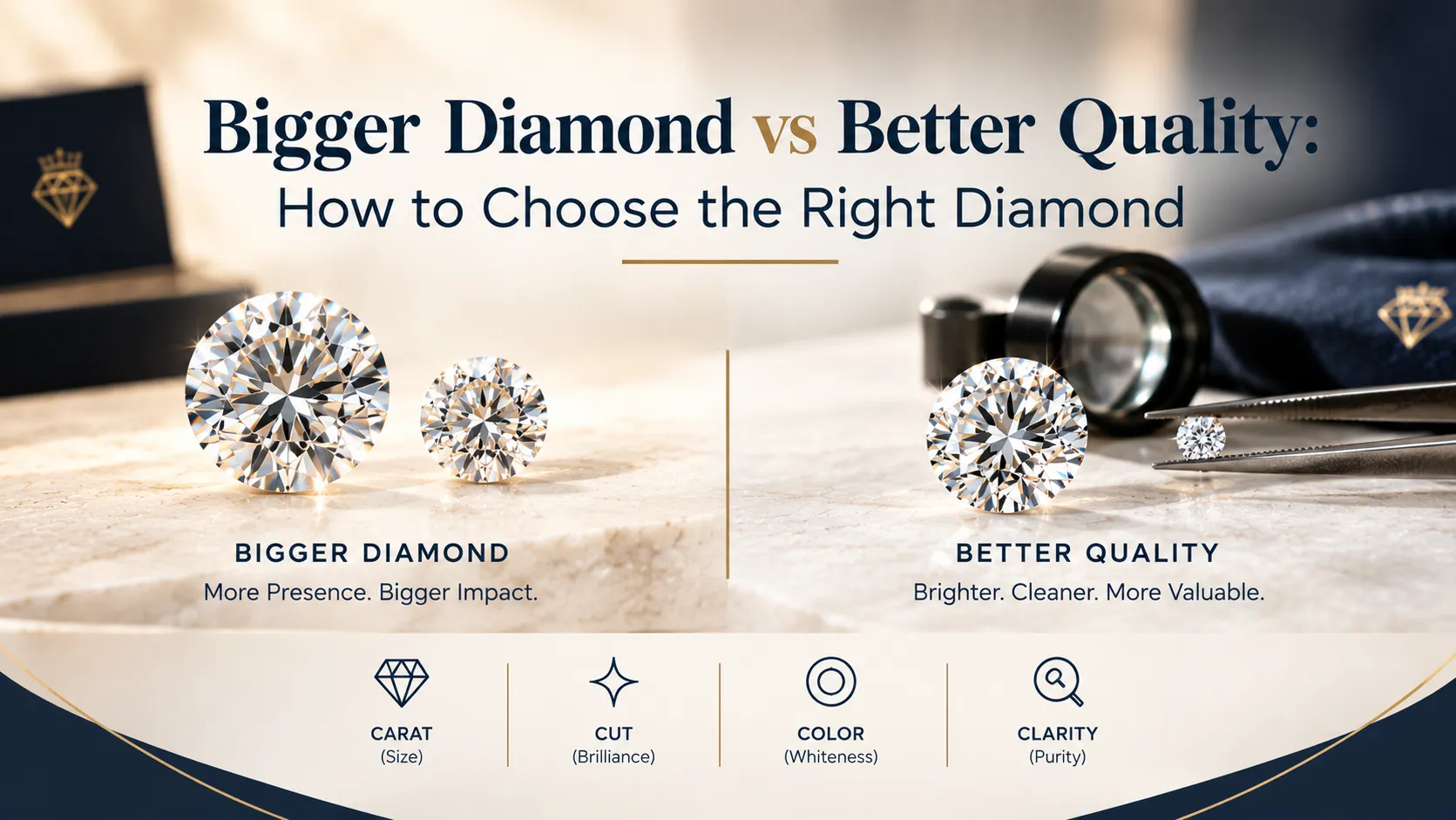
When choosing the right diamond cut wins almost every time. A well-cut diamond throws more light and looks bigger than its actual carat weight suggests, while a poorly cut large stone can look flat and lifeless no matter how many carats it carries. For most budgets, the smartest move is a diamond that’s eye-clean (no visible flaws) with a very good or excellent cut, sized to fit what your budget allows and not the other way around.
That’s the short version. Here’s the longer one, because “just pick quality” isn’t useful advice until you understand what you’re actually trading off.
Key Takeaways
- Cut affects brilliance more than carat weight does. A well-cut smaller diamond can out-sparkle a larger one with mediocre proportions.
- Clarity below the eye-clean threshold (VS2-SI1) is often invisible. Paying up for flawless clarity rarely changes how the ring looks in person.
- Color grades G-H look colorless to the naked eye, especially in yellow or rose gold settings, at a lower cost than D-F.
- Round-number carat weights cost more. Buying just under a whole carat (0.90, 0.97, 1.90) can save money with no visible size difference.
- Lab-grown diamonds shrink the size-vs-quality trade-off, since the same budget stretches further across carat, cut, and clarity at once.
The Real Trade-Off Nobody Explains Well
Every diamond is priced on four factors:
- cut,
- color,
- clarity, and
- carat weight
Also, known as the 4Cs. Carat weight is the one people fixate on because it’s the easiest number to compare. But it’s also the factor with the steepest price jumps and, honestly, the least influence on how brilliant a diamond looks.
Here’s what actually happens when you push your budget toward size instead of quality:
- You cross carat weight thresholds that cost disproportionately more. A 0.99-carat diamond can cost noticeably less than a 1.00-carat diamond of similar quality, simply because shoppers search in round numbers. Buying at 0.90 or 1.90 carats instead of exactly 1 or 2 carats can save you real money with almost no visible difference.
- You risk visible inclusions or a dull face-up look. Dropping clarity or cut grade to afford more carats can leave you with a diamond that looks glassy instead of fiery, or has a spot you can see without a loupe.
- You lose the “wow” factor a smaller, sharper diamond has. A 0.90-carat excellent-cut diamond will often out-sparkle a 1.20-carat diamond with a mediocre cut, even though it’s smaller and cheaper.
Cut Is the One C That Actually Controls Brilliance
Cut isn’t the shape of the diamond (round, oval, cushion) — it’s how precisely the facets are angled and proportioned. This is the factor that decides whether light bounces back up through the top of the stone (brilliance) or leaks out the sides and bottom (a dull, glassy look).
A diamond graded Excellent or Ideal cut reflects light efficiently, which is why it can visually “read” larger and brighter than a bigger diamond cut too shallow or too deep. If you’re only going to prioritize one grade on a certificate, make it this one.
Rule of thumb: never go below Very Good cut on a round diamond, and don’t go below Good on fancy shapes like oval, cushion, or pear, since those shapes are more forgiving but still need reasonably even proportions to avoid a dark “bowtie” effect across the center.
Color and Clarity: Where You Can Actually Save Money
This is where most of your budget flexibility lives, because color and clarity differences are often invisible to the naked eye once you know where the safe zones are.
Color (D to Z scale): Diamonds graded D–F are colorless, and most people can’t tell them apart from G–I diamonds without a side-by-side comparison under controlled lighting. G, H, or I color diamonds look white to the eye in a ring and cost meaningfully less than D–F. Below J, a faint warm tint can start showing, especially in yellow gold settings it may even blend in, but it becomes more visible in platinum or white gold.
Clarity (FL to I3 scale): Flawless and Internally Flawless diamonds are priced for collectors and graders, not for everyday wear — nobody looking at your hand across a dinner table is checking for inclusions with a jeweler’s loupe. VS1, VS2, and even SI1 diamonds are typically eye-clean, meaning any inclusions are invisible without 10x magnification. This is usually the single easiest place to cut cost without cutting visible quality.
Where this saves you money: choosing G-H color and VS2-SI1 clarity instead of D color and VVS clarity can free up 20-30% of your budget to put toward a better cut grade or a slightly larger stone, without anyone noticing a difference in person.
Does Carat Weight Even Matter, Then?
Yes, but not the way most people assume. Two diamonds of the same carat weight can look different sizes depending on their cut proportions and shape. A diamond cut too deep hides weight down in the bottom (the pavilion) where you can’t see it, so it looks smaller from the top than its carat weight suggests. A well-proportioned diamond of the same weight spreads more of that weight across the top, so it looks bigger face-up.
Shape also changes perceived size. Elongated shapes like oval, marquise, pear, and emerald cut tend to look larger per carat than round or cushion cuts, because they cover more surface area on the finger relative to their weight. If size is your priority, an oval or emerald cut will typically outperform a round diamond of the same carat weight in visual footprint.
How to Make a Diamond Look Bigger Without Buying Bigger
If your budget caps your carat weight but you still want maximum visual size, the setting does a lot of the work:
- Halo settings surround the center stone with smaller diamonds, which can add 20-30% to the apparent size of the ring.
- Thin bands make the center stone look larger by contrast, compared to a thick, chunky shank.
- Hidden halos add sparkle underneath the center stone without changing its silhouette from above, giving a subtle size boost.
- Pavé or diamond-set shanks extend the sparkle down the band, so the eye reads the whole ring as bigger, not just the center stone.
This is one advantage of building your own ring instead of buying a preset one. On Custom Karat, you can start from a design already on the site and just swap the setting, or build the your whole jewel from scratch with the utmost customisation. You’re picking the exact combination of stone size, cut quality, and setting style for what you want to spend, at prices that don’t break the bank.
Lab-Grown Diamonds Change the Math Entirely
Lab-grown diamonds are chemically, physically, and optically identical to mined diamonds. They’re graded on the same 4Cs by the same labs. The difference is cost; lab-grown diamonds typically run 60-85% less than mined diamonds of the same size and quality.
That price gap means the “bigger or better” trade-off almost disappears. With a lab-grown diamond, you can often afford a larger carat weight and an excellent cut and higher clarity, all at once, for what a mined diamond of lower specs would cost. If stretching your budget across every C matters more to you than the mined-vs-lab-grown question, this is worth serious consideration. Moissanite is another option if you want maximum size and fire at the lowest possible cost, since it has even more brilliance than diamond, though it reads visibly different under close inspection to a trained eye.
A Simple Way to Decide
Ask yourself these three questions before you set a carat target:
- Will this diamond be seen up close often, or mostly from a distance? An engagement ring gets examined closely. A pendant or stud earring is usually seen from a few feet away, where cut and sparkle matter more than a marginal size difference.
- What’s the setting style? A halo, pavé band, or cluster setting can make a smaller center stone look substantially bigger, freeing up budget for a better cut and clarity.
- What’s the hand or ear it’s going on? Diamonds appear larger on smaller hands and slimmer fingers. If size is the priority, a slightly smaller stone may already read as “big” depending on proportions.
If your honest answer is “I want it to look as big and bright as possible for the money,” the formula that tends to work best is: excellent or very good cut, G-H color, VS2-SI1 clarity, and let carat weight be whatever’s left in the budget. That combination almost always outperforms a bigger stone with a compromised cut.
There’s no universally “right” answer between size and quality. There’s only the right answer for how the ring will be worn, seen, and lived in day-to-day, which is really a question of priorities, not a fixed rule.
The Bottom Line
Chasing carat weight alone is the easiest way to overspend on a diamond that doesn’t actually look bigger or better. Get the cut right first, keep clarity and color in the eye-clean, near-colorless range, and let the setting do some of the visual work that combination beats “just buy the biggest one you can afford” almost every time.
The easiest way to actually apply all of this is to build the ring yourself instead of choosing between whatever’s already sitting in a display case. Custom Karat lets you do exactly that pick a design already on the site or start from scratch, choose your diamond and its specs, and see the price update as you go, all without the retail markup that usually eats into these decisions. It’s a straightforward way to put your budget exactly where you’ve decided it should go.
Frequently Asked Questions
Is a bigger diamond always better?
No. A bigger diamond only looks better if the cut quality is high enough to reflect light well. A large diamond with a poor cut can look duller and even smaller face-up than a smaller, well-cut diamond.
What’s more important, carat or cut?
Cut, in almost every case. Cut determines how much light the diamond reflects back to the eye, which is what creates sparkle. Carat weight only measures size and weight, not brilliance.
Can you tell the difference between VS1 and SI1 clarity?
Almost never with the naked eye. Both grades are typically eye-clean, meaning any internal characteristics are only visible under 10x magnification. SI1 is usually the better value choice.
Does color grade really matter if I can’t see it?
It matters less than most people expect. G through I color diamonds look colorless in a ring to the naked eye, especially set in yellow or rose gold. Below J, a warm tint can become visible, particularly in white metal settings.
Are lab-grown diamonds a good way to get a bigger stone?
Yes. Lab-grown diamonds cost significantly less than mined diamonds of the same size and grade, so the same budget typically buys a noticeably larger stone with a better cut and clarity than a mined equivalent.
Which diamond shapes look bigger for the same carat weight?
Oval, marquise, pear, and emerald cuts generally look larger per carat than round or cushion cuts, because their elongated shape covers more visible surface area on the finger.
How can I make a smaller diamond look bigger in a ring?
A halo setting, hidden halo, pavé band, or thin shank can all make a center stone appear larger by contrast or by adding surrounding sparkle, often adding the visual effect of 20-30% more size.
What carat weight should I aim for on a typical budget?
There’s no fixed number it depends on cut, clarity, color, and setting priorities. A better approach is to lock in cut quality and eye-clean clarity first, then let carat weight be whatever your remaining budget supports.

About Author Gautami Teliwadekar
Gautami brings over 10 years of experience in the jewelry industry, with expertise in fine jewelry, custom designs, diamonds, gemstones, and evolving jewelry trends. At Custom Karat, she combines her industry knowledge and passion for craftsmanship to help customers make confident, informed choices when creating jewelry that reflects their unique style.