No products added!

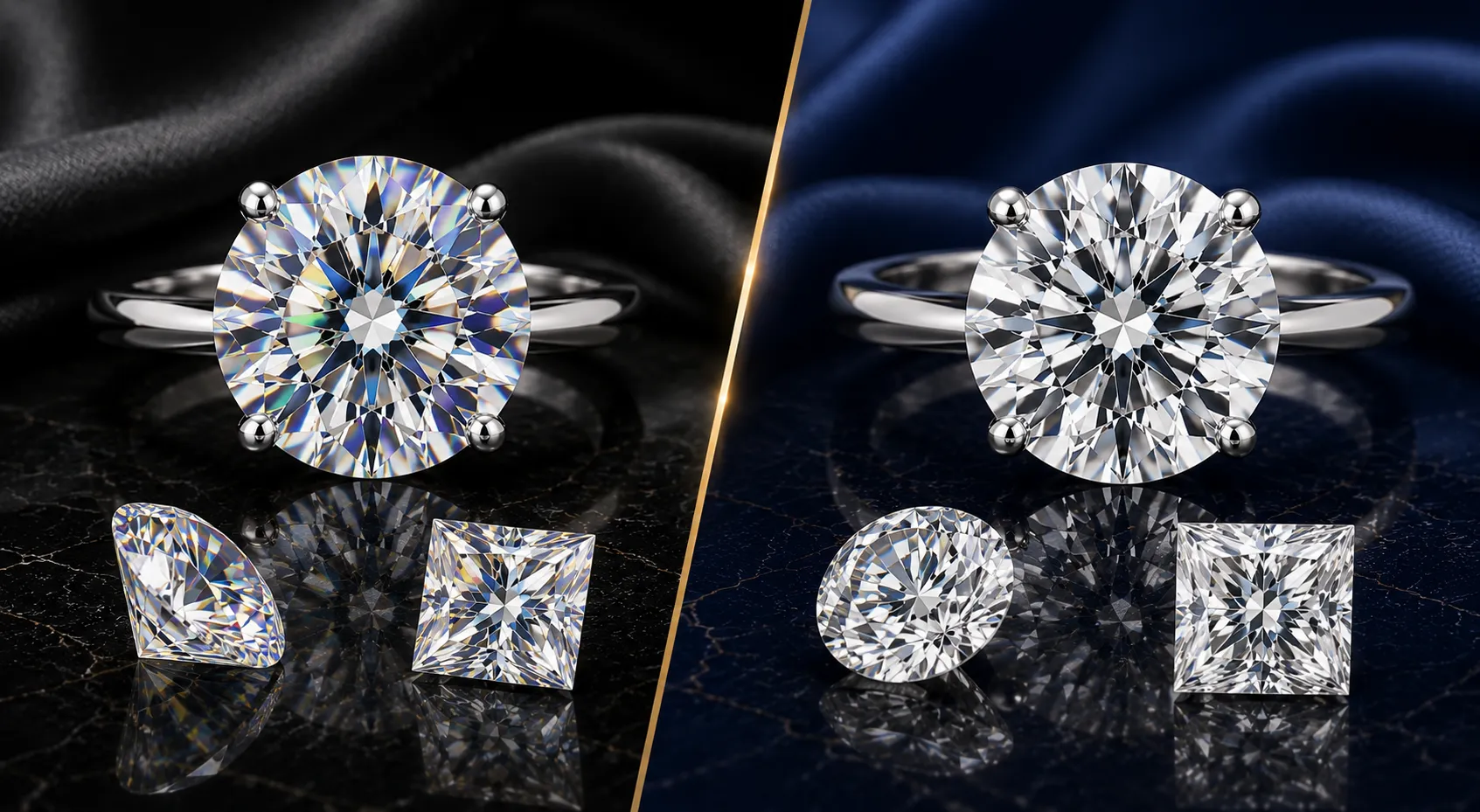
Moissanite and lab-grown diamonds are both popular choices for modern jewelry, but they are not the same.
A lab-grown diamond is a real diamond created in a laboratory. Moissanite is a diamond alternative that has its own chemical makeup, sparkle style, and value. Both can look beautiful, but they differ in composition, brilliance, durability, price, long-term value, and buyer expectations.
This difference matters when buying engagement rings, wedding bands, earrings, pendants, bracelets, necklaces, men’s jewelry, hip hop jewelry, or custom jewelry. If you want real diamond jewelry, lab-grown diamonds are the better choice. If you want a highly sparkling diamond alternative at a lower price, moissanite can be a good option.
This guide explains the difference between moissanite and lab-grown diamonds, which one is better for different jewelry types, and how Custom Karat helps buyers choose the right stone for their style, budget, and design.
Key Takeaways
- Lab-grown diamonds are real diamonds created in controlled laboratory environments.
- Moissanite is not a diamond. It is a diamond alternative and is considered a diamond simulant.
- GIA explains that lab-grown diamonds have the same crystal structure as natural diamonds and nearly the same chemical, optical, and physical properties.
- GIA also notes that common simulants, including moissanite, glass, and cubic zirconia, are not diamonds and are unrelated to diamonds at the atomic level.
- Moissanite can offer strong sparkle and a lower price, but its sparkle looks different from diamond.
- Lab-grown diamonds are usually better for buyers who want fine jewelry, engagement rings, diamond identity, certification, and long-term value.
- Moissanite may work well for fashion jewelry, budget-conscious pieces, travel jewelry, or buyers who specifically like its rainbow-like fire.
- Sellers should clearly disclose laboratory-created diamonds and simulated or imitation stones so buyers know exactly what they are purchasing.
- Custom Karat helps buyers choose between lab-grown diamonds, natural diamonds, moissanite, colored gemstones, and other custom jewelry options.
What Is Moissanite?
Moissanite is a gemstone that resembles diamond but is not diamond.
It has a different chemical composition, different optical behavior, and a different sparkle pattern. Moissanite is often chosen by buyers who want a bright stone at a more accessible price than diamonds.
Moissanite can be used in:
- Engagement-style rings
- Earrings
- Pendants
- Bracelets
- Necklaces
- Men’s rings
- Fashion jewelry
- Custom jewelry
Moissanite can be beautiful, but it should be clearly understood as a diamond alternative, not a lab-grown diamond.
What Is a Lab-Grown Diamond?
A lab-grown diamond is a real diamond created in a laboratory instead of mined from the earth.
Lab-grown diamonds are grown using advanced processes such as HPHT or CVD. GIA explains that HPHT diamonds are produced by recreating high-pressure, high-temperature conditions, while CVD diamonds grow when carbon-rich gas breaks down and carbon atoms deposit on diamond seeds.
Lab-grown diamonds can be used in:
- Engagement rings
- Wedding bands
- Earrings
- Necklaces
- Pendants
- Bracelets
- Men’s jewelry
- Hip hop jewelry
- Custom jewelry
Main Difference Between Moissanite and Lab-Grown Diamonds
The main difference is simple:
Lab-grown diamonds are real diamonds. Moissanite is not a diamond.
| Feature | Lab-Grown Diamond | Moissanite |
| Stone Type | Real diamond | Diamond alternative |
| Composition | Carbon diamond crystal | Different gemstone material |
| Appearance | Classic diamond brilliance | Stronger rainbow-like fire |
| Durability | Excellent for daily wear | Very good for daily wear |
| Price | Usually higher than moissanite | Usually lower than lab-grown diamond |
| Certification | Can be graded as diamond | Not graded as diamond |
| Best For | Fine jewelry, engagement rings, custom diamond jewelry | Budget-friendly sparkle, fashion jewelry, alternative rings |
Are Lab-Grown Diamonds Real Diamonds?
Yes, lab-grown diamonds are real diamonds.
They are not cubic zirconia, moissanite, glass, crystal, or simulated diamonds. They have a diamond crystal structure and are made of carbon atoms arranged like diamond.
GIA explains that lab-grown diamonds can look indistinguishable from natural diamonds by eye, but experienced gemological laboratories can separate them using advanced instruments because their growth histories are different.
Is Moissanite a Real Diamond?
No, moissanite is not a real diamond.
Moissanite can resemble diamond, but it is a different gemstone. GIA classifies moissanite among common diamond simulants, meaning it may flash like a diamond but is not diamond.
This does not mean moissanite is bad. It simply means buyers should understand what they are purchasing.
Moissanite vs Lab-Grown Diamonds: Quick Comparison
| Factor | Lab-Grown Diamonds | Moissanite |
| Real Diamond? | Yes | No |
| Looks Like Diamond? | Yes, because it is diamond | Similar, but different sparkle |
| Sparkle Style | Diamond brilliance and fire | More rainbow-like fire |
| Price | Usually more than moissanite | Usually less than lab-grown diamond |
| Durability | Excellent | Very good |
| Certification | Diamond grading reports available | Usually not diamond-graded |
| Best For Engagement Rings | Strong choice | Good alternative if buyer accepts it is not diamond |
| Best For Fine Jewelry | Strong choice | Good for alternative jewelry |
| Best For Budget | Good value vs natural diamond | Lower-cost sparkle |
| Long-Term Diamond Identity | Yes | No |
Moissanite vs Lab-Grown Diamonds: Composition
Composition is the biggest technical difference. Lab-grown diamonds are diamonds. Moissanite is not diamond.
| Stone | Composition Category |
| Lab-Grown Diamond | Carbon diamond crystal |
| Natural Diamond | Carbon diamond crystal |
| Moissanite | Different gemstone material |
| Cubic Zirconia | Diamond simulant |
| White Sapphire | Diamond alternative |
Because lab-grown diamonds have diamond composition and structure, they are considered real diamonds. Moissanite is valued as a diamond alternative.
Moissanite vs Lab-Grown Diamonds: Appearance
Both stones can look bright and beautiful, but they do not look exactly the same. Lab-grown diamonds show classic diamond brilliance, fire, and scintillation. Moissanite often shows stronger rainbow-like flashes, especially in larger stones or under direct light.
Some buyers love moissanite’s extra fire. Others prefer the more traditional diamond look of lab-grown diamonds.
Smart Buying Tip
Choose lab-grown diamonds if you want the classic diamond appearance.
Choose moissanite if you like a more colorful, fiery sparkle and are comfortable with a diamond alternative.
Moissanite vs Lab-Grown Diamonds: Sparkle
Sparkle is one of the biggest visual differences.
Lab-Grown Diamond Sparkle
Lab-grown diamonds offer true diamond sparkle. Their brilliance and fire are the same style buyers expect from natural diamond jewelry.
Moissanite Sparkle
Moissanite can look very bright and fiery. It often reflects more colorful flashes than diamond, which can make it stand out.
Which Sparkles More?
Moissanite may appear more fiery, but lab-grown diamonds provide the classic diamond sparkle most buyers expect from fine diamond jewelry.
Moissanite vs Lab-Grown Diamonds: Durability
Both moissanite and lab-grown diamonds are suitable for many jewelry designs.
Lab-grown diamonds are excellent for daily wear because they are diamonds. Moissanite is also durable enough for many everyday jewelry uses, but it is still not diamond.
Best for Daily Wear
| Jewelry Use | Better Choice |
| Engagement Ring | Lab-grown diamond |
| Wedding Band | Lab-grown diamond |
| Daily Stud Earrings | Lab-grown diamond or moissanite |
| Fashion Ring | Moissanite or lab-grown diamond |
| Tennis Bracelet | Lab-grown diamond |
| Travel Jewelry | Moissanite |
| Luxury Custom Jewelry | Lab-grown diamond |
For daily fine jewelry, lab-grown diamonds are usually the stronger choice if the buyer wants real diamond identity.
Moissanite vs Lab-Grown Diamonds: Price
Moissanite usually costs less than lab-grown diamonds.
Lab-grown diamonds usually cost less than natural diamonds of similar size and quality, but they are still real diamonds and typically cost more than moissanite.
| Stone Type | General Price Position |
| Natural Diamond | Usually highest |
| Lab-Grown Diamond | Usually lower than natural diamond |
| Moissanite | Usually lower than lab-grown diamond |
| Cubic Zirconia | Usually very low |
Smart Buying Tip
If your goal is the lowest upfront price, moissanite may be attractive.
If your goal is real diamond jewelry at better value than many natural diamond options, lab-grown diamonds are usually better.
Moissanite vs Lab-Grown Diamonds: Value
Value is not only about price.
It also includes:
- Stone identity
- Beauty
- Durability
- Certification
- Long-term wear
- Metal quality
- Setting security
- Craftsmanship
- Buyer confidence
- Personal meaning
Moissanite offers strong value for buyers who want a lower-cost diamond alternative. Lab-grown diamonds offer strong value for buyers who want real diamond jewelry with better cost control than many natural diamonds.
Moissanite vs Lab-Grown Diamonds: Certification
Lab-grown diamonds can be graded by recognized diamond laboratories.
A lab-grown diamond report may include:
- Lab-grown origin
- Shape
- Carat weight
- Color grade
- Clarity grade
- Cut details
- Measurements
- Polish
- Symmetry
- Report number
- Laser inscription
GIA says it tests every diamond submitted to its grading and identification labs to determine whether it is natural or laboratory-grown. Moissanite is not graded as a diamond because it is not a diamond.
Moissanite vs Lab-Grown Diamonds: Testing
Testing is important because moissanite can sometimes confuse older or basic diamond testers.
The FTC notes that thermal testers used to distinguish diamonds from cubic zirconia may not accurately identify moissanite, and moissanite may falsely register as diamond on that type of tester.
For important purchases, buyers should use proper testing, clear disclosure, certification, and trusted sellers.
Moissanite vs Lab-Grown Diamonds for Engagement Rings
For engagement rings, lab-grown diamonds are usually better if the buyer wants a real diamond.
An engagement ring is often worn daily and carries emotional value, so many buyers prefer the identity, certification, and traditional look of diamond.
Choose Lab-Grown Diamond Engagement Rings If You Want:
- Real diamond jewelry
- Classic diamond sparkle
- Diamond certification
- Better value than many natural diamonds
- Long-term fine jewelry feel
- Custom luxury design
Choose Moissanite Engagement Rings If You Want:
- Lower upfront cost
- Bright rainbow-like sparkle
- Diamond alternative
- Fashion-forward ring
- Travel or temporary ring
- A non-diamond center stone
Moissanite vs Lab-Grown Diamonds for Earrings
Both stones can work well for earrings.
Lab-grown diamond earrings are better for buyers who want real diamond studs, hoops, huggies, or bridal earrings. Moissanite earrings may work well for budget-conscious buyers who want strong sparkle without diamond pricing.
Smart Buying Tip
For classic diamond studs, lab-grown diamonds are usually the stronger fine jewelry choice. For fashion earrings or lower-cost sparkle, moissanite can be considered.
Moissanite vs Lab-Grown Diamonds for Pendants
For pendants, the best choice depends on purpose.
Lab-grown diamond pendants are ideal for buyers who want real diamond sparkle, premium value, and long-term jewelry appeal.
Moissanite pendants can work for lower-cost fashion pieces or buyers who specifically like moissanite’s fiery sparkle.
Moissanite vs Lab-Grown Diamonds for Bracelets
Bracelets experience movement and contact, so durability and setting quality matter.
Lab-grown diamonds are usually better for premium tennis bracelets, diamond bangles, Cuban bracelets, and fine custom bracelets.
Moissanite can work for alternative bracelets, but buyers should understand it is not diamond.
Moissanite vs Lab-Grown Diamonds for Necklaces
Lab-grown diamonds are ideal for tennis necklaces, solitaire necklaces, station necklaces, and luxury custom necklaces.
Moissanite can be used in fashion necklaces and budget-conscious pieces, but the sparkle may look different from diamond, especially in larger stones or multi-stone designs.
Moissanite vs Lab-Grown Diamonds for Men’s Jewelry
Men’s jewelry often uses larger stones, thicker metal, and bolder designs.
Lab-grown diamonds work well for men’s rings, earrings, bracelets, pendants, Cuban chains, and custom jewelry because they offer real diamond sparkle with better cost control than many natural diamond options.
Moissanite can work for budget-conscious men’s jewelry, but buyers who want real diamond identity should choose lab-grown diamonds.
Moissanite vs Lab-Grown Diamonds for Hip Hop Jewelry
Hip hop jewelry often uses many stones, so cost matters. Moissanite may offer a lower-cost iced-out look, but lab-grown diamonds offer real diamond identity and a more premium fine-jewelry position.
Lab-grown diamonds are especially useful for:
- Iced-out pendants
- Cuban chains
- Tennis chains
- Name pendants
- Logo pendants
- Pinky rings
- Diamond bracelets
- Custom earrings
Which Looks More Like a Natural Diamond?
Lab-grown diamonds look like natural diamonds because they are diamonds.
Moissanite can look similar, but its fire and sparkle pattern can appear different from diamond.
| Stone | Looks Like Natural Diamond? | Real Diamond? |
| Lab-Grown Diamond | Yes | Yes |
| Moissanite | Similar, but different sparkle | No |
| Cubic Zirconia | Similar at first glance | No |
| White Sapphire | Similar but softer sparkle | No |
If the goal is the closest match to natural diamond, lab-grown diamond is the better choice.
Which Is Better for Jewelry?
The better choice depends on your goal.
Lab-Grown Diamonds Are Better If You Want:
- Real diamond jewelry
- Engagement ring quality
- Fine jewelry value
- Classic diamond sparkle
- Diamond certification
- Long-term wear
- Premium custom jewelry
- Better value than many natural diamonds
Moissanite Is Better If You Want:
- Lower upfront price
- Extra fiery sparkle
- Diamond alternative
- Fashion jewelry
- Travel jewelry
- Temporary ring
- Budget-conscious custom piece
For most luxury jewelry buyers, lab-grown diamonds are the stronger choice. For buyers who want a low-cost alternative with strong sparkle, moissanite can be a practical option.
Common Buyer Mistakes
Thinking Moissanite Is a Lab-Grown Diamond
Moissanite is not a lab-grown diamond. It is a different gemstone and should be described clearly as moissanite.
Choosing Only by Sparkle
Moissanite may sparkle strongly, but sparkle alone does not make it diamond. Consider identity, durability, value, and long-term expectations.
Ignoring Disclosure
Always check whether the stone is lab-grown diamond, natural diamond, moissanite, cubic zirconia, or another simulant.
Buying Moissanite When You Want Diamond
If you want real diamond jewelry, choose lab-grown diamonds or natural diamonds.
Moissanite is a diamond alternative.
Overlooking Certification
For lab-grown diamond jewelry, certification or clear diamond quality details are important, especially for engagement rings and larger stones.
Comparing Only Price
Moissanite may cost less, but the final jewelry value also depends on metal, setting, craftsmanship, comfort, and long-term wear.
Expert Tips Before Buying
Ask What the Stone Actually Is
Do not rely only on terms like “diamond alternative,” “created stone,” or “brilliant stone.”
Ask clearly whether it is:
- Lab-grown diamond
- Natural diamond
- Moissanite
- Cubic zirconia
- White sapphire
- Simulated diamond
Choose Lab-Grown Diamonds for Real Diamond Jewelry
If your goal is real diamond sparkle and fine jewelry value, lab-grown diamonds are usually the better choice.
Choose Moissanite for Budget-Friendly Sparkle
If your goal is a lower-cost alternative and you like rainbow-like fire, moissanite can work well.
Check the Full Jewelry Quality
The stone is only one part of the piece.
Also check:
- Metal type
- Setting security
- Prong strength
- Clasp quality
- Bail strength
- Backing type
- Polish
- Comfort
- Craftsmanship
Use CAD for Custom Jewelry
If the piece is custom, CAD helps you review the design before production. This is especially helpful for engagement rings, pendants, bracelets, men’s jewelry, and hip hop jewelry.
Buyer Checklist Before Purchasing
Before buying moissanite or lab-grown diamond jewelry, check:
- Is the stone clearly described?
- Is it moissanite or lab-grown diamond?
- Do I want real diamond jewelry or a diamond alternative?
- What is my budget?
- What is the jewelry type?
- Will I wear it daily or occasionally?
- Is certification available for lab-grown diamonds?
- What metal is used?
- Is the setting secure?
- Are the prongs strong?
- Is the clasp or bail strong?
- Is CAD approval available for custom jewelry?
- Is pricing transparent?
- Is shipping secure?
- Is the seller clear and trustworthy?
Final Verdict
Moissanite and lab-grown diamonds can both be beautiful, but they are not the same.
A lab-grown diamond is a real diamond created in a laboratory. Moissanite is a diamond alternative with its own sparkle style, price point, and identity.
If you want real diamond jewelry, lab-grown diamonds are the better choice. They offer diamond beauty, daily-wear durability, certification options, and better value than many natural diamonds.
If you want a lower-cost stone with bright rainbow-like sparkle, moissanite can be a good option for selected jewelry.
The right choice depends on your budget, style, jewelry type, and expectations.
Custom Karat helps buyers compare lab-grown diamonds, natural diamonds, moissanite, and colored gemstones so they can create jewelry that feels personal, premium, and right for their needs.
FAQs
Is moissanite a lab-grown diamond?
No. Moissanite is not a lab-grown diamond. It is a different gemstone and is considered a diamond alternative.
Are lab-grown diamonds real diamonds?
Yes. Lab-grown diamonds are real diamonds created in controlled laboratory environments.
Which is better, moissanite or lab-grown diamond?
Lab-grown diamonds are better if you want real diamond jewelry. Moissanite is better if you want a lower-cost diamond alternative with strong sparkle.
Is moissanite cheaper than lab-grown diamond?
Usually, yes. Moissanite generally costs less than lab-grown diamonds.
Does moissanite sparkle more than diamond?
Moissanite often shows stronger rainbow-like fire, while lab-grown diamonds show classic diamond brilliance and sparkle.
Can people tell moissanite from diamond?
Sometimes, especially in larger stones or bright lighting, moissanite’s sparkle may look different from diamond. Professional testing can identify the difference.
Is moissanite good for engagement rings?
Moissanite can work for engagement rings if the buyer accepts that it is not diamond. If the buyer wants a real diamond ring, lab-grown diamonds are the better choice.
Is a lab-grown diamond better for daily wear?
Yes. Lab-grown diamonds are excellent for daily wear because they are real diamonds.
Does moissanite pass a diamond tester?
Some thermal diamond testers may mistakenly identify moissanite as diamond, so proper testing is important.
Can Custom Karat make jewelry with moissanite or lab-grown diamonds?
Yes. Custom Karat can help buyers create custom jewelry using lab-grown diamonds, natural diamonds, moissanite, colored gemstones, and other stone options based on style, budget, and purpose.

About Author Priyanka Kale
Priyanka Kale is a jewelry retail industry author who shares knowledge on diamonds, lab-grown jewelry, custom designs, and jewelry buying tips. Her content helps customers understand quality, pricing, trends, and craftsmanship before making confident jewelry purchase decisions.