No products added!


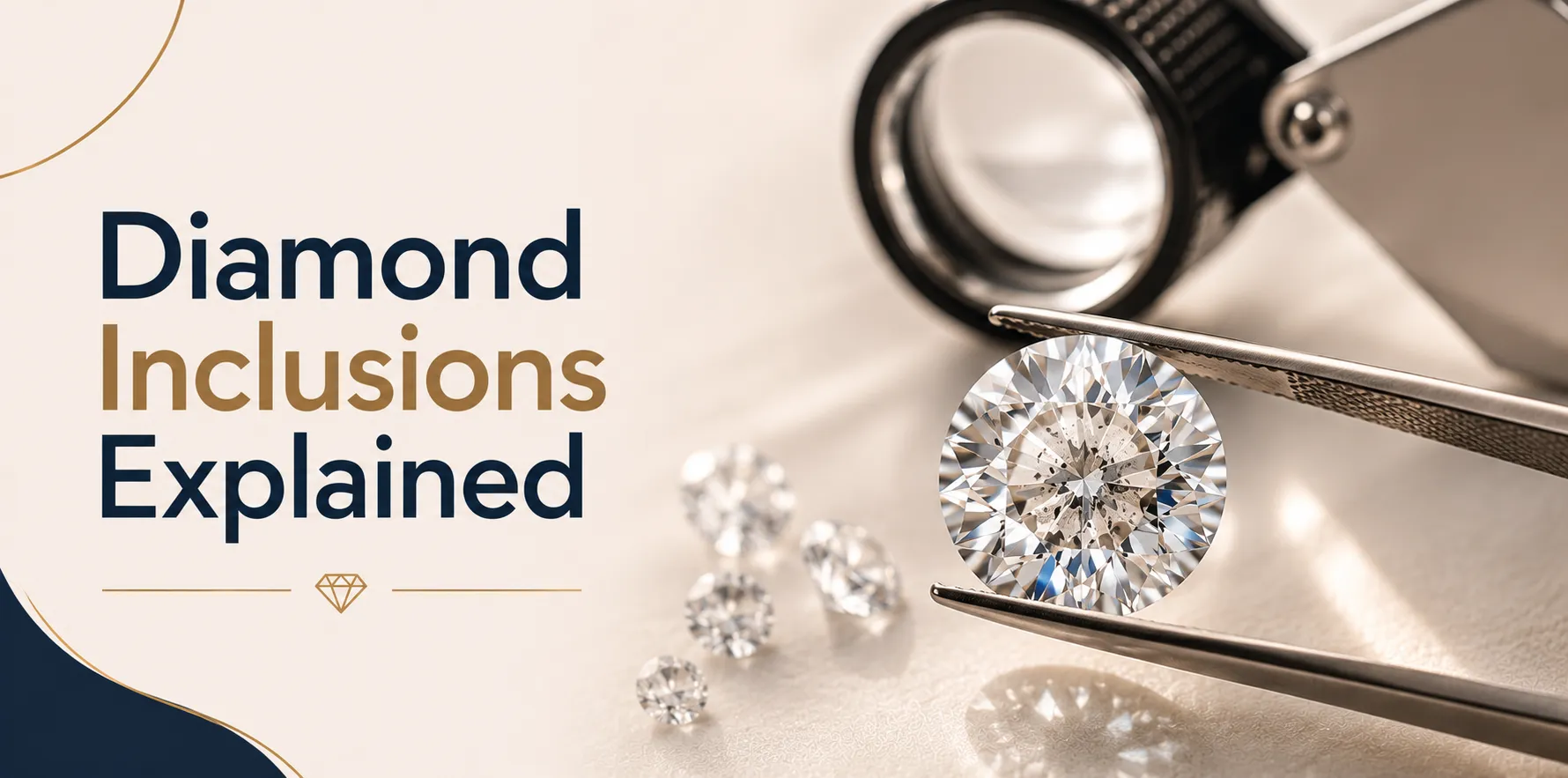
Diamond inclusions are one of the most important things to understand before buying a diamond.
Many buyers think a diamond must be flawless to be beautiful, but that is not always true. Most diamonds have tiny internal characteristics that formed during their growth. These are called inclusions.
Some inclusions are so small that they can only be seen under magnification. Others may be visible to the naked eye and can affect sparkle, clarity, durability, and price.
Understanding diamond inclusions helps buyers make a smarter decision. Instead of paying only for the highest clarity grade, buyers can choose a diamond that looks clean, sparkles well, and offers better value.
This guide explains what diamond inclusions are, the common types, how they form, and how they affect diamond value.
Key Takeaways
- Diamond inclusions are internal characteristics found inside a diamond.
- Most diamonds have some inclusions, even if they are not visible to the naked eye.
- Inclusions affect the diamond’s clarity grade, appearance, rarity, and price.
- Some inclusions are harmless, while others may affect sparkle or durability.
- The location, size, color, and type of inclusion matter more than the name alone.
- Eye-clean diamonds can offer excellent value without needing flawless clarity.
- Larger diamonds and step-cut shapes often show inclusions more clearly.
- Certification helps buyers understand diamond clarity and inclusion details.
What Are Diamond Inclusions?
Diamond inclusions are natural or growth-related internal characteristics found inside a diamond.
They may appear as small crystals, clouds, feathers, needles, pinpoints, or other marks inside the stone.
Inclusions are different from blemishes. Inclusions are inside the diamond, while blemishes are surface marks found on the outside.
Most inclusions are very small and do not affect the diamond’s beauty in normal viewing conditions. However, larger or darker inclusions can make the diamond look less clean and may reduce its value.
Why Do Diamonds Have Inclusions?
Diamonds form under extreme heat and pressure.
Natural diamonds form deep within the earth over long periods of time. During this process, small minerals, crystals, or structural irregularities may become trapped inside the diamond.
Lab-grown diamonds are created in controlled laboratory environments, but they can also have inclusions or growth characteristics. These may form during the growth process depending on the method, conditions, and material used.
Inclusions are a normal part of diamond formation. They are one reason every diamond is unique.
Diamond Inclusions vs Diamond Blemishes
Diamond inclusions and blemishes are both clarity characteristics, but they are not the same.
| Factor | Inclusions | Blemishes |
| Location | Inside the diamond | On the surface |
| Visibility | May appear under magnification or to the eye | Usually seen on the surface under magnification |
| Examples | Feathers, clouds, crystals, pinpoints | Scratches, polish lines, abrasions |
| Impact | Can affect clarity, sparkle, value, or durability | Usually affects surface appearance |
| Buyer Concern | More important for clarity grading | Usually less serious unless obvious |
Inclusions usually have a stronger effect on clarity grade than minor surface blemishes.
Common Types of Diamond Inclusions
Different inclusions affect diamonds in different ways.
Some are minor and difficult to notice. Others may be more visible or may affect durability depending on their size and location.
1. Feather Inclusions
A feather is a small internal fracture or crack-like feature inside a diamond.
Small feathers are often harmless and may not be visible without magnification. However, larger feathers near the edge or surface should be reviewed carefully because they may affect durability.
2. Cloud Inclusions
A cloud is a group of tiny pinpoints or small inclusions clustered together.
Light clouds may not affect appearance. Heavy clouds can make a diamond look hazy, dull, or less transparent, which can reduce sparkle.
3. Crystal Inclusions
A crystal inclusion is a small mineral or diamond crystal trapped inside the diamond.
Some crystals are white or transparent and hard to notice. Dark crystals can be more visible and may lower the diamond’s visual appeal.
4. Pinpoint Inclusions
Pinpoints are tiny dot-like inclusions inside the diamond.
They are usually very small and often do not affect beauty. However, many pinpoints grouped together can form a cloud.
5. Needle Inclusions
Needles are long, thin inclusions that look like small lines under magnification.
Single needles may not be noticeable, but groups of needles can affect clarity if they appear in visible areas.
6. Cavity Inclusions
A cavity is a small opening or pit that extends into the diamond.
Cavities can trap dirt or affect appearance, especially if they are near the surface. Buyers should review cavity inclusions carefully before purchasing.
7. Chip Inclusions
A chip is a small broken area, usually near the girdle or edge of the diamond.
Chips may affect durability and appearance. A diamond with a noticeable chip should be inspected carefully before being used in jewelry.
8. Knot Inclusions
A knot is an included crystal that reaches the surface of the diamond.
Knots can sometimes be visible and may affect polish, appearance, and durability. They should be reviewed carefully in higher-value diamonds.
9. Twinning Wisps
Twinning wisps are growth-related inclusions that may look like small lines, clouds, or streaks.
They are common in some diamonds and may not always affect appearance. The impact depends on how visible they are.
10. Graining
Graining appears as internal lines or irregular growth patterns within the diamond. Minor graining may not be a concern, but strong graining can affect transparency or make the diamond look less clean.
What Causes Diamond Inclusions?
Diamond inclusions form during the diamond’s growth or as a result of pressure, heat, and structural changes. The cause depends on whether the diamond is natural or lab-grown.
Natural Diamond Formation
Natural diamonds form deep underground under intense heat and pressure.
During formation, minerals, crystals, or growth irregularities can become trapped inside the diamond.
Lab-Grown Diamond Growth
Lab-grown diamonds are created using advanced technology, but they can still develop internal growth features.
These characteristics may depend on whether the diamond is grown using HPHT or CVD methods.
Pressure and Structural Stress
Diamonds experience pressure during formation and sometimes during cutting. This can create internal strain, feathers, or other clarity characteristics.
Cutting and Polishing
Some clarity features may become more visible after the diamond is cut and polished. Surface-reaching inclusions, chips, or cavities may also be affected by the cutting process.
How Inclusions Affect Diamond Clarity
Inclusions directly affect a diamond’s clarity grade. The fewer and less visible the inclusions, the higher the clarity grade usually is.
Diamond clarity grades include:
- FL — Flawless
- IF — Internally Flawless
- VVS1 and VVS2 — Very, Very Slightly Included
- VS1 and VS2 — Very Slightly Included
- SI1 and SI2 — Slightly Included
- I1, I2, and I3 — Included
A diamond with very small inclusions may receive a high clarity grade. A diamond with visible or large inclusions will receive a lower clarity grade.
How Inclusions Affect Diamond Value
Inclusions can affect diamond value in several ways.
A diamond with fewer visible inclusions is usually rarer and more expensive. However, value is not based only on the number of inclusions. Their size, color, location, and effect on appearance also matter.
Size of the Inclusion
Larger inclusions are usually easier to see.
A small pinpoint may have little impact, while a large feather or dark crystal may reduce value more significantly.
Location of the Inclusion
An inclusion in the center of the diamond is usually more noticeable. An inclusion near the edge may be easier to hide under a prong, depending on the setting.
Color of the Inclusion
White or transparent inclusions may be harder to notice. Dark inclusions are usually more visible and can reduce visual appeal.
Number of Inclusions
A diamond with many inclusions may look less clean. Even if each inclusion is small, multiple inclusions can affect clarity and transparency.
Impact on Sparkle
Some inclusions can block light or create a hazy appearance. This can reduce brilliance and make the diamond look less lively.
Impact on Durability
Certain inclusions, such as large feathers, chips, or cavities, may affect durability. This is especially important for engagement rings and jewelry worn daily.
Do Inclusions Always Make a Diamond Bad?
No, inclusions do not always make a diamond bad.
Many inclusions are tiny and not visible without magnification. These diamonds can still look beautiful, bright, and clean in normal wear.
A diamond does not need to be flawless to be a good purchase.
For many buyers, the goal should be to find an eye-clean diamond. This means the diamond has no obvious inclusions visible to the naked eye.
Eye-clean diamonds can offer strong value because buyers avoid paying extra for clarity grades that may not look different in real life.
What Is an Eye-Clean Diamond?
An eye-clean diamond looks clean when viewed without magnification.
This does not mean the diamond has no inclusions. It means the inclusions are not obvious during normal viewing.
Eye-clean appearance depends on:
- Diamond size
- Diamond shape
- Inclusion type
- Inclusion color
- Inclusion location
- Cut quality
- Lighting conditions
- Viewer’s eyesight
For many buyers, VS2 or SI1 diamonds can be eye-clean, depending on the specific stone.
Which Diamond Shapes Show Inclusions More?
Diamond shape affects how visible inclusions appear.
Some shapes hide inclusions better because they have more sparkle and complex faceting. Other shapes show inclusions more easily because they have large open facets.
Round Diamonds
Round diamonds hide inclusions well because of their strong brilliance. Buyers can often find eye-clean diamonds in VS2 or SI1 clarity, depending on the stone.
Oval Diamonds
Oval diamonds can hide inclusions fairly well, but dark marks near the center may be noticeable. Buyers should also check for overall clarity and bow-tie effect.
Cushion Diamonds
Cushion diamonds can hide inclusions because of their soft faceting style. Eye-clean VS2 or SI1 diamonds may offer good value.
Emerald Cut Diamonds
Emerald cut diamonds show inclusions more clearly because of their large open facets. Higher clarity grades such as VS1 or better are often recommended.
Asscher Cut Diamonds
Asscher cut diamonds also show inclusions more easily due to step-cut facets. Buyers should choose clarity carefully for a clean appearance.
Pear and Marquise Diamonds
Pear and marquise diamonds may hide inclusions near the pointed ends. However, inclusions in the center can be more visible.
Which Inclusions Should Buyers Avoid?
Not all inclusions are equal.
Some inclusions are minor, while others may affect appearance or durability. Buyers should be careful with:
Large Feathers Near the Edge
A large feather near the girdle or edge may affect durability. This is especially important for rings worn daily.
Dark Crystals in the Center
Dark inclusions near the center of the diamond can be easy to see. They may reduce beauty even if the diamond has a decent clarity grade.
Heavy Clouds
Heavy clouds can make the diamond look milky or hazy. This can reduce sparkle and transparency.
Surface-Reaching Cavities
Cavities that reach the surface may collect dirt or affect durability. These should be reviewed carefully before buying.
Chips or Open Inclusions
Chips and open inclusions can affect appearance and long-term wearability. They are usually a concern for fine jewelry and engagement rings.
Which Inclusions Are Usually Less Concerning?
Some inclusions are less concerning if they are small, light-colored, and not visible to the naked eye.
These may include:
- Tiny pinpoints
- Small needles
- Minor feathers away from the edge
- Light crystals
- Small clouds that do not create haze
- Inclusions hidden near the edge
A diamond with minor inclusions can still be a smart purchase if it looks clean and sparkles well.
Inclusions in Lab-Grown Diamonds
Lab-grown diamonds can also have inclusions. These inclusions may look different depending on the growth method used.
Common lab-grown diamond characteristics may include:
- Growth lines
- Metallic inclusions in some HPHT diamonds
- Strain patterns
- Clouds
- Pinpoints
- Crystals
Lab-grown diamonds are graded using the same clarity scale as natural diamonds.
Because lab-grown diamonds often offer better value, buyers may choose higher clarity grades such as VS or VVS within budget.
Inclusions in Natural Diamonds
Natural diamonds commonly have inclusions formed during their growth underground. These inclusions can include crystals, feathers, clouds, pinpoints, graining, or twinning wisps.
Natural inclusions are one reason each natural diamond is unique.
For buyers who value natural origin, inclusions are part of the diamond’s geological story. However, the diamond should still look beautiful and be suitable for the intended jewelry design.
How to Read Inclusions on a Diamond Certificate
A diamond grading report may include clarity grade and inclusion details. Some reports also include a clarity plot that shows where inclusions are located.
When reviewing a certificate, check:
- Clarity grade
- Inclusion type
- Inclusion location
- Diamond measurements
- Cut grade
- Color grade
- Carat weight
- Laser inscription
- Report number
Certification helps buyers compare diamonds more confidently and verify quality details.
Common grading laboratories include IGI and GIA.
Do Inclusions Affect Diamond Sparkle?
Inclusions can affect sparkle, but not always. Small inclusions usually do not affect sparkle in a noticeable way.
However, large inclusions, heavy clouds, or inclusions that block light can reduce brilliance and make the diamond look dull.
Cut quality usually has the biggest impact on sparkle. A well-cut diamond with small inclusions can look brighter than a higher-clarity diamond with poor cut.
Do Inclusions Affect Diamond Durability?
Some inclusions can affect durability, especially if they are large, close to the surface, or located near the edge.
Durability concerns are more important for:
- Engagement rings
- Daily-wear rings
- Bracelets
- Men’s rings
- Jewelry exposed to frequent contact
Inclusions such as large feathers, chips, and cavities should be reviewed carefully before choosing the diamond.
For pendants and earrings, durability concerns may be slightly lower because these pieces experience less direct impact.
Best Clarity Grades for Avoiding Visible Inclusions
The best clarity grade depends on the diamond shape, size, and budget.
VS1
VS1 diamonds usually have very small inclusions that are difficult to see. They are a strong choice for buyers who want a clean diamond without paying for VVS or flawless grades.
VS2
VS2 diamonds often offer excellent value. Many VS2 diamonds look clean to the naked eye, especially in round, oval, cushion, and radiant shapes.
SI1
SI1 diamonds can be a good value if they are eye-clean. Buyers should inspect SI1 diamonds carefully because some may have visible inclusions.
VVS Grades
VVS diamonds have extremely small inclusions. They are a good choice for buyers who want premium clarity, larger diamonds, or step-cut shapes.
Inclusions and Diamond Price
Inclusions usually reduce diamond price as clarity grade goes lower.
However, lower clarity is not always bad. If the inclusions are small, hidden, or not visible to the eye, the diamond may offer better value.
For example:
- A VS2 diamond may look almost identical to a VVS diamond in normal wear.
- An eye-clean SI1 diamond may cost less while still looking beautiful.
- A diamond with visible dark inclusions may be cheaper but less attractive.
- A diamond with heavy clouds may look dull even if the price seems appealing.
The best value comes from balancing clarity with cut, color, carat, shape, and certification.
Inclusions and Custom Jewelry Design
Inclusions should be considered when designing custom jewelry. The diamond’s placement, setting, and jewelry type can affect how visible inclusions appear.
For example:
- A prong may hide an inclusion near the edge.
- A bezel setting may protect a diamond with minor edge inclusions.
- A solitaire ring needs a cleaner center stone.
- A tennis bracelet may focus more on consistency than flawless clarity.
- Earrings and pendants may allow slightly lower clarity because they are viewed from a distance.
When designing custom jewelry, the diamond should be chosen based on the full design, not clarity grade alone.
Common Mistakes Buyers Make With Inclusions
Thinking All Inclusions Are Bad
Most diamonds have inclusions. Small inclusions that are not visible to the eye may not affect beauty or value in a negative way.
Paying Too Much for Flawless
Flawless diamonds are rare and expensive. Most buyers do not need flawless clarity for a beautiful engagement ring or jewelry piece.
Ignoring Inclusion Location
Location matters. A small inclusion in the center may be more noticeable than a larger inclusion near the edge.
Choosing SI Without Inspection
Some SI diamonds are eye-clean, but others are not. Always review the diamond carefully before buying SI clarity.
Forgetting About Diamond Shape
Emerald and Asscher cut diamonds show inclusions more easily. Round, cushion, oval, and radiant cuts may hide inclusions better.
Ignoring Durability
Large feathers, chips, and cavities can affect durability. This is especially important for rings and bracelets.
Expert Tips for Evaluating Diamond Inclusions
Look for Eye-Clean Beauty
The best value often comes from diamonds that look clean without magnification. You do not always need the highest clarity grade.
Prioritize Cut Quality
Cut has a bigger impact on sparkle than minor inclusions. A well-cut diamond can still look beautiful even with small clarity characteristics.
Check Inclusion Location
Avoid obvious dark inclusions in the center of the diamond. Inclusions near the edge may be less noticeable or hidden by the setting.
Be Careful With Step Cuts
Emerald and Asscher cuts show inclusions more easily. Choose a higher clarity grade for these shapes if you want a clean appearance.
Review the Certificate
A grading report helps identify clarity grade and inclusion details. Always verify the report number when buying certified diamonds.
Match Clarity to Jewelry Type
A center stone may need higher clarity than small accent stones. Earrings, pendants, and bracelets may allow more flexibility depending on visibility.
Why Choose Custom Karat for Diamond Jewelry?
Custom Karat helps buyers choose diamonds based on appearance, value, durability, and design. Instead of focusing only on clarity grade, buyers can select diamonds that match the final jewelry style and budget.
Custom Karat offers:
Lab-Grown and Natural Diamond Options
Buyers can choose lab-grown diamonds for better value or natural diamonds for traditional rarity.
Both options can be used in custom rings, pendants, earrings, necklaces, bracelets, and men’s jewelry.
Diamond Quality Guidance
Custom Karat helps buyers understand cut, clarity, color, carat, and certification before production. This makes it easier to choose diamonds that look beautiful in the final piece.
CAD Design Previews
CAD previews help buyers review the jewelry before production begins. This helps confirm stone placement, setting style, proportions, and overall appearance.
Premium Metal Choices
Buyers can choose from gold, white gold, rose gold, platinum, sterling silver, gold vermeil, or suitable custom finishes. The right metal helps protect the diamonds and improve long-term wear.
Transparent Pricing
Pricing is based on diamond quality, metal, design complexity, craftsmanship, and finishing. This helps buyers understand what they are paying for.
Expert Craftsmanship
Each piece is made with attention to stone setting, polish, comfort, durability, and long-term wearability. A well-set diamond can look beautiful and stay secure over time.
Secure USA Shipping
Finished jewelry is securely packed and shipped to customers in the USA. This gives buyers confidence when ordering custom diamond jewelry online.
Final Verdict
Diamond inclusions are normal, and they do not always make a diamond less beautiful.
The most important thing is whether the inclusions are visible, whether they affect sparkle, and whether they create any durability concern.
For many buyers, eye-clean diamonds in VS2 or SI1 clarity can offer excellent value. For larger diamonds or step-cut shapes, higher clarity may be worth considering.
When buying a diamond, do not judge by clarity grade alone. Review inclusion type, size, location, diamond shape, cut quality, certification, and the final jewelry design.
Custom Karat helps buyers create custom diamond jewelry with lab-grown or natural diamonds, clarity guidance, premium materials, CAD approval, transparent pricing, and expert craftsmanship.
FAQs
What are diamond inclusions?
Diamond inclusions are internal characteristics found inside a diamond, such as feathers, clouds, crystals, pinpoints, or needles.
Are diamond inclusions bad?
Not always. Many inclusions are tiny and not visible to the naked eye.
Do inclusions affect diamond value?
Yes. Visible or serious inclusions can reduce diamond value, while tiny hidden inclusions may have little visual impact.
Do inclusions affect sparkle?
Small inclusions usually do not affect sparkle, but heavy clouds or large inclusions can reduce brilliance.
What is an eye-clean diamond?
An eye-clean diamond has no obvious inclusions visible to the naked eye.
Which inclusions should I avoid?
Be careful with large feathers, dark crystals in the center, heavy clouds, chips, cavities, and surface-reaching inclusions.
Do lab-grown diamonds have inclusions?
Yes. Lab-grown diamonds can have inclusions or growth characteristics, just like natural diamonds.
Which clarity grade is best for avoiding visible inclusions?
VS1 and VS2 are strong choices for many buyers. Eye-clean SI1 diamonds can also offer good value.
Do emerald cut diamonds show inclusions more?
Yes. Emerald cut diamonds have large open facets, so inclusions are usually easier to see.
Should I buy a flawless diamond?
Flawless diamonds are rare and expensive, but most buyers do not need flawless clarity for a beautiful diamond.

About Author Brijesh Sharma
Brijesh Sharma is a jewelry retail industry author who shares expert insights on diamonds, lab-grown jewelry, custom designs, and smart jewelry buying. His content helps customers understand quality, pricing, trends, and craftsmanship so they can make confident jewelry purchase decisions.