No products added!


Introduction
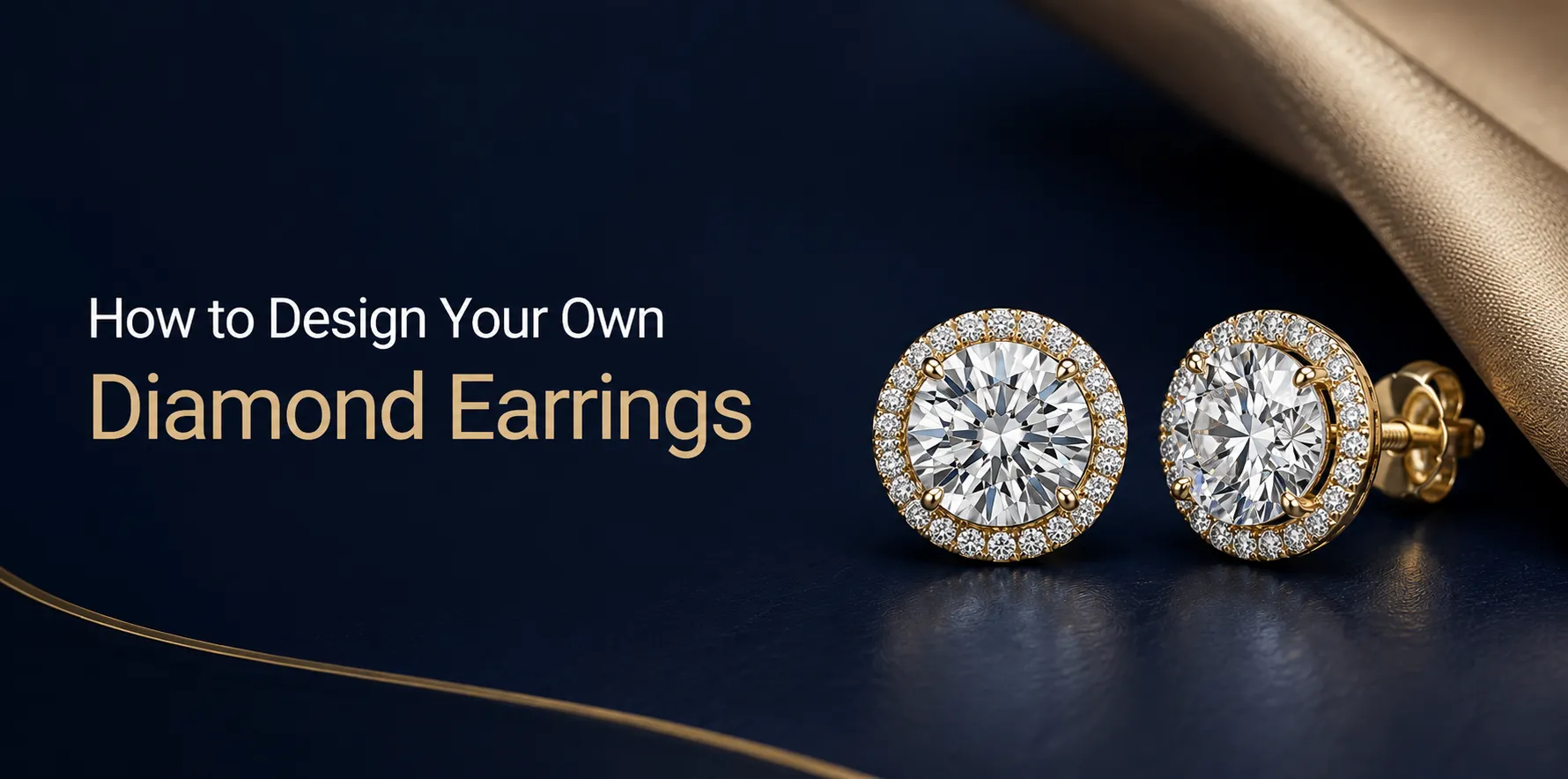
Designing your own diamond earrings is a smart way to create jewelry that feels personal, elegant, and suitable for the wearer’s style.
Unlike ready-made earrings, custom earrings allow you to choose every important detail, including the diamond type, size, shape, metal, setting, backing style, weight, finish, and overall design. This makes the final piece more personal, comfortable, and meaningful.
Diamond earrings can be designed for everyday wear, bridal styling, anniversaries, birthdays, formal occasions, or luxury gifting. Whether you want classic diamond studs, hoops, drop earrings, halo earrings, cluster earrings, or fully custom earrings, the design should balance beauty, comfort, and security.
This guide explains how to design your own diamond earrings step by step.
Key Takeaways
- Custom diamond earrings give buyers control over diamond type, size, shape, metal, setting, and backing style.
- Earrings should be designed with comfort, weight, and secure backing in mind.
- Lab-grown diamonds and natural diamonds can both be used in custom earrings.
- Diamond cut quality affects sparkle more than size alone.
- The right earring style should match face shape, occasion, hairstyle, and personal preference.
- CAD approval helps buyers review custom earring designs before production.
- A well-designed pair of earrings should look beautiful, feel lightweight, and stay secure when worn.
What Does It Mean to Design Your Own Diamond Earrings?
Designing your own diamond earrings means creating earrings based on your preferred style, budget, occasion, and comfort needs.
Instead of choosing from standard designs, you can customize the diamonds, metal, setting, size, backing style, and final finish.
You can customize:
- Earring style
- Diamond type
- Diamond size
- Diamond shape
- Metal type
- Setting style
- Backing style
- Earring weight
- Drop length
- Hoop size
- Stone layout
- Engraving or personal details
- Finish
- Overall design
This makes custom earrings a strong choice for buyers who want jewelry that feels more personal than ready-made options.
Step 1: Decide the Purpose of the Earrings
Start by deciding why the earrings are being designed. The purpose will help you choose the right style, diamond size, metal, setting, and backing.
Everyday Earrings
Everyday earrings should be lightweight, comfortable, and easy to wear for long hours. Stud earrings, small hoops, and minimal diamond designs usually work well for daily styling because they are secure and practical.
Bridal Earrings
Bridal earrings should complement the dress, hairstyle, neckline, and overall wedding look. Depending on the bridal style, you can choose classic studs, halo earrings, drop earrings, or statement diamond earrings.
Gift Earrings
Diamond earrings are popular for birthdays, anniversaries, graduations, and romantic gifts. For gifting, classic styles such as studs, hoops, or elegant drop earrings are usually safe and timeless choices.
Statement Earrings
Statement earrings are designed to stand out. For bold designs, pay close attention to weight, backing strength, diamond layout, and how the earrings sit when worn.
Formal Occasion Earrings
Formal earrings should feel elegant and refined. Drop earrings, halo earrings, chandelier-inspired designs, or larger diamond studs can work well for special events.
Step 2: Choose the Earring Style
The earring style defines the overall look and wearability of the piece. Choose a style based on personal taste, face shape, occasion, and comfort.
Diamond Stud Earrings
Diamond studs are classic, timeless, and easy to wear. They work well for daily wear, gifting, bridal jewelry, and luxury basics.
Diamond Hoop Earrings
Diamond hoops add more presence and movement. They can be designed as small everyday hoops, medium hoops, or larger statement hoops depending on the wearer’s style.
Diamond Drop Earrings
Drop earrings hang below the earlobe and create an elegant look. They are popular for bridal wear, formal events, and occasion jewelry.
Halo Diamond Earrings
Halo earrings feature a center diamond surrounded by smaller diamonds. This style adds extra sparkle and can make the center diamond appear larger.
Cluster Diamond Earrings
Cluster earrings use multiple diamonds arranged together. They create a fuller look and are a good option for buyers who want more sparkle without using one large diamond.
Custom Shape Earrings
Custom earrings can be designed in hearts, initials, flowers, stars, geometric shapes, or symbolic designs. These styles work well for personalized gifts and signature jewelry.
Step 3: Set a Practical Budget
A clear budget helps guide the design process.
The cost of custom diamond earrings depends on diamond type, diamond size, total carat weight, metal type, design complexity, setting style, backing style, and craftsmanship.
Important pricing factors include:
- Diamond type
- Diamond quality
- Total carat weight
- Metal type
- Metal weight
- Earring style
- Setting complexity
- Backing style
- Craftsmanship
- Finishing
Lab-grown diamonds are often chosen by buyers who want larger earrings, better diamond quality, or more sparkle within a planned budget.
Natural diamonds are often chosen by buyers who prefer traditional rarity and natural origin.
Step 4: Choose Lab-Grown or Natural Diamonds
You can design diamond earrings with lab-grown diamonds or natural diamonds.
Both options can create beautiful fine jewelry. The right choice depends on budget, preference, and purpose.
Lab-Grown Diamonds
Lab-grown diamonds are real diamonds created in controlled laboratory environments.
They are popular for earrings because they offer real diamond beauty, strong value, and flexibility in size and quality.
Lab-grown diamonds are ideal for:
- Diamond studs
- Bridal earrings
- Larger carat earrings
- Halo earrings
- Custom earring designs
- Gift jewelry
Natural Diamonds
Natural diamonds are valued for their natural origin and traditional rarity.
They are often chosen for classic luxury, heirloom-style jewelry, and high-end gifting.
Natural diamonds are ideal for:
- Fine diamond studs
- Bridal earrings
- Luxury gifts
- Traditional diamond jewelry
- Long-term sentimental pieces
Step 5: Select the Diamond Shape
Diamond shape affects the final look of the earrings.
For studs and halo earrings, the shape becomes the main design feature. For drop earrings, hoops, and cluster styles, the diamond shape affects movement, balance, and overall design flow.
Popular diamond shapes include:
Round
Round diamonds are the most classic and brilliant option. They work beautifully in studs, hoops, halo earrings, and drop earrings.
Oval
Oval diamonds create an elegant and elongated look. They are popular for drop earrings and statement studs because they feel graceful and modern.
Pear
Pear-shaped diamonds are feminine and refined. They work especially well in drop earrings, bridal earrings, and romantic designs.
Cushion
Cushion diamonds have a soft and romantic appearance. They are suitable for halo earrings, vintage-inspired earrings, and elegant studs.
Emerald
Emerald cut diamonds create a clean and sophisticated look. They are best for buyers who prefer quiet luxury and refined styling.
Princess
Princess cut diamonds have a modern square shape. They work well in studs and geometric earring designs.
Step 6: Focus on Diamond Quality
Diamond quality affects sparkle, brightness, and overall beauty. For earrings, both diamonds should look well matched, especially in size, shape, color, and clarity.
Cut
Cut quality affects how much the diamonds sparkle. Well-cut diamonds can look brighter and more attractive, even when they are smaller in size.
Color
Color grade affects how white or warm the diamonds appear. For earrings, the two stones should look visually consistent when worn together.
Clarity
Clarity refers to internal or surface characteristics. For earrings, eye-clean diamonds are usually a practical choice because they look beautiful without unnecessary overspending.
Carat
Carat refers to diamond weight. For earrings, total carat weight usually refers to the combined weight of both earrings, so buyers should confirm whether the listed carat is per stone or total.
Step 7: Choose the Metal
Metal choice affects appearance, durability, comfort, and skin sensitivity. Since earrings touch the skin directly, the metal should be comfortable, smooth, and suitable for regular wear.
Yellow Gold
Yellow gold gives earrings a warm and classic look. It works well for studs, hoops, bridal earrings, and timeless gift designs.
White Gold
White gold creates a clean, bright, and modern finish. It pairs beautifully with diamonds and is popular for studs, hoops, and halo earrings.
Rose Gold
Rose gold has a soft and romantic tone. It is a good choice for feminine, delicate, vintage-inspired, or gift-focused earring designs.
Platinum
Platinum is strong, premium, and naturally white. It is often chosen for high-value earrings and buyers who want long-term durability.
Sterling Silver
Sterling silver can be used for select earring designs. For daily wear or sensitive ears, buyers should confirm metal quality and finishing before ordering.
Step 8: Choose the Setting Style
The setting holds the diamond and influences both sparkle and security. For earrings, the setting should be secure, smooth, and comfortable behind and around the ear.
Prong Setting
A prong setting uses small metal claws to hold the diamond. It allows more light to enter the diamond, making it a popular choice for classic diamond studs.
Bezel Setting
A bezel setting surrounds the diamond with metal. It gives a smooth and secure finish, making it suitable for everyday earrings.
Halo Setting
A halo setting surrounds the center diamond with smaller diamonds. It creates extra sparkle and makes the earrings appear larger.
Pavé Setting
Pavé setting uses small diamonds placed closely together. It works well for hoops, drop earrings, and custom statement designs.
Channel Setting
Channel setting places diamonds between metal walls. It is commonly used in diamond hoops and certain structured earring designs.
Step 9: Select the Backing Style
Backing style is one of the most important parts of earring design. A good backing keeps the earrings secure and comfortable throughout the day.
Push Back
Push backs are common and easy to use. They work well for lightweight studs and everyday earrings.
Screw Back
Screw backs twist into place for added security. They are often preferred for diamond studs and higher-value earrings.
Lever Back
Lever backs close behind the ear and provide a secure fit. They are commonly used for drop earrings and dangle earrings.
Hinged Back
Hinged backs are often used in hoop earrings. They should close securely and feel smooth when worn.
Omega Back
Omega backs offer strong support for larger earrings. They are useful for statement earrings that need better balance and stability. The right backing depends on earring style, weight, value, and comfort preference.
Step 10: Consider Size, Weight, and Comfort
Earrings should look beautiful without feeling heavy or uncomfortable. This is especially important for daily wear, bridal earrings, and statement designs.
Diamond Size
Diamond size should match the wearer’s style and comfort level. Larger diamonds create more visual impact, but they can also increase weight.
Earring Weight
Heavy earrings can pull on the earlobe and feel uncomfortable over time. A custom design should balance sparkle with practical wearability.
Drop Length
Drop earrings should move naturally without feeling too long or heavy. The length should match the face shape, hairstyle, and occasion.
Hoop Size
Hoop size affects both style and comfort. Smaller hoops are better for daily wear, while larger hoops create a bolder look.
Face Shape
Different earring shapes can complement different face shapes. Longer earrings can elongate the face, while studs and round shapes create a balanced look.
Step 11: Add Personal Design Details
Personal details can make diamond earrings more meaningful. These details should enhance the design without making the earrings too heavy or complicated.
Initials or Symbols
Initials, hearts, stars, flowers, or custom symbols can make earrings feel personal. They work well for gifts, signature jewelry, and custom everyday pieces.
Birthstone Accents
Birthstones can be added with diamonds for a meaningful touch. This is especially useful for birthday gifts, anniversary pieces, or family-inspired designs.
Two-Tone Metal
Two-tone metal can make earrings more unique. It also helps the earrings match different jewelry pieces.
Engraving
Engraving can be added to certain custom earring designs. Because earrings are small, engraving should be simple and placed carefully.
Step 12: Review the CAD Design
CAD stands for Computer-Aided Design. A CAD preview helps buyers review the earring design before production begins.
Size and Proportion
CAD shows the actual size, width, height, and structure of the earrings. This helps avoid surprises after production.
Stone Placement
CAD shows where each diamond will be placed. This is important for halo, pavé, cluster, hoop, and custom shape earrings.
Backing Structure
CAD can help confirm backing placement and support. This is important for comfort, security, and balance.
Matching Pair Design
For earrings, both pieces should match properly. CAD helps confirm symmetry, diamond placement, and overall pair balance.
Step 13: Approve Production
Once the CAD design is approved, the earrings move into production. This stage turns the approved design into finished fine jewelry.
Casting or Metal Forming
The earrings are created in the selected metal. Clean shaping is important because earrings should feel smooth and comfortable.
Stone Setting
Diamonds are carefully placed into the design. Secure setting is important because earrings can be handled often during wear and removal.
Backing Assembly
The backing is attached and checked for proper function. A secure backing helps prevent loss and improves daily wear confidence.
Polishing and Finishing
Polishing gives the earrings their final shine. Smooth finishing is important around the posts, backs, and edges for comfort.
Quality Inspection
The finished earrings should be checked for stone security, backing strength, symmetry, polish, comfort, and overall design accuracy.
This helps ensure the final pair matches the approved design.
Custom Diamond Earrings vs Ready-Made Diamond Earrings
| Factor | Custom Diamond Earrings | Ready-Made Earrings |
| Design Control | High | Limited |
| Diamond Choice | Flexible | Pre-Selected |
| Metal Choice | Flexible | Limited |
| Backing Style | Customizable | Standard |
| Size and Weight | Customizable | Fixed |
| Personalization | Strong | Limited |
| CAD Approval | Available | Usually Not |
| Pair Matching | Carefully Planned | Pre-Matched |
| Uniqueness | High | Moderate |
Ready-made earrings are useful when speed matters.
Custom diamond earrings are better when buyers want control over style, diamond quality, metal, backing, comfort, and personal design.
Common Mistakes to Avoid
Choosing Only by Price
The cheapest earrings are not always the best value. Always check diamond quality, metal quality, backing security, stone setting, and craftsmanship.
Ignoring Earring Weight
Heavy earrings may look beautiful but can feel uncomfortable. Weight should always be considered, especially for drops, hoops, and statement earrings.
Choosing the Wrong Backing
The backing affects both comfort and security. For valuable diamond earrings, secure backing should be a priority.
Not Matching the Pair Properly
Diamond earrings should look balanced as a pair. The diamonds should match in size, shape, color, clarity, and overall appearance.
Skipping CAD Review
CAD approval helps confirm size, diamond placement, backing style, and overall design before production. This is especially important for custom shapes, halos, hoops, and drop earrings.
Overlooking Metal Sensitivity
Earrings touch the skin directly. Buyers with sensitive ears should choose quality metals and smooth finishing.
Expert Tips for Designing Diamond Earrings
Start With the Wearing Purpose
Decide whether the earrings are for daily wear, gifting, bridal styling, or special occasions. This helps guide style, size, metal, backing, and diamond choice.
Keep Comfort in Mind
Earrings should feel secure and lightweight. A beautiful design should not pull on the ear or feel uncomfortable after a few hours.
Choose Secure Backings
Backing style is very important for valuable diamond earrings. Screw backs, lever backs, and hinged backs can offer added security depending on the earring style.
Match the Diamonds Carefully
For pairs, visual matching matters. Both earrings should look balanced in sparkle, size, shape, and color.
Review CAD Before Production
CAD review helps confirm the final design. Check size, weight, stone placement, backing structure, and pair symmetry before approval.
Why Design Your Diamond Earrings With Custom Karat?
Custom Karat helps buyers create personalized diamond earrings with more control over design, diamonds, metal, backing style, and budget.
With Custom Karat, buyers can create:
- Diamond stud earrings
- Diamond hoop earrings
- Diamond drop earrings
- Halo earrings
- Cluster earrings
- Bridal earrings
- Custom shape earrings
- Lab-grown diamond earrings
- Natural diamond earrings
Custom Karat offers lab-grown and natural diamond options, premium metal choices, custom design support, CAD design previews, transparent pricing, direct manufacturer value, expert craftsmanship, and secure USA shipping.
Instead of choosing only from standard designs, buyers can create diamond earrings that feel personal, elegant, comfortable, and made around their style.
Final Verdict
Designing your own diamond earrings gives you the freedom to create jewelry that feels beautiful, personal, and practical.
The best custom earrings are not only about diamond size or sparkle. They should balance diamond quality, metal choice, backing security, comfort, symmetry, craftsmanship, and personal style.
For buyers who want more control than ready-made earrings can offer, designing custom diamond earrings is a smart choice.
Custom Karat helps modern buyers design diamond earrings with lab-grown or natural diamonds, premium metals, CAD approval, transparent pricing, and direct manufacturer craftsmanship.
FAQs
Can I design my own diamond earrings online?
Yes. You can design your own diamond earrings online by choosing the diamond type, shape, size, metal, setting, backing style, and custom details.
Can lab-grown diamonds be used in custom earrings?
Yes. Lab-grown diamonds are widely used in diamond studs, hoops, drop earrings, halo earrings, and custom earring designs.
What style of diamond earrings can I customize?
You can customize studs, hoops, drop earrings, halo earrings, cluster earrings, bridal earrings, and custom shape earrings.
What backing is best for diamond earrings?
Screw backs are popular for diamond studs because they offer added security. Lever backs work well for drop earrings, while hinged backs are common for hoops.
What diamond shape is best for earrings?
Round diamonds are the most classic, but oval, pear, cushion, princess, and emerald cuts can also work depending on the design.
Why is CAD approval important for earrings?
CAD approval helps buyers review size, stone placement, backing structure, pair symmetry, and overall design before production.
Are custom diamond earrings expensive?
The cost depends on diamond type, diamond size, metal, setting, backing style, design complexity, and craftsmanship.
Are custom diamond earrings better than ready-made earrings?
Custom earrings are better if you want control over diamond quality, metal, design, backing style, comfort, and personal details.

About Author Brijesh Sharma
Brijesh Sharma is a jewelry retail industry author who shares expert insights on diamonds, lab-grown jewelry, custom designs, and smart jewelry buying. His content helps customers understand quality, pricing, trends, and craftsmanship so they can make confident jewelry purchase decisions.