No products added!

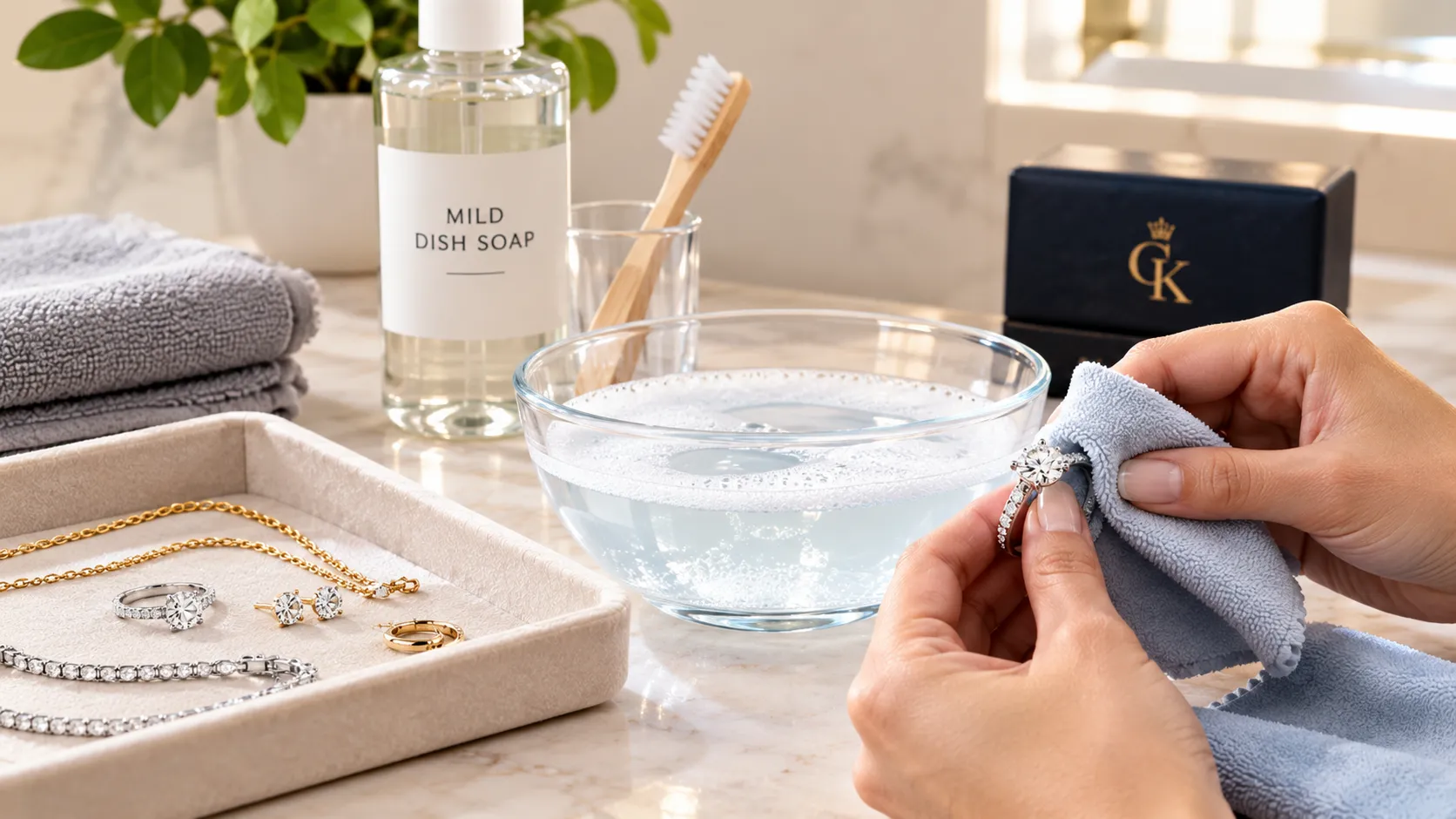
Quick answer: Most everyday jewelry can be cleaned at home with warm water, a few drops of mild dish soap, and a soft-bristled brush, soaked for 10-20 minutes then gently scrubbed and dried with a lint-free cloth. The exceptions are porous stones like pearls, opals, and emeralds, and plated pieces, which need gentler, drier methods since soaking and scrubbing can damage them.
Jewelry doesn’t need a professional clean every time it looks dull. Most of what makes a ring or necklace look tired is just everyday buildup, lotion, skin oils, soap residue, that comes off with the right method for the material you’re actually cleaning.
Key Takeaways
- Warm water, mild dish soap, and a soft brush handle most jewelry safely, no need for specialty cleaners for everyday pieces.
- Metal changes the method. Gold tolerates cleaning well; sterling silver needs gentler handling and occasional polishing to fight tarnish.
- Porous stones are the exception. Pearls, opals, emeralds, and turquoise should never be soaked, since moisture and chemicals can damage them internally.
- Ultrasonic cleaners aren’t safe for everything. They can loosen already-fragile settings and damage soft or included stones.
- Plated jewelry needs the gentlest approach. Scrubbing or soaking too long can wear down the plating faster than normal use would.
The Safe Default Method (Works for Most Jewelry)
For solid gold, platinum, and most diamond or gemstone settings, this method is safe and effective:
- Mix warm water with a few drops of mild dish soap in a small bowl. Avoid anything with bleach, ammonia, or added fragrance chemicals.
- Soak the piece for 10-20 minutes. This loosens built-up oils and residue without needing to scrub hard.
- Gently brush with a soft-bristled brush (a clean, soft toothbrush works well), focusing on the underside of stones and any detailed metalwork where buildup collects.
- Rinse thoroughly under running water, making sure no soap residue is left in the setting.
- Dry immediately with a soft, lint-free cloth. Air-drying can leave water spots, especially on silver.
This method works for most everyday pieces, including the stud earrings, chain necklaces, and stacking rings that make up a typical everyday collection.
Cleaning by Metal Type
Different metals respond differently to cleaning, which is worth knowing before you reach for a cloth or solution.
Gold (10k-18k): Gold resists tarnish and holds up well to the soap-and-water method above. It rarely needs anything more aggressive unless it’s picked up heavy residue from lotion or sunscreen.
Sterling silver: Silver tarnishes from air exposure, which is a chemical reaction, not dirt, so soap and water alone won’t reverse it. A dedicated silver polishing cloth handles light tarnish, and for deeper tarnish, a silver dip cleaner works, but it shouldn’t be used on pieces with soft or porous stones. Since silver needs more upkeep than gold, worth keeping in mind if you’re deciding which metal actually suits your lifestyle before building out a collection.
White gold: Clean it the same gentle way as yellow gold, but avoid anything abrasive, since white gold’s bright finish comes from a thin rhodium plating that can wear down with harsh scrubbing.
Platinum: Extremely durable and tolerates the soap-and-water method well. Platinum develops a soft surface patina over time that some people prefer to leave alone rather than polish out completely.
Cleaning Diamonds and Gemstones
Diamonds are hard enough to handle the standard soap-and-water method without risk to the stone itself. The bigger risk with diamond rings is usually the setting, not the stone. Halo settings and pavé bands, in particular, trap oils and lotion in tight spaces between stones, so a soft brush worked gently around the base of each stone matters more here than for a simple solitaire.
If you went with a halo to make a smaller center stone look bigger, that same design is exactly the kind that needs more frequent gentle cleaning to keep its sparkle.
Softer or porous stones need a different approach entirely:
- Pearls should never be soaked. Wipe gently with a damp, soft cloth after each wear and let them air dry completely before storing.
- Opals are sensitive to sudden temperature changes and dehydration. A damp cloth wipe is safer than soaking or exposure to heat.
- Emeralds are often treated with oil to fill natural inclusions, which soap and soaking can strip out over time. A soft, dry cloth is the safer option.
- Turquoise is porous and can absorb liquids, including cleaning solutions, which may permanently discolor it. Avoid water and chemicals altogether; a dry cloth is enough.
What to Avoid
- Ultrasonic cleaners on fragile or included stones. The vibration can worsen existing inclusions or loosen prongs that are already slightly worn.
- Toothpaste as a jewelry cleaner. It’s a common myth, but toothpaste is abrasive enough to scratch softer metals and dull polished finishes over time.
- Chlorine and household cleaning chemicals. These can pit gold alloys and corrode silver, and they’re especially damaging to plated jewelry.
- Soaking plated jewelry. Plating is a thin surface layer, and prolonged soaking or scrubbing wears through it faster than normal wear does.
- Storing jewelry damp. Always dry pieces fully before putting them away, since trapped moisture speeds up tarnish and can damage certain stones.
A Simple Cleaning Routine
Rather than deep-cleaning occasionally, a light routine keeps everyday pieces looking better for longer:
- Weekly: A quick soap-and-water soak for gold, platinum, and diamond pieces in daily rotation.
- After sweat or swimming: Rinse with clean water and dry thoroughly, since chlorine and salt both accelerate tarnish and can affect certain settings.
- Before storage: Make sure everything is fully dry, and store pieces separately so metals and stones don’t scratch against each other.
- Monthly or as needed: A dedicated polishing cloth for silver pieces to stay ahead of tarnish before it sets in.
This kind of routine matters more the more pieces you’re rotating through daily. If your everyday collection includes a mix of metals, gold studs, a silver chain, stacking rings in both, it’s worth cleaning each by its own rules rather than treating the whole collection the same way.
When to Skip the DIY Method and See a Jeweler
Home cleaning handles routine buildup, but it’s not a substitute for professional attention when:
- A stone feels loose in its setting, since cleaning won’t fix a prong issue and could risk losing the stone entirely.
- You notice a soldered joint or seam looking discolored or separated, which needs a jeweler’s attention rather than a cleaning fix.
- Plating has visibly worn through to the base metal underneath, which requires replating, not cleaning.
- The piece has significant sentimental or monetary value, where the cost of a professional clean is worth the peace of mind over a DIY method.
The Bottom Line
Most jewelry stays looking good with a simple, consistent routine, not an occasional deep clean. The method matters more than the frequency: match it to the metal and stone you’re actually working with, skip the harsh shortcuts, and dry everything fully before it goes back in the box.
If keeping track of which pieces need gentle handling versus which can take a regular soak feels like a lot to manage, that’s usually a sign the collection could use fewer, better-chosen pieces in durable materials to begin with. Custom Karat builds every piece in solid metals designed to hold up to real, daily wear, whether you’re customizing an existing design or starting from scratch, so cleaning stays this simple instead of becoming its own project.
Frequently Asked Questions
Can I clean my jewelry with toothpaste?
It’s not recommended. Toothpaste is mildly abrasive, which can scratch softer metals and dull polished finishes over repeated use, even though it’s a common home remedy.
Is it safe to clean diamond rings with soap and water?
Yes, for most diamond settings, warm water and mild dish soap with a soft brush is safe and effective. Halo and pavé settings need extra attention around each stone since they trap more residue.
How often should I clean my jewelry?
A quick soap-and-water clean weekly for frequently worn pieces keeps buildup from accumulating, which is generally more effective than an occasional deep clean.
Why does my silver jewelry keep tarnishing even after I clean it?
Tarnish is a chemical reaction between silver and air, not just surface dirt, so it returns over time regardless of cleaning frequency. A polishing cloth used regularly slows it down more than washing alone.
Can I use an ultrasonic cleaner at home?
It depends on the piece. Ultrasonic cleaners are safe for solid, well-set diamonds without inclusions, but they can damage softer or included stones and loosen already-worn prong settings.
How do I clean pearls or opals without damaging them?
Wipe them gently with a soft, damp cloth after wearing, and avoid soaking, chemicals, or ultrasonic cleaners entirely, since both stones are porous or sensitive to moisture and can be permanently damaged by standard jewelry cleaning methods.

About Author Gautami Teliwadekar
Gautami brings over 10 years of experience in the jewelry industry, with expertise in fine jewelry, custom designs, diamonds, gemstones, and evolving jewelry trends. At Custom Karat, she combines her industry knowledge and passion for craftsmanship to help customers make confident, informed choices when creating jewelry that reflects their unique style.