No products added!
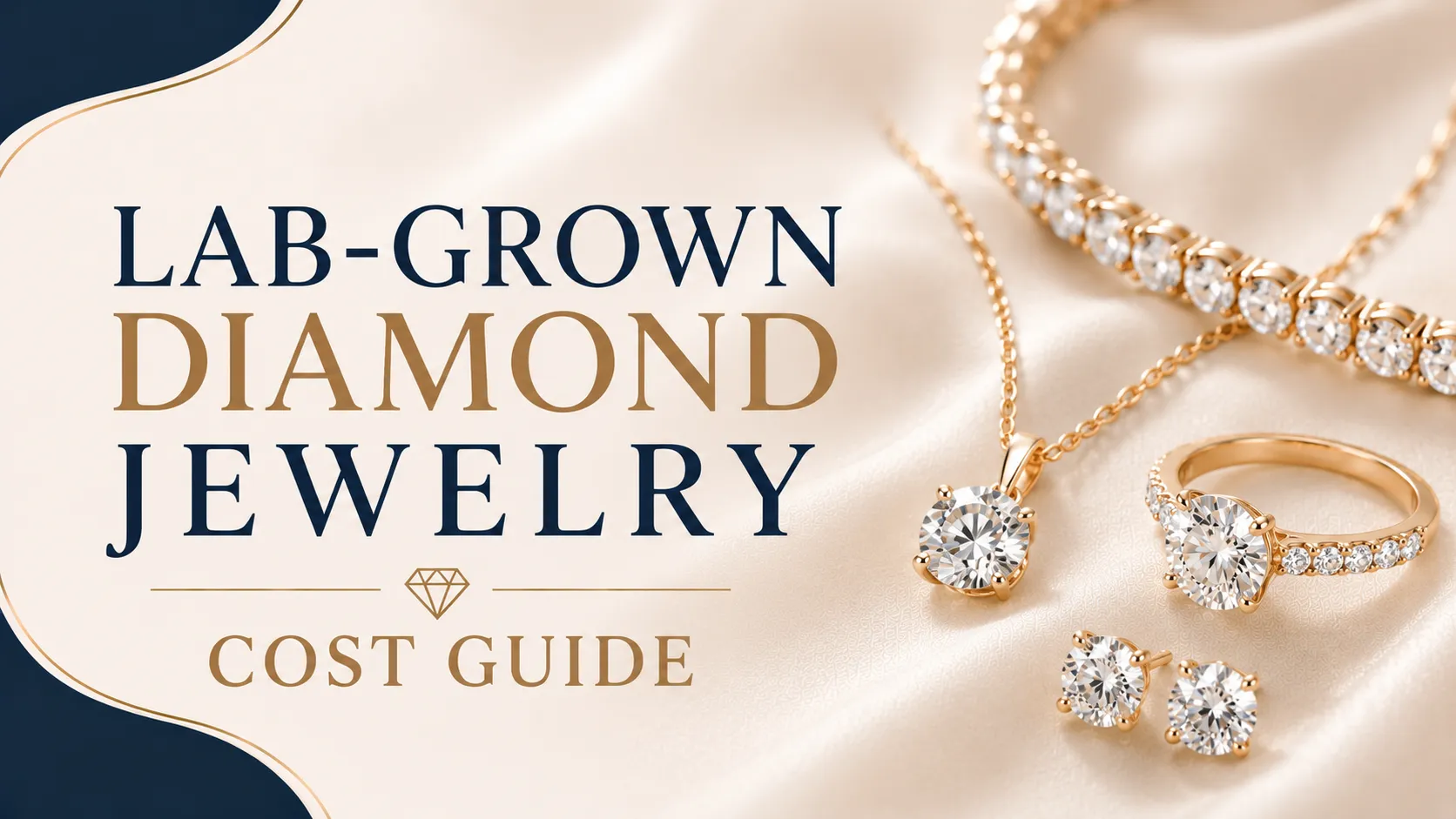
Lab-grown diamond jewelry gives modern buyers a smarter way to own real diamond jewelry without paying traditional natural diamond prices.
Whether you are buying an engagement ring, tennis bracelet, pendant, necklace, earrings, men’s ring, Cuban bracelet, or custom jewelry piece, the final cost depends on diamond size, quality, metal, setting, craftsmanship, and design complexity.
The biggest advantage of lab-grown diamonds is value. Buyers can often choose a larger diamond, better clarity, higher color grade, or more detailed custom design while staying within budget.
But getting the lowest cost does not mean choosing cheap jewelry.
The real goal is to get the lowest possible cost for a premium-quality product by avoiding unnecessary markups, overpaying for grades you cannot see, and choosing a direct custom manufacturing process.
This guide explains lab-grown diamond jewelry cost, what affects pricing, real-life buying examples, and how Custom Karat helps buyers create premium jewelry at a more competitive price.
Key Takeaways
- Lab-grown diamonds are real diamonds created in controlled laboratory environments.
- Lab-grown diamond jewelry usually costs less than natural diamond jewelry of similar size and quality.
- The final jewelry cost depends on diamond quality, metal type, metal weight, setting, craftsmanship, and design complexity.
- Buyers can reduce cost by choosing smart diamond grades, practical metals, efficient settings, and direct custom manufacturing.
- The lowest cost should mean the best price for the same quality, not lower-quality jewelry.
- Custom Karat helps buyers reduce unnecessary markups through direct manufacturer value, CAD-based design, and transparent pricing.
- Lab-grown diamonds are ideal for custom rings, pendants, bracelets, earrings, necklaces, men’s jewelry, and bridal jewelry.
- A smart buyer compares the full jewelry value, not only the diamond price.
What Is Lab-Grown Diamond Jewelry?
Lab-grown diamond jewelry is fine jewelry made with diamonds created in a laboratory instead of mined from the earth.
These diamonds have nearly the same chemical, optical, and physical properties as natural diamonds. The main difference is origin. Natural diamonds form underground, while lab-grown diamonds are created in controlled laboratory environments.
Lab-grown diamonds can be used in:
- Engagement rings
- Wedding bands
- Diamond rings
- Pendants
- Necklaces
- Tennis bracelets
- Diamond bangles
- Earrings
- Men’s rings
- Cuban bracelets
- Hip hop jewelry
- Bridal jewelry
- Custom jewelry
Are Lab-Grown Diamonds Real Diamonds?
Yes, lab-grown diamonds are real diamonds. They are not cubic zirconia, moissanite, glass, white sapphire, or simulated diamonds.
A simulated diamond only looks like a diamond but is made from a different material. A lab-grown diamond is actual diamond material created in a laboratory.
The FTC also advises that laboratory-created diamonds should be clearly described as laboratory-grown or laboratory-created so buyers understand they are not mined diamonds.
Why Lab-Grown Diamond Jewelry Costs Less
Lab-grown diamond jewelry usually costs less because the diamond is created through technology instead of mined from the earth.
Natural diamond pricing is affected by mining, rarity, supply chain costs, and traditional retail structures. Lab-grown diamonds are produced in controlled environments, making supply more scalable.
This does not mean lab-grown diamonds are low quality.
A lab-grown diamond can still have excellent cut, high color, strong clarity, certification, and beautiful sparkle. The lower cost mainly comes from origin and supply chain difference.
For buyers, this means more budget can go toward:
- Larger diamond size
- Better cut quality
- Higher clarity
- Better color grade
- More detailed custom design
- Premium metal
- Better craftsmanship
Lab-Grown Diamond Jewelry Cost Chart
The price ranges below are educational estimates only. Actual cost changes based on diamond quality, metal, design, craftsmanship, certification, and market conditions.
| Jewelry Type | Approximate Cost Range |
| Simple Lab-Grown Diamond Ring | $500 – $1,500+ |
| Lab-Grown Diamond Engagement Ring | $1,000 – $8,000+ |
| Lab-Grown Diamond Wedding Band | $600 – $3,500+ |
| Lab-Grown Diamond Pendant | $500 – $4,000+ |
| Lab-Grown Diamond Earrings | $400 – $5,000+ |
| Lab-Grown Diamond Tennis Bracelet | $1,000 – $8,000+ |
| Lab-Grown Diamond Necklace | $800 – $15,000+ |
| Men’s Lab-Grown Diamond Ring | $800 – $7,000+ |
| Lab-Grown Diamond Cuban Bracelet | $2,000 – $15,000+ |
| Custom Lab-Grown Diamond Jewelry | Depends on diamond, metal, design, and craftsmanship |
These are not fixed prices. A simple 1-carat solitaire pendant will cost much less than a heavy custom iced-out pendant with multiple diamonds and more metal.
What Affects Lab-Grown Diamond Jewelry Cost?
Lab-grown diamond jewelry pricing is based on multiple factors. The diamond is important, but it is not the only cost.
Main pricing factors include:
- Diamond size
- Diamond cut
- Diamond color
- Diamond clarity
- Diamond shape
- Certification
- Metal type
- Metal weight
- Setting style
- Number of diamonds
- Design complexity
- CAD work
- Stone setting labor
- Finishing and polishing
- Clasp, backing, or chain quality
- Custom engraving
- Shipping and packaging
To get the lowest possible price, buyers should understand where money is being spent.
Factor 1: Diamond Size
Diamond size has a major impact on cost. Larger diamonds usually cost more because they require more material and are less common in higher grades.
However, buyers can save money by choosing smart size points.
For example:
- Choose 0.90 carat instead of 1.00 carat
- Choose 1.40 carat instead of 1.50 carat
- Choose 1.90 carat instead of 2.00 carat
The diamond may look very similar in real life but cost less.
This is one of the easiest ways to get a premium look at a lower price.
Factor 2: Diamond Cut
Cut affects sparkle. A well-cut diamond reflects light better and appears brighter.
GIA explains that the 4Cs — cut, color, clarity, and carat weight — are the global standard for evaluating diamond quality.
Cut should not be sacrificed only to reduce price.
A cheaper diamond with weak cut may look dull. A slightly smaller diamond with excellent cut can look more premium.
Smart cost tip:
Choose the best cut quality your budget allows, then adjust carat, color, or clarity if needed.
Factor 3: Diamond Color
Diamond color affects how white or warm the diamond looks. For many buyers, D-F color looks premium, but G-H can still appear beautiful and white in many settings.
Choosing G-H instead of D-F can reduce cost while keeping a high-end appearance. For yellow gold or rose gold jewelry, slightly warmer diamonds can still look excellent because the metal already has warmth.
Smart cost tip:
Do not automatically pay for D color unless you specifically want the whitest possible diamond.
Factor 4: Diamond Clarity
Clarity refers to inclusions and blemishes. Many buyers overpay for flawless or VVS clarity even when the difference is not visible without magnification.
For most jewelry, VS1, VS2, or eye-clean diamonds can offer excellent value.
Smart cost tip:
Choose an eye-clean diamond instead of paying extra for flawless clarity. This helps reduce cost without reducing visible beauty.
Factor 5: Diamond Shape
Diamond shape affects price, appearance, and size impression. Round diamonds are classic and brilliant, but fancy shapes such as oval, cushion, pear, radiant, emerald, and princess may offer more visual size for the price.
Shapes that can look larger for their carat weight include:
- Oval
- Pear
- Marquise
- Emerald
- Radiant
Smart cost tip:
If you want a larger look without paying for a larger carat weight, consider oval, pear, marquise, or radiant shapes.
Factor 6: Certification
Certification helps verify diamond quality and origin.
A lab-grown diamond report may include:
- Lab-grown origin
- Carat weight
- Shape
- Measurements
- Color or quality details
- Clarity or quality details
- Cut details
- Polish
- Symmetry
- Laser inscription
- Report number
Certification matters because buyers should know exactly what they are paying for.
Smart cost tip:
Do not overpay for vague diamond descriptions. Ask for clear grading or quality details.
Factor 7: Metal Type
Metal affects cost, durability, and appearance.
Common options include:
- 10K gold
- 14K gold
- 18K gold
- White gold
- Yellow gold
- Rose gold
- Platinum
- Sterling silver
- Gold vermeil
Platinum is usually more expensive than gold. 18K gold is usually more expensive than 14K or 10K because it contains more gold.
Smart cost tip:
For many buyers, 14K gold gives a strong balance of durability, luxury, and price. 10K gold can reduce cost further, especially for bold men’s jewelry or budget-conscious custom designs.
Factor 8: Metal Weight
Metal weight can affect the final price significantly. A thin solitaire ring uses less metal than a thick men’s ring, Cuban bracelet, heavy pendant, or tennis necklace.
More metal usually means higher cost.
Smart cost tip:
Do not make jewelry unnecessarily heavy if the design does not need it. Custom Karat can help balance durability and metal weight so the piece feels premium without wasting budget.
Factor 9: Setting Style
The setting affects both design and labor cost.
Simple settings usually cost less than detailed settings.
Examples:
- Solitaire setting: usually more cost-effective
- Halo setting: higher cost due to extra diamonds and labor
- Pavé setting: higher cost due to many small diamonds
- Bezel setting: can be secure but may require more metal
- Channel setting: clean and durable, often used in bands and bracelets
- Iced-out setting: higher cost due to heavy stone setting work
Smart cost tip:
Choose a setting that gives maximum visual impact without unnecessary complexity.
Factor 10: Custom Design Complexity
Custom jewelry can be affordable or premium depending on design complexity.
Simple custom designs cost less. Detailed designs with logos, names, symbols, multiple stones, hidden details, and complex structures cost more.
Design complexity affects:
- CAD work
- Wax model
- Casting
- Stone setting
- Polishing
- Finishing
- Quality control
Smart cost tip:
Use CAD review to remove unnecessary design elements before production. This helps control cost while keeping the jewelry beautiful.
How to Get Lab-Grown Diamond Jewelry at the Lowest Possible Cost
Getting the lowest cost does not mean buying the cheapest product.b It means getting the best possible price for premium quality.
Here is how buyers can reduce cost without sacrificing beauty.
1. Choose Lab-Grown Instead of Natural Diamonds
This is the biggest cost-saving step.
Lab-grown diamonds usually allow buyers to get more size, better quality, or more design detail for the same budget.
Example:
A buyer wants a 2-carat oval engagement ring.
A natural diamond version may push the budget much higher. A lab-grown diamond version can help the buyer achieve the same real diamond look at a more accessible price.
This is why lab-grown diamonds are ideal for buyers who want premium jewelry without traditional diamond pricing.
2. Buy Direct Instead of Paying Retail Markups
Traditional jewelry pricing often includes multiple layers:
- Supplier margin
- Distributor margin
- Retail store margin
- Showroom cost
- Inventory cost
- Brand markup
Custom Karat focuses on direct manufacturer value.
This helps buyers reduce unnecessary markups and put more budget into the actual product.
That means more value goes toward:
- Diamond quality
- Metal
- Craftsmanship
- Design
- Finishing
Instead of paying mainly for retail overhead.
3. Use Smart Diamond Grades
Most buyers do not need the highest grade in every category.
A smart value combination may be:
- Excellent or very good cut
- G-H color
- VS1 or VS2 clarity
- Eye-clean appearance
- Certified or clearly documented diamond
- Shape chosen for visual size
This type of diamond can look beautiful while costing less than a D color, flawless diamond.
4. Choose 14K Gold Instead of Platinum
Platinum is premium, but it may not be necessary for every design.
14K gold is strong, durable, beautiful, and more cost-effective.
It works well for:
- Engagement rings
- Pendants
- Earrings
- Bracelets
- Men’s rings
- Custom jewelry
For buyers who want lower cost, 10K gold can also be considered depending on the design.
5. Optimize the Design Before Production
Custom jewelry gives buyers more control.
Instead of buying a fixed retail piece, buyers can adjust:
- Diamond size
- Diamond count
- Metal weight
- Setting style
- Bracelet length
- Pendant size
- Band width
- Chain thickness
- Engraving
- Finish
This helps reduce unnecessary cost while keeping the final design premium.
6. Avoid Overpaying for Hidden Details
Some jewelry details are beautiful but may not be visible during normal wear.
For example:
- Extra diamonds under the setting
- Very high clarity for tiny stones
- Excessive metal thickness
- Overly complex hidden patterns
- Premium grades for stones viewed from a distance
Custom Karat helps buyers decide which details are worth paying for and which can be simplified.
7. Compare the Full Product, Not Only Stone Price
Some sellers may advertise a low diamond price but add cost through:
- Weak metal quality
- Thin settings
- Basic finishing
- Extra customization fees
- Higher setting charges
- Shipping costs
- Limited support
- No CAD review
A lower diamond price does not always mean a better final deal.
Custom Karat focuses on the complete jewelry value: diamond, metal, design, craftsmanship, finishing, and secure delivery.
Real-Life Example 1: Lab-Grown Diamond Engagement Ring
Buyer Goal
A customer wants a premium oval diamond engagement ring with a clean, modern look.
Traditional Retail Situation
The buyer visits a retail store and sees a 2-carat oval diamond ring. The price feels high because it includes showroom costs, inventory markup, and limited design flexibility.
The buyer may also be pushed toward higher grades that are not visually necessary.
Smart Custom Karat Approach
Custom Karat can help the buyer reduce cost by choosing:
- Lab-grown oval diamond
- Eye-clean VS clarity
- G-H color
- 14K white gold instead of platinum
- Simple solitaire or hidden halo setting
- CAD approval before production
- Direct manufacturer pricing
Result
The buyer can still get a premium-looking 2-carat oval diamond ring, but with a smarter cost structure.
The savings come from choosing lab-grown diamonds, avoiding unnecessary retail markup, and selecting quality grades that look beautiful in real life.
Real-Life Example 2: Lab-Grown Diamond Tennis Bracelet
Buyer Goal
A customer wants a luxury tennis bracelet for daily wear.
Traditional Retail Situation
The buyer finds a ready-made tennis bracelet with a high price. The design may have fixed length, fixed diamond quality, and limited metal options.
The buyer may pay more for a standard product that is not customized to wrist size.
Smart Custom Karat Approach
Custom Karat can help control cost by adjusting:
- Bracelet length
- Total carat weight
- Diamond size
- Diamond clarity range
- Metal type
- Clasp type
- Setting style
- Safety lock
- Overall diamond consistency
Result
The buyer gets a bracelet that fits better, looks premium, and avoids paying for unnecessary carat weight or retail markup. The final product can feel more personal and practical while staying cost-efficient.
Real-Life Example 3: Men’s Lab-Grown Diamond Ring
Buyer Goal
A customer wants a bold men’s diamond ring with a luxury look.
Traditional Retail Situation
Retail men’s diamond rings can be expensive because they use more metal and may include heavy markups.
The available designs may also be limited.
Smart Custom Karat Approach
Custom Karat can reduce unnecessary cost by helping choose:
- 10K or 14K gold depending on budget
- Lab-grown diamonds
- Channel or pavé setting
- Controlled diamond coverage
- Practical band width
- CAD-reviewed metal weight
- Custom finish
Result
The customer gets a premium men’s diamond ring with strong design presence, while avoiding excess metal weight and unnecessary markup.
Real-Life Example 4: Custom Diamond Pendant
Buyer Goal
A customer wants a personalized diamond pendant with initials or a logo.
Traditional Retail Situation
A ready-made pendant may not match the customer’s exact idea.
A retail custom quote may be high because of design fees, brand markup, and limited production flexibility.
Smart Custom Karat Approach
Custom Karat can help reduce cost by optimizing:
- Pendant size
- Metal thickness
- Diamond layout
- Bail size
- Diamond count
- Lab-grown diamond selection
- Chain compatibility
- CAD design before production
Result
The buyer gets a personalized premium pendant without paying for unnecessary size, excess metal, or over-complicated design elements.
Lab-Grown Diamond Jewelry Cost by Product Type
Lab-Grown Diamond Rings Cost
Lab-grown diamond rings can range from simple and affordable to premium and luxury.
Main cost factors include:
- Center diamond size
- Diamond shape
- Metal type
- Setting style
- Side stones
- Band width
- Certification
- CAD work
- Craftsmanship
A solitaire ring usually costs less than a halo, pavé, three-stone, or custom statement ring.
Lab-Grown Diamond Bracelets Cost
Bracelet cost depends heavily on total carat weight, bracelet length, diamond count, metal weight, and clasp security.
Tennis bracelets and Cuban bracelets usually cost more than simple station bracelets because they use more diamonds and more labor.
Buyers should not compare only total carat weight. Diamond consistency, clasp strength, and setting quality matter.
Lab-Grown Diamond Pendants Cost
Pendant cost depends on diamond size, pendant size, metal thickness, bail strength, chain compatibility, and custom design.
A solitaire pendant may be cost-effective. A custom name, logo, or iced-out pendant may cost more because it uses more stones and more setting work.
Lab-Grown Diamond Earrings Cost
Earring cost depends on total carat weight, diamond matching, backing style, metal type, and design complexity.
Stud earrings are usually more cost-effective than halo, drop, hoop, or custom statement earrings. Buyers should check whether the listed carat weight is per earring or total for the pair.
Lab-Grown Diamond Necklaces Cost
Necklace cost depends on length, diamond count, total carat weight, clasp quality, chain strength, and metal weight.
A solitaire necklace will cost much less than a tennis necklace because a tennis necklace uses many diamonds and more detailed craftsmanship.
Men’s Lab-Grown Diamond Jewelry Cost
Men’s jewelry often uses more metal and bolder design proportions.
Cost factors include:
- Metal weight
- Diamond layout
- Setting security
- Ring width
- Bracelet length
- Pendant size
- Chain thickness
- Custom design complexity
Lab-grown diamonds help buyers create bold men’s jewelry at a more accessible price than natural diamond designs.
Cost-Saving Tips by Jewelry Type
| Jewelry Type | Best Cost-Saving Tip |
| Engagement Ring | Choose eye-clean clarity and 14K gold |
| Tennis Bracelet | Optimize total carat weight and bracelet length |
| Pendant | Control pendant size and diamond count |
| Earrings | Choose matched near-colorless stones |
| Necklace | Choose solitaire or station style instead of full tennis necklace |
| Men’s Ring | Balance metal weight with durability |
| Cuban Bracelet | Use lab-grown diamonds and practical diamond coverage |
| Custom Jewelry | Use CAD to refine cost before production |
Lab-Grown vs Natural Diamond Jewelry Cost
Lab-grown diamond jewelry generally gives buyers more diamond for the same budget.
| Factor | Lab-Grown Diamond Jewelry | Natural Diamond Jewelry |
| Diamond Type | Real diamond | Real diamond |
| Origin | Laboratory-created | Earth-mined |
| Cost | Usually lower | Usually higher |
| Size Flexibility | Higher within budget | More limited |
| Custom Design Flexibility | Strong | Depends on budget |
| Certification | Available | Available |
| Best For | Value and modern luxury | Natural rarity and tradition |
Both can be beautiful.
The better choice depends on budget, values, and jewelry purpose.
What Does “Lowest Cost” Really Mean?
Lowest cost should not mean weak jewelry, poor metal, fake stones, or unclear diamond quality.
For premium jewelry, lowest cost should mean:
- Lowest avoidable markup
- Best diamond quality for the budget
- Smart metal selection
- Efficient custom design
- Clear pricing
- No unnecessary upgrades
- Strong craftsmanship
- Secure setting
- Transparent production process
This is where Custom Karat helps buyers.
The brand does not focus on making jewelry look cheap. It focuses on helping buyers get premium custom jewelry without traditional retail overpricing.
How Custom Karat Helps Buyers Get the Lowest Possible Cost
Custom Karat helps buyers reduce cost through a smarter custom process.
Direct Manufacturer Value
Custom Karat works with a direct-to-customer approach. This helps reduce traditional retail layers and allows more of the buyer’s budget to go into the product itself.
Custom Budget Planning
Instead of forcing buyers into fixed ready-made designs, Custom Karat can help adjust the design to match the buyer’s budget. The buyer can control diamond size, metal, setting, and finish.
Smart Diamond Selection
Custom Karat helps buyers choose diamonds that look beautiful without paying for unnecessary grades. For example, an eye-clean VS2 diamond may look excellent while costing less than VVS or flawless clarity.
Lab-Grown Diamond Options
Lab-grown diamonds allow buyers to achieve real diamond beauty at a lower cost than comparable natural diamonds. This is one of the strongest ways to create premium jewelry at a more accessible price.
CAD Approval Before Production
CAD previews help buyers review the design before manufacturing. This helps avoid expensive changes after production and gives buyers more control over cost and design.
Metal Optimization
Custom Karat can help buyers choose practical metals such as 10K or 14K gold when they want lower cost. For premium designs, 18K gold or platinum can also be selected.
Transparent Pricing
Pricing is based on diamond quality, metal, design complexity, craftsmanship, and finishing. This helps buyers understand what they are paying for and where savings are possible.
Premium Craftsmanship
A lower cost should not mean poor setting or weak finishing. Custom Karat focuses on secure stone setting, clean polish, comfortable wear, and long-term durability.
How Custom Karat Reduces Cost Without Reducing Quality
Imagine a buyer wants a 1.5-carat lab-grown diamond engagement ring.
Option A: Overpriced Retail Approach
The buyer may be shown:
- D color diamond
- VVS clarity
- Platinum setting
- Branded retail markup
- Fixed design
- No design flexibility
This can increase the price quickly.
Option B: Smart Custom Karat Approach
Custom Karat may suggest:
- G-H color diamond
- VS1 or VS2 clarity
- Excellent cut
- 14K white gold
- CAD-approved custom setting
- Direct manufacturer pricing
Buyer Benefit
The ring can still look premium, bright, and elegant.
The buyer saves by avoiding unnecessary clarity and color premiums, choosing practical metal, and reducing traditional retail markup. This is how buyers can get a premium product at a lower cost.
Buyer Checklist to Get the Lowest Price for Premium Quality
Before buying lab-grown diamond jewelry, ask:
- Is the diamond clearly disclosed as lab-grown?
- Is the diamond quality clearly explained?
- Is certification or quality documentation available?
- Am I paying for grades I cannot see?
- Can I choose eye-clean clarity instead of flawless?
- Can I choose G-H color instead of D-F?
- Can I choose 14K gold instead of platinum?
- Can the design be optimized before production?
- Is CAD approval available?
- Is the price transparent?
- Is the seller adding unnecessary retail markup?
- Is the setting strong and secure?
- Is the final product premium, not just cheap?
This checklist helps buyers get better value without compromising quality.
Common Cost Mistakes Buyers Make
Buying Only From Retail Showrooms
Retail stores may include showroom expenses, inventory costs, and brand markups. A direct custom process can often offer better value.
Choosing the Highest Grades Without Need
D color and flawless clarity sound impressive, but many buyers cannot see the difference in daily wear. Smart grade selection can reduce cost.
Ignoring Metal Weight
Heavy metal increases cost. The design should use enough metal for strength, but not unnecessary excess.
Choosing Too Many Small Diamonds
More diamonds mean more setting labor. Sometimes fewer, better-placed diamonds can create a cleaner and more premium look.
Skipping CAD Review
Without CAD review, buyers may not understand size, proportion, or design complexity until production is complete. CAD helps control both design and cost.
Comparing Only Diamond Price
A cheap diamond with weak setting quality is not a good deal. Compare the complete product: diamond, metal, design, setting, polish, and craftsmanship.
Expert Tips to Save More
Start With Your Budget
Tell the jeweler your realistic budget first. A good custom jeweler can design around your budget instead of pushing unnecessary upgrades.
Choose Lab-Grown Diamonds
Lab-grown diamonds give real diamond beauty with better pricing flexibility. They are ideal for buyers who want larger or premium-looking jewelry.
Prioritize Cut Over Clarity
Cut affects sparkle more than clarity in many cases. A well-cut eye-clean diamond can look more beautiful than a higher-clarity diamond with weak cut.
Use Near-Colorless Grades
G-H color often looks beautiful in many designs and can cost less than D-F color.
Choose Practical Metal
14K gold is a strong balance of durability, luxury, and cost. 10K gold can reduce cost further for certain designs.
Keep the Design Clean
Minimal and well-balanced designs can look more premium than overcomplicated designs. Luxury does not always mean adding more stones or more metal.
Use Custom Design to Control Cost
Custom design allows you to adjust every detail before production. This is one of the best ways to stay within budget.
Why Choose Custom Karat for Lab-Grown Diamond Jewelry?
Custom Karat helps buyers create premium lab-grown diamond jewelry at a more competitive cost through direct manufacturer value, smart customization, and transparent pricing.
Instead of choosing from fixed retail designs, buyers can create jewelry around their budget, diamond preference, metal choice, and personal style.
Custom Karat offers:
Lab-Grown and Natural Diamond Options
Buyers can choose lab-grown diamonds for better value or natural diamonds for traditional rarity. This gives more flexibility when designing jewelry around budget and purpose.
Lowest Possible Cost Through Smart Customization
Custom Karat helps buyers reduce unnecessary costs by optimizing diamond grade, metal choice, setting style, and design complexity. The goal is to help buyers get premium jewelry at the lowest practical cost for their chosen quality level.
Direct Manufacturer Value
Custom Karat’s direct approach helps reduce traditional retail markups. This means more of the buyer’s money goes into the actual jewelry, not showroom overhead.
CAD Design Previews
CAD previews allow buyers to review the jewelry before production. This helps confirm design, size, stone placement, and cost-related details before manufacturing begins.
Transparent Pricing
Pricing is based on diamond quality, metal, design complexity, craftsmanship, and finishing. Buyers can understand exactly what affects the final quote.
Premium Metal Choices
Buyers can choose yellow gold, white gold, rose gold, platinum, sterling silver, gold vermeil, or suitable custom finishes. This allows cost control without losing design quality.
Custom Jewelry Design
Custom Karat can create engagement rings, wedding bands, pendants, necklaces, bracelets, earrings, men’s jewelry, hip hop jewelry, bridal jewelry, and personalized gifts. Each piece can be designed around style, budget, and occasion.
Expert Craftsmanship
Each piece is crafted with attention to diamond setting, polish, comfort, durability, and long-term wear. A lower price should still result in jewelry that feels premium and well made.
Secure USA Shipping
Finished jewelry is securely packed and shipped to customers in the USA. This gives buyers confidence when ordering custom lab-grown diamond jewelry online.
Final Verdict
Lab-grown diamond jewelry is one of the smartest ways to get premium diamond jewelry at a lower cost.
The key is not simply choosing the cheapest option. The real goal is choosing the best diamond, metal, setting, and craftsmanship for your budget while avoiding unnecessary markups and upgrades.
Buyers can save more by choosing lab-grown diamonds, eye-clean clarity, near-colorless grades, practical metals, efficient settings, and direct custom manufacturing.
Custom Karat helps buyers create premium lab-grown diamond jewelry at the lowest practical cost by combining direct manufacturer value, CAD approval, transparent pricing, smart diamond selection, and expert craftsmanship.
For buyers who want real diamond beauty, custom design, and better value, lab-grown diamond jewelry from Custom Karat is a strong choice.
FAQs
How much does lab-grown diamond jewelry cost?
Lab-grown diamond jewelry can start from a few hundred dollars and go into thousands depending on diamond size, quality, metal, design, and craftsmanship.
Is lab-grown diamond jewelry cheaper than natural diamond jewelry?
Yes. Lab-grown diamond jewelry usually costs less than natural diamond jewelry of similar size and quality.
How can I get lab-grown diamond jewelry at the lowest cost?
Choose lab-grown diamonds, eye-clean clarity, near-colorless grades, practical metals like 10K or 14K gold, and work with a direct custom jeweler like Custom Karat.
Does lower cost mean lower quality?
Not always. Lower cost can come from avoiding retail markups, choosing smart diamond grades, and optimizing the design. It should not mean weak metal or poor craftsmanship.
Why is Custom Karat more cost-effective?
Custom Karat helps reduce unnecessary retail markups and allows buyers to customize diamond size, metal, setting, and design based on budget.
What is the best clarity for saving money?
VS1, VS2, or eye-clean diamonds often provide excellent beauty without paying for flawless or VVS clarity.
What diamond color gives good value?
G-H color often gives a beautiful near-colorless appearance at a better price than D-F color.
Which metal is best for saving cost?
14K gold is often a strong balance of durability, luxury, and cost. 10K gold can reduce cost further for selected designs.
Is custom lab-grown diamond jewelry expensive?
It depends on the design. Custom jewelry can be cost-effective because buyers can control diamond size, metal, setting, and design complexity.
Can I get a premium product at a lower price?
Yes. By choosing lab-grown diamonds, smart quality grades, practical metal, and direct custom manufacturing, buyers can get premium jewelry at a lower overall cost.

About Author Brijesh Sharma
Brijesh Sharma is a jewelry retail industry author who shares expert insights on diamonds, lab-grown jewelry, custom designs, and smart jewelry buying. His content helps customers understand quality, pricing, trends, and craftsmanship so they can make confident jewelry purchase decisions.