No products added!

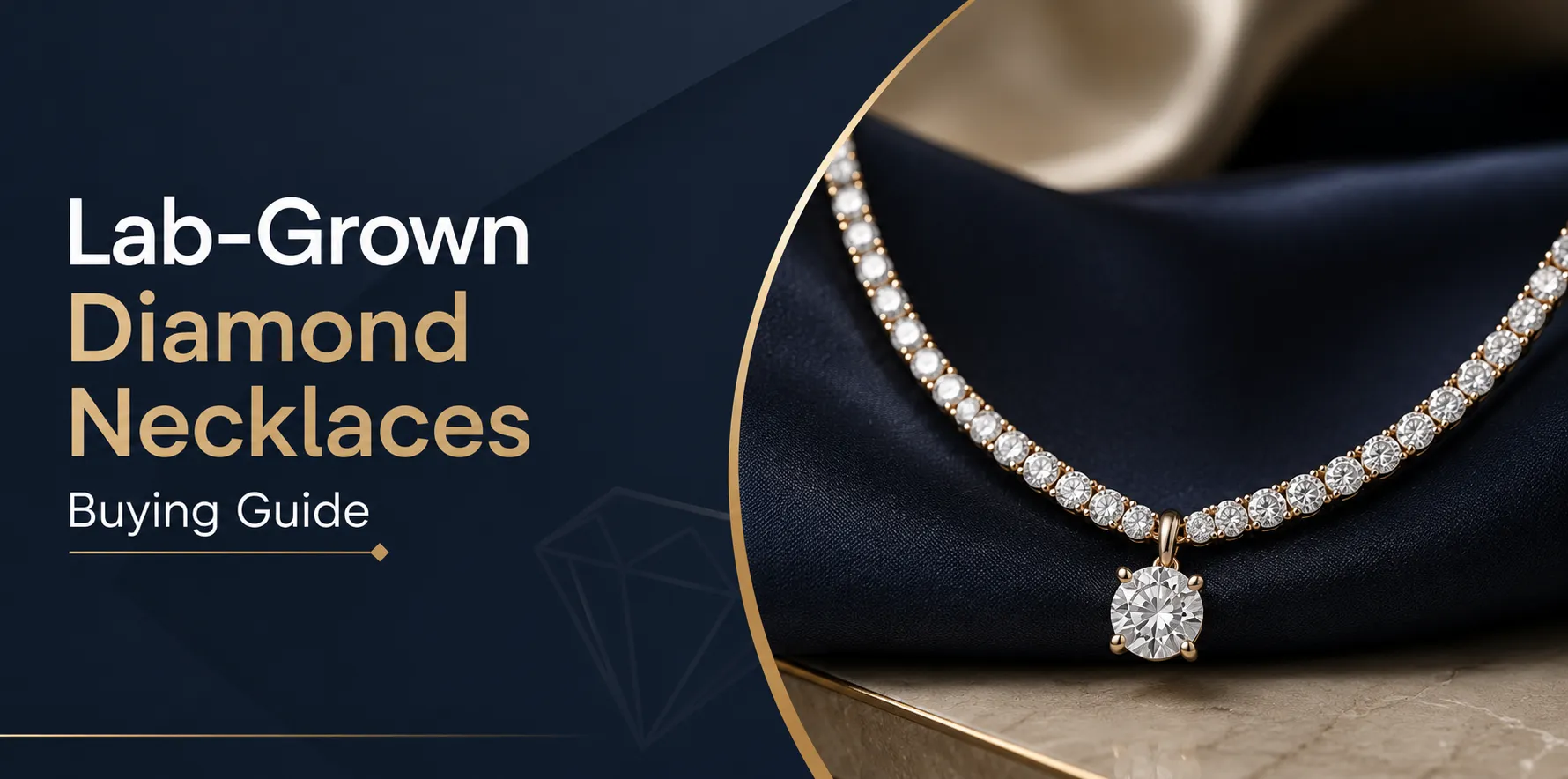
Lab-grown diamond necklaces are a beautiful choice for buyers who want real diamond sparkle, elegant styling, and better value compared to many natural diamond options.
Whether you are buying a solitaire diamond necklace, tennis necklace, pendant necklace, station necklace, name necklace, heart necklace, cross necklace, or custom diamond necklace, lab-grown diamonds give you more flexibility in design, size, and budget.
However, buying a diamond necklace is different from buying a ring or bracelet. Necklaces need the right chain length, pendant balance, clasp strength, diamond size, metal quality, and comfortable wearability.
This lab-grown diamond necklaces buying guide explains what to check before buying, how to compare necklace styles, what affects cost, and how to choose a necklace that looks premium and lasts.
Key Takeaways
- Lab-grown diamond necklaces use real diamonds created in controlled laboratory environments.
- They usually cost less than natural diamond necklaces of similar size and quality.
- Popular styles include solitaire necklaces, tennis necklaces, station necklaces, pendants, name necklaces, and custom designs.
- Diamond cut, color, clarity, carat, shape, metal, chain strength, and clasp quality all matter.
- Necklace length affects how the piece sits on the neckline.
- Tennis necklaces are usually more expensive because they use many diamonds.
- Certification is important for larger diamonds and high-value custom pieces.
- Custom lab-grown diamond necklaces allow buyers to choose diamond size, shape, chain, metal, pendant design, and finish.
What Are Lab-Grown Diamond Necklaces?
Lab-grown diamond necklaces are necklaces made with diamonds created in a laboratory instead of mined from the earth.
These diamonds are real diamonds. They have the same diamond beauty, brilliance, and sparkle expected from fine diamond jewelry. The main difference is origin.
Lab-grown diamonds can be used in many necklace styles, including:
- Solitaire diamond necklaces
- Diamond pendant necklaces
- Tennis necklaces
- Station necklaces
- Name necklaces
- Initial necklaces
- Heart necklaces
- Cross necklaces
- Choker necklaces
- Bridal necklaces
- Men’s diamond necklaces
- Custom statement necklaces
Are Lab-Grown Diamond Necklaces Real Diamond Necklaces?
Yes, lab-grown diamond necklaces are real diamond necklaces.
A lab-grown diamond is not cubic zirconia, moissanite, glass, white sapphire, or a simulated diamond. Simulated stones only look like diamonds, while lab-grown diamonds are actual diamonds created in controlled laboratory environments.
| Diamond Type | Meaning |
| Natural Diamond | Formed underground |
| Lab-Grown Diamond | Created in a laboratory |
| Simulated Diamond | Looks like diamond but is not diamond |
For buyers who want real diamond jewelry with better value, lab-grown diamond necklaces are a strong choice.
Why Buy a Lab-Grown Diamond Necklace?
Lab-grown diamond necklaces are popular because they offer beauty, value, and design flexibility.
Better Value
Lab-grown diamonds usually cost less than natural diamonds of similar size and quality.
This allows buyers to choose a larger center diamond, higher total carat weight, better clarity, or a more detailed custom design within budget.
Real Diamond Sparkle
Lab-grown diamonds offer real diamond brilliance and fire. They work beautifully in everyday necklaces, bridal jewelry, tennis necklaces, pendants, and luxury custom designs.
More Design Flexibility
Buyers can customize diamond shape, chain length, metal type, pendant size, diamond layout, clasp type, engraving, and finish. This makes lab-grown diamonds ideal for personalized jewelry.
Suitable for Daily and Special Occasion Wear
A simple solitaire necklace can be worn daily. A tennis necklace or custom statement piece can be reserved for special occasions, weddings, events, or luxury styling.
Step 1: Choose the Necklace Style
The first step is choosing the type of necklace you want. Each necklace style has a different look, cost, and wearability.
Solitaire Lab-Grown Diamond Necklace
A solitaire diamond necklace features one main diamond set on a chain. It is one of the most classic and versatile necklace styles.
Best For
Solitaire necklaces are ideal for everyday wear, gifting, birthdays, anniversaries, bridal jewelry, and minimal luxury styling.
Buying Tip
Focus on diamond cut and chain balance. The diamond should be bright, well-proportioned, and properly matched with the chain thickness.
Lab-Grown Diamond Pendant Necklace
A diamond pendant necklace includes a pendant design attached to a chain.
The pendant may include one diamond, multiple diamonds, initials, symbols, names, logos, hearts, crosses, or custom shapes.
Best For
Pendant necklaces are ideal for personal jewelry, gifts, religious designs, statement pieces, and custom designs.
Buying Tip
Check pendant size, bail strength, chain compatibility, and diamond placement. A beautiful pendant should sit properly and not feel too heavy for the chain.
Lab-Grown Diamond Tennis Necklace
A tennis necklace features a continuous line of diamonds around the neck. It is one of the most luxurious diamond necklace styles.
Best For
Tennis necklaces are ideal for bridal styling, formal events, luxury gifts, red-carpet looks, and high-end custom jewelry.
Buying Tip
Check diamond consistency, clasp security, flexibility, and total carat weight. A tennis necklace should sit smoothly and sparkle evenly from end to end.
Lab-Grown Diamond Station Necklace
A station necklace features diamonds placed at intervals along a chain. It gives a refined and minimal look.
Best For
Station necklaces are ideal for everyday luxury, layering, gifting, and subtle sparkle.
Buying Tip
Check diamond spacing and chain strength. The necklace should sit evenly and not twist too much during wear.
Lab-Grown Diamond Name Necklace
A diamond name necklace includes a custom name, word, or meaningful text with diamond accents. It can be minimal, bold, iced-out, or elegant depending on the design.
Best For
Name necklaces are ideal for personalized gifts, birthdays, anniversaries, fashion jewelry, and statement styling.
Buying Tip
Check letter thickness, diamond setting, chain strength, and readability. A name necklace should look clear, balanced, and wearable.
Lab-Grown Diamond Initial Necklace
An initial necklace features one or more initials, often with diamond accents. It is personal but usually more minimal than a full name necklace.
Best For
Initial necklaces are ideal for everyday wear, gifting, couples’ jewelry, and personalized luxury.
Buying Tip
Choose a size that feels visible but not too heavy. For daily wear, a clean and simple initial design often works best.
Lab-Grown Diamond Cross Necklace
A diamond cross necklace is a meaningful and classic jewelry piece. It can be designed with a single diamond accent or fully set with lab-grown diamonds.
Best For
Cross necklaces are suitable for religious gifts, personal jewelry, men’s jewelry, women’s jewelry, and custom designs.
Buying Tip
Check symmetry, metal strength, bail size, and diamond layout. The cross should hang straight and feel secure.
Lab-Grown Diamond Heart Necklace
A heart necklace is romantic and symbolic. It can include a solitaire heart diamond, pavé diamonds, or a custom heart-shaped pendant.
Best For
Heart necklaces are popular for anniversaries, Valentine’s Day, birthdays, romantic gifts, and bridal jewelry.
Buying Tip
Choose the right heart size and diamond coverage. A heart necklace should feel elegant, not overly bulky.
Men’s Lab-Grown Diamond Necklace
Men’s diamond necklaces often have bolder proportions, heavier chains, custom pendants, or iced-out details.
Best For
Men’s necklaces are ideal for statement jewelry, Cuban chains, cross pendants, name pendants, initials, hip hop jewelry, and luxury custom designs.
Buying Tip
Focus on chain thickness, pendant weight, bail strength, metal weight, and setting security.
Step 2: Understand Diamond Quality
Diamond quality affects necklace beauty, sparkle, and cost.
The main diamond quality factors are the 4Cs:
- Cut
- Color
- Clarity
- Carat
Cut Quality
Cut affects how much the diamond sparkles.
For necklaces, cut is important because the diamond sits near the face and catches light as the wearer moves.
A well-cut diamond will look bright and lively. Poorly cut diamonds can look dull, even if they are larger.
Color Grade
Color affects how white or warm the diamond appears. For white gold or platinum necklaces, buyers may prefer colorless or near-colorless diamonds.
For yellow gold or rose gold necklaces, slightly warmer diamonds can still look beautiful. For tennis necklaces, diamond color consistency is important. The stones should look balanced across the full necklace.
Clarity Grade
Clarity refers to inclusions and blemishes.
For solitaire necklaces and pendants, the center diamond is more visible, so eye-clean clarity is important.
For tennis necklaces and station necklaces, smaller diamonds may not need extremely high clarity, but they should not look cloudy or visibly included.
VS1, VS2, or eye-clean diamonds are often a strong choice for lab-grown diamond necklaces.
Carat Weight
Carat measures diamond weight.
For necklaces, carat can refer to one center diamond or total carat weight. A solitaire necklace may have a 1-carat center diamond.
A tennis necklace may have 10 carats total across many diamonds. When comparing necklaces, always check whether the carat weight refers to:
- One diamond
- The pendant only
- Total diamonds in the necklace
- Total carat weight across all stones
Step 3: Choose the Diamond Shape
Diamond shape affects the necklace’s appearance and personality.
Popular shapes for lab-grown diamond necklaces include:
- Round
- Oval
- Pear
- Cushion
- Emerald
- Heart
- Princess
- Radiant
- Marquise
Round
Round diamonds are classic, brilliant, and versatile. They work well in solitaire necklaces, pendants, tennis necklaces, and station necklaces.
Oval
Oval diamonds feel elegant and modern. They can appear larger than their carat weight and work beautifully in pendants.
Pear
Pear diamonds create a graceful teardrop look. They are popular for pendants and drop-style necklaces.
Cushion
Cushion diamonds offer a soft, romantic look. They work well in halo pendants and bridal necklaces.
Emerald
Emerald cut diamonds feel refined and sophisticated. They show inclusions more easily, so buyers may prefer higher clarity.
Heart
Heart diamonds are romantic and meaningful. They are ideal for gifts and sentimental pendant necklaces.
Step 4: Choose the Right Necklace Length
Necklace length affects how the jewelry sits on the neckline.
Choosing the right length is important for comfort, styling, and visibility.
| Necklace Length | Common Style |
| 14 inches | Choker fit |
| 16 inches | Sits near the base of the neck |
| 18 inches | Classic everyday necklace length |
| 20 inches | Slightly lower, versatile fit |
| 22 inches | Longer styling |
| 24 inches+ | Statement or layering style |
16-Inch Necklace
A 16-inch necklace sits higher on the neckline. It works well for delicate pendants, chokers, and layered styling.
18-Inch Necklace
An 18-inch necklace is one of the most popular lengths. It works well for solitaire necklaces, pendants, hearts, initials, and everyday jewelry.
20-Inch Necklace
A 20-inch necklace sits slightly lower. It is suitable for larger pendants, men’s necklaces, cross necklaces, and statement pieces.
22-Inch and Longer Necklaces
Longer necklaces create a more relaxed or bold look. They work well with larger pendants, men’s jewelry, and layered styling.
Step 5: Choose the Right Chain Style
The chain supports the diamond or pendant, so it should be strong enough for the design.
Popular chain styles include:
Cable Chain
A cable chain is simple, classic, and versatile. It works well for solitaire necklaces, small pendants, and everyday pieces.
Box Chain
A box chain has a clean square-link structure. It is strong and suitable for pendants that need more support.
Rope Chain
A rope chain has a twisted design and a more decorative look. It works well for men’s necklaces and statement pendants.
Figaro Chain
A Figaro chain has alternating link lengths. It gives a stylish, slightly bolder appearance.
Cuban Chain
A Cuban chain is bold, strong, and popular for men’s jewelry and hip hop styling. It can be worn alone or with a custom pendant.
Tennis Chain
A tennis chain is fully set with diamonds. It is luxurious and requires strong craftsmanship, consistent diamonds, and secure clasps.
Step 6: Choose the Right Metal
Metal affects necklace appearance, durability, and cost.
Yellow Gold
Yellow gold gives a warm, classic, and luxurious look. It pairs beautifully with warm diamond tones, fancy colored diamonds, pendants, and men’s jewelry.
White Gold
White gold creates a clean and modern appearance. It pairs well with colorless and near-colorless diamonds.
Rose Gold
Rose gold has a romantic pink tone. It works beautifully for heart necklaces, name necklaces, bridal jewelry, and feminine designs.
Platinum
Platinum is premium, strong, and naturally white. It is suitable for high-value necklaces and luxury custom designs.
Sterling Silver
Sterling silver can work for select accessible necklace designs. For long-term fine jewelry, buyers should consider maintenance and durability before choosing silver.
Step 7: Check the Setting Style
The setting holds the diamond in place. For necklaces, the right setting depends on the design and level of security needed.
Prong Setting
Prong settings hold the diamond with small metal claws. They allow more light to reach the diamond and create strong sparkle.
Bezel Setting
A bezel setting surrounds the diamond with metal. It offers a smooth, secure, and modern look.
Pavé Setting
Pavé settings use many small diamonds set close together. They are common in name necklaces, heart pendants, cross pendants, and iced-out designs.
Halo Setting
A halo setting surrounds the center diamond with smaller diamonds. It adds sparkle and can make the center stone appear larger.
Channel Setting
Channel settings place diamonds between metal walls. They are useful for clean, secure designs and some men’s necklaces.
Step 8: Check Clasp Strength
The clasp is important for necklace security. A weak clasp can increase the risk of loss, especially with high-value necklaces.
Common clasp types include:
Spring Ring Clasp
A spring ring clasp is common for lightweight necklaces. It is simple but may not be ideal for heavier diamond pieces.
Lobster Clasp
A lobster clasp is stronger and more secure. It is commonly used for pendants, chains, and everyday necklaces.
Box Clasp
A box clasp is often used for tennis necklaces. It creates a clean look and can be paired with safety locks.
Hidden Clasp
A hidden clasp creates a seamless appearance. It is often used in luxury tennis necklaces and high-end custom designs.
Safety Lock
A safety lock adds extra security. For tennis necklaces and expensive custom pieces, safety locks are highly recommended.
Step 9: Check Certification and Quality Details
Certification is important for larger diamonds, solitaire necklaces, and high-value custom pieces.
A diamond report may include:
- Lab-grown origin
- Carat weight
- Shape
- Measurements
- Color grade
- Clarity grade
- Cut details
- Polish
- Symmetry
- Laser inscription
- Report number
For tennis necklaces or multi-stone necklaces, every small diamond may not be individually certified. However, buyers should still receive clear details about total carat weight, diamond count, color range, clarity range, metal, and craftsmanship.
Step 10: Understand Lab-Grown Diamond Necklace Pricing
Lab-grown diamond necklace pricing depends on many factors.
Main cost factors include:
- Diamond size
- Total carat weight
- Number of diamonds
- Diamond shape
- Cut quality
- Color grade
- Clarity grade
- Metal type
- Metal weight
- Chain length
- Chain style
- Pendant size
- Setting style
- Clasp type
- Design complexity
- CAD work
- Craftsmanship
- Finishing
A simple solitaire necklace usually costs less than a tennis necklace or custom iced-out pendant necklace.
Lab-Grown Diamond Necklace Price Guide
The ranges below are educational estimates only. Actual pricing can change based on diamond quality, metal, design, chain, craftsmanship, and market conditions.
| Necklace Type | Approximate Price Range |
| Lab-Grown Diamond Solitaire Necklace | $500 – $4,000+ |
| Lab-Grown Diamond Pendant Necklace | $500 – $5,000+ |
| Lab-Grown Diamond Station Necklace | $700 – $4,500+ |
| Lab-Grown Diamond Name Necklace | $800 – $6,000+ |
| Lab-Grown Diamond Cross Necklace | $700 – $7,000+ |
| Lab-Grown Diamond Tennis Necklace | $3,000 – $25,000+ |
| Men’s Lab-Grown Diamond Necklace | $1,500 – $20,000+ |
| Custom Lab-Grown Diamond Necklace | Depends on design, metal, diamonds, and craftsmanship |
For custom necklaces, the final price depends on the full design.
Lab-Grown Diamond Necklaces vs Natural Diamond Necklaces
| Factor | Lab-Grown Diamond Necklaces | Natural Diamond Necklaces |
| Diamond Type | Real diamond | Real diamond |
| Origin | Created in a laboratory | Formed underground |
| Price | Usually lower | Usually higher |
| Design Flexibility | Strong | More budget-sensitive |
| Certification | Available | Available |
| Best For | Value, custom designs, larger diamond coverage | Natural rarity and tradition |
| Appearance | Real diamond sparkle | Real diamond sparkle |
Both can be beautiful.
Lab-grown diamond necklaces are ideal for buyers who want real diamond jewelry with more design flexibility and better cost control.
Best Lab-Grown Diamond Necklaces to Buy
Lab-Grown Diamond Solitaire Necklace
A solitaire necklace is timeless and elegant. It is ideal for daily wear, gifting, bridal jewelry, and minimal luxury.
Lab-Grown Diamond Tennis Necklace
A tennis necklace is bold and luxurious. It is best for buyers who want continuous sparkle and a high-end look.
Lab-Grown Diamond Pendant Necklace
A pendant necklace offers more design freedom. It can include initials, hearts, crosses, names, symbols, or custom shapes.
Lab-Grown Diamond Station Necklace
A station necklace is subtle and refined. It is ideal for layering and everyday styling.
Lab-Grown Diamond Name Necklace
A name necklace is personal and expressive. It works well for gifts, fashion styling, and custom luxury designs.
Lab-Grown Diamond Necklaces for Women
Women’s lab-grown diamond necklaces can be minimal, romantic, bridal, bold, or personalized.
Popular choices include:
- Solitaire necklaces
- Heart necklaces
- Initial necklaces
- Tennis necklaces
- Station necklaces
- Name necklaces
- Bridal necklaces
- Rose gold diamond necklaces
- White gold diamond necklaces
For women’s necklaces, buyers should focus on neckline fit, chain comfort, diamond size, metal tone, and styling flexibility.
Lab-Grown Diamond Necklaces for Men
Men’s lab-grown diamond necklaces often use bolder chains, larger pendants, stronger metal, and more structured designs.
Popular choices include:
- Cuban chains
- Diamond cross necklaces
- Name pendants
- Initial pendants
- Iced-out pendants
- Rope chains
- Figaro chains
- Tennis necklaces
- Custom logo pendants
For men’s necklaces, buyers should check chain thickness, pendant weight, bail strength, clasp security, and overall durability.
Lab-Grown Diamond Necklaces for Gifting
Lab-grown diamond necklaces make excellent gifts because they are meaningful, wearable, and versatile.
They are suitable for:
- Birthdays
- Anniversaries
- Weddings
- Bridal gifts
- Valentine’s Day
- Mother’s Day
- Graduation gifts
- Milestone celebrations
- Personalized gifts
For gifting, popular choices include solitaire necklaces, heart necklaces, initial necklaces, name necklaces, and station necklaces.
Personal details such as initials, engraving, birthstones, and custom symbols can make the necklace more meaningful.
Custom Lab-Grown Diamond Necklaces
Custom lab-grown diamond necklaces allow buyers to create a design around personal style, budget, and purpose.
You can customize:
- Necklace style
- Chain length
- Chain type
- Diamond shape
- Diamond size
- Total carat weight
- Metal type
- Pendant size
- Bail design
- Setting style
- Clasp type
- Name or initial design
- Engraving
- Finish
- Two-tone details
- Diamond layout
Custom design is ideal for buyers who want a necklace that feels personal and premium.
CAD Design for Custom Diamond Necklaces
CAD design helps buyers review the necklace or pendant before production.
A CAD preview can show:
- Pendant size
- Diamond placement
- Bail size
- Chain compatibility
- Metal thickness
- Name or letter structure
- Stone setting layout
- Necklace proportions
- Overall design balance
For custom necklaces, CAD approval is important because it helps avoid confusion before manufacturing begins.
Common Mistakes Buyers Make
Choosing Only by Carat Weight
A higher carat weight does not always mean a better necklace. Diamond quality, chain strength, metal, clasp security, and craftsmanship matter just as much.
Ignoring Chain Strength
A beautiful pendant needs a strong chain. If the chain is too thin for the pendant, it may not sit properly or wear well over time.
Choosing the Wrong Length
Necklace length affects how the piece looks on the neckline. Always consider whether the necklace is meant for daily wear, layering, formal styling, or statement use.
Forgetting Clasp Quality
A weak clasp can put the necklace at risk. High-value necklaces should use secure clasps and safety features.
Not Checking Pendant Balance
A pendant should not be too heavy for the chain. It should hang straight and feel comfortable.
Skipping CAD for Custom Designs
CAD helps confirm proportions, diamond layout, size, and chain compatibility before production.
Expert Tips for Buying Lab-Grown Diamond Necklaces
Match Necklace Style to Lifestyle
For daily wear, choose a comfortable chain, secure clasp, and practical pendant size. For special occasions, a tennis necklace or bold custom pendant can make a stronger statement.
Prioritize Cut Quality
Cut affects sparkle. A well-cut diamond necklace will look brighter and more premium.
Check Diamond Consistency
For tennis and station necklaces, diamonds should look consistent in size, color, clarity, and sparkle.
Choose the Right Chain Length
An 18-inch necklace is a versatile choice for many buyers. Longer lengths work better for larger pendants and men’s necklaces.
Check Bail Strength
For pendants, the bail connects the pendant to the chain. It should be strong enough for the pendant’s weight.
Compare Full Necklace Value
Do not compare only diamond price. Metal, chain quality, clasp, setting, finishing, and craftsmanship all affect value.
Buyer Checklist Before Purchasing
Before buying a lab-grown diamond necklace, check:
- Is the diamond clearly disclosed as lab-grown?
- What is the necklace style?
- What is the diamond shape?
- What is the carat weight or total carat weight?
- What is the diamond color range?
- What is the diamond clarity range?
- Is certification available for larger stones?
- What metal is used?
- What is the chain length?
- What is the chain type?
- Is the clasp secure?
- Is the pendant balanced with the chain?
- Is the bail strong enough?
- Is CAD approval available for custom designs?
- Is pricing transparent?
- Is shipping secure?
This checklist helps buyers compare necklace options with more confidence.
Why Choose Custom Karat for Lab-Grown Diamond Necklaces?
Custom Karat helps buyers create lab-grown diamond necklaces with quality, transparency, and design control.
Instead of choosing only from standard ready-made designs, buyers can customize the necklace around their style, budget, diamond preference, and occasion.
Custom Karat offers:
Lab-Grown and Natural Diamond Options
Buyers can choose lab-grown diamonds for better value or natural diamonds for traditional rarity. This gives more flexibility when designing solitaire necklaces, tennis necklaces, pendants, name necklaces, and men’s necklaces.
Custom Necklace Design
Custom Karat helps create solitaire necklaces, pendant necklaces, tennis necklaces, cross necklaces, heart necklaces, name necklaces, initial necklaces, men’s necklaces, and bridal necklaces.
Each piece can be designed around the buyer’s personal style.
Diamond Quality Guidance
Buyers can compare diamond size, shape, cut, color, clarity, certification, and total carat weight before finalizing the design. This helps create a necklace that looks balanced and premium.
CAD Design Previews
CAD previews allow buyers to review necklace and pendant details before production. This helps confirm diamond placement, pendant size, bail design, chain compatibility, and overall proportions.
Premium Metal Choices
Buyers can choose yellow gold, white gold, rose gold, platinum, sterling silver, gold vermeil, or suitable custom finishes. The right metal improves durability, comfort, and long-term appearance.
Transparent Pricing
Pricing depends on diamond quality, total carat weight, metal, chain length, pendant size, design complexity, craftsmanship, and finishing. This helps buyers understand what affects the final cost.
Direct Manufacturer Value
Custom Karat offers direct manufacturer craftsmanship. This helps reduce traditional retail markups while keeping the focus on quality and customization.
Expert Craftsmanship
Each necklace is made with attention to stone setting, chain strength, clasp security, polish, comfort, and long-term wearability. A diamond necklace should look beautiful and feel secure when worn.
Secure USA Shipping
Finished necklaces are securely packed and shipped to customers in the USA. This gives buyers confidence when ordering custom lab-grown diamond necklaces online.
Final Verdict
Lab-grown diamond necklaces are a smart choice for buyers who want real diamond beauty, better value, and more design freedom.
The best necklace is not based only on carat weight or price. Buyers should also check diamond quality, chain strength, metal type, clasp security, pendant balance, necklace length, and craftsmanship.
Solitaire necklaces are classic and versatile. Tennis necklaces are luxurious and bold. Station necklaces are subtle and refined. Pendant necklaces offer the most personal design flexibility.
Custom Karat helps buyers create lab-grown diamond necklaces with certified diamond options, CAD approval, premium materials, transparent pricing, direct manufacturer value, expert craftsmanship, and secure USA shipping.
FAQs
Are lab-grown diamond necklaces real diamond necklaces?
Yes. Lab-grown diamond necklaces use real diamonds created in controlled laboratory environments.
Are lab-grown diamond necklaces worth buying?
Yes. They offer real diamond sparkle, better value, and strong design flexibility.
What is the best lab-grown diamond necklace style?
Solitaire necklaces are classic, tennis necklaces are luxurious, and pendant necklaces are best for personalized designs.
What should I check before buying a diamond necklace?
Check diamond quality, chain strength, necklace length, metal type, clasp security, pendant balance, and craftsmanship.
What is the best necklace length?
An 18-inch necklace is a versatile everyday choice. Longer lengths work well for larger pendants and men’s necklaces.
Are lab-grown diamond tennis necklaces good?
Yes. They offer real diamond sparkle and better value compared to many natural diamond tennis necklaces.
What metal is best for lab-grown diamond necklaces?
Yellow gold, white gold, rose gold, and platinum are popular choices. The best metal depends on style, budget, and wear needs.
Do lab-grown diamond necklaces need certification?
Certification is important for larger diamonds and high-value pieces. Multi-stone necklaces should still include clear quality details.
Can I customize a lab-grown diamond necklace?
Yes. You can customize diamond shape, chain length, chain style, pendant design, metal, setting, engraving, and finish.
Are lab-grown diamond necklaces good for gifting?
Yes. Solitaire necklaces, heart necklaces, initial necklaces, and pendant necklaces make excellent gifts for birthdays, anniversaries, weddings, and milestones.
About Author Brijesh Sharma
Brijesh Sharma is a jewelry retail industry author who shares expert insights on diamonds, lab-grown jewelry, custom designs, and smart jewelry buying. His content helps customers understand quality, pricing, trends, and craftsmanship so they can make confident jewelry purchase decisions.